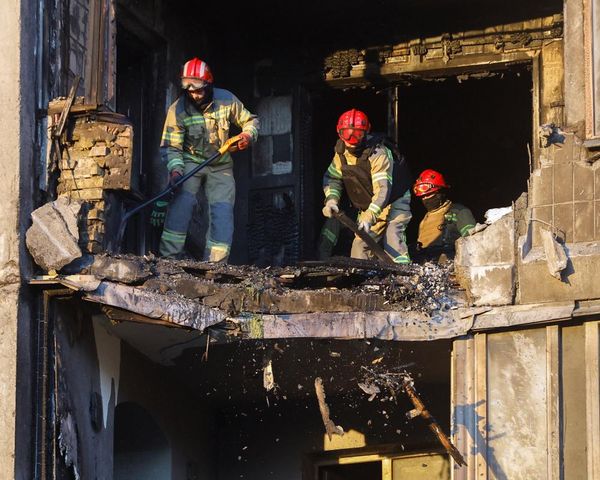
ANXIETY and anger sparked by the devastating wildfires in the Cairngorms and across Europe this summer can be turned into positive action to help slow down global warming, according to a leading environmentalist.
Many Scots may have felt genuine grief over the terrible destruction wreaked by the ongoing fire near Nethybridge but Dr Ruth Valerio says this does not mean people are powerless in the face of extreme events caused by global warming.
While not denying the seriousness of the crisis, she believes that our choices and collective response still matter.

“Yes, things are bad but we can still take action and there are still things that we can do as individuals and as a wider society,” she told the Sunday National.
Although the governments in the UK have been taking steps to cut carbon emissions that most scientists agree are causing global warming, they are not moving as quickly as many people would wish.
Dr Valerio said this was partly because of the narrative coming from political parties, backed by much of the media, that have decided to use net zero as a political football.
As a result, more forward-thinking political parties are becoming scared of talking about net zero in case they are attacked by the right-wing media.
“The majority of the media is owned by very wealthy people who often have a lot of vested interest in fossil fuel companies, so there is a whole agenda coming from them,” she said.
“I just want to put over a more positive message that this doesn’t represent what the majority of us think and that there are things we can do.”
One of the simplest and most constructive actions is to write a short email to your political representatives stating your views, she said.
“You don’t have to be a scientist or get into anything technical - just say that you care about the climate crisis and want them to know that taking positive action on the climate crisis is a voting issue for yourself,” said Dr Valerio. “Our political representatives need to know that what the media says does not represent the majority of people in the UK.”
At the same time, it is important for individuals to keep doing what they can to cut their carbon footprint as it all helps to send a message to political leaders.
“Government does what it thinks the people want it to do, so every little positive action that we take sends a tiny political signal saying this is what I’m interested in and this is how I want to live,” Dr Valerio said.
“You might feel that your one action makes no difference at all, and in many ways that’s true. But when you put that one action against the next action, against somebody else’s action, against your family’s action, it does build up, and if the government sees the electorate acting in a particular way, then it will respond along those lines. We can be sending those little political signals with every positive action that we take.
“You go from being worried about the climate crisis to taking positive action, both to reduce our own amount of resource and energy that we use and to push governments and businesses to do the same.”
Dr Valerio pointed out that what Europe was now experiencing as a result of global warming had been hitting other parts of the world for many years.
And she warned that what Europe is suffering now is only the start of severe weather events.
“It’s going to get worse, and we need to be really honest about this,” she said. “Now is a moment to lift our heads out of the sand.”
There are two areas where people can affect change, according to Dr Valerio.
“One is the political area with that really simple email,” she said. “Just tell your representative that you care and that you want them to take action and then think about a few things that you can do in your own life so that you’re using fewer of the resources around you.
“There are practical things we can do as individuals and we have to hold those things side by side with the political change because that’s where the really big change will happen.”
Throughout history, Dr Valerio pointed out, change has come about as a result of individuals getting together to take action.
“I keep going because you can never know when that’s going to happen,” she said. “It takes a particular set of factors to come together and we might think we’re heading in one terrible direction but actually things change and you reach the tipping point.”
Those who would like more advice on how they can act can find tools for positive action in her book, How To Survive A World In Crisis (And Not Grow Weary Of Doing Good).
“It’s written with people of faith in mind but you don’t have to be a person of faith to read it,” she said.