New research puts a number on something health departments have struggled to budget for: the cost of simply starting a measles response before a second case is even counted.
Johns Hopkins researchers estimate the fixed cost of launching a public health response at about $244,480. Each additional case after that adds roughly $16,200. The average cost across all outbreaks reviewed came to $43,204 per case.
That structure is the finding, and it explains something counterintuitive that county health officials already know. The cost of a measles outbreak is not proportional to the number of people who get sick. A cluster of three cases and a cluster of thirty draw on much of the same machinery, and the small one ends up costing far more per patient.
The Study and What It Actually Covers
The analysis is a systematic review, not a costing of any single outbreak. Researchers at the International Vaccine Access Center at the Johns Hopkins Bloomberg School of Public Health searched published literature and government reports on U.S. measles outbreaks between Jan. 1, 2000, and Oct. 7, 2025. They screened 120 articles, reviewed 33 in full, and extracted data from 19, yielding cost figures across 18 states, plus eight additional reports from the gray literature. It has now been published in the journal Vaccine after circulating as a preprint since October.
Outbreak sizes in the review ranged from 1 to 802 cases. The per-case figure changes depending on whose money is being counted. From the medical provider's perspective, the average was $33,416 per case. Including the public health response, it rose to $58,592. The average cost per exposed contact was $443.
The average total cost of a single outbreak was about $756,584, but the range shows the arithmetic at work: from $892 at the low end to more than $10.6 million at the high end. The lowest figure came from an Oklahoma event where no cases were identified, and four refugee contacts were investigated. The entire cost was labor and measles testing.
At the other extreme, a single confirmed case in Iowa in 2004 produced the highest per-case figure in the review, an estimated $243,615, because one patient absorbed the entire cost of a response.
CIDRAP reported the published totals, putting the 2025 U.S. outbreak year at about $134 million based on 2,289 confirmed cases, and noting that 2026, which has already passed 2,500 cases, would exceed $150 million on the same basis.
Where the Money Goes, and It Is Not Hospital Bills
The largest expenses in a measles response are labor and logistics, not medical treatment.
Containment requires case investigation, contact tracing, quarantine monitoring, laboratory testing, and vaccination campaigns. Each confirmed case generates a list of exposed people who must be identified, contacted, and monitored for up to 21 days.
A review of the cost figures by outbreak shows the scaling effect directly. The 2018 to 2019 New York City outbreak involved 649 cases and cost an estimated $10.6 million, which works out to $16,355 per case. The Clark County, Washington, outbreak involved 71 cases and cost about $4.3 million, or $59,994 per case. The larger event cost more overall but far less per patient.
Productivity loss was measured in only one of the reviewed studies, the Clark County analysis, where lost work time totaled about $1.3 million, or $18,066 per case and $310 per contact. That component was excluded from the scaling analysis because it does not appear in any public budget, which means the figures here understate the total burden on households.
Bryan Patenaude, an associate professor of health economics at the Bloomberg School and one of the study authors, framed the practical implication in terms of preparedness, saying the analysis shows how "early response capacity can help to avoid the economic and health burden" of measles outbreaks. The authors position the figures as planning tools for budgeting rather than as an argument in themselves, and note that measles is preventable through vaccination.
Small Outbreaks Carry the Steepest Bill Per Patient
The researchers calculated an elasticity of 0.86 between outbreak size and total cost, meaning costs rise with size but less than proportionally.
In practice, doubling the number of cases does not double the bill. The fixed costs are already spent. A large outbreak incurs higher total costs but spreads them across more patients, while a small outbreak concentrates a nearly identical setup cost on a handful of people. In the smallest outbreaks, mobilization costs can account for more than half of everything spent.
That has an uncomfortable budgeting consequence for local officials, as state health officials summarized the findings for their members. A health department cannot predict its exposure from case counts alone, and the cheapest outbreak per case is one that never starts. It also means a county with two cases is not facing a small bill, which is exactly the assumption that leaves response funding short.
The Household Side of a Public Health Budget Line
These costs are not abstract to families who have been through one. An exposure notice from a school, a pediatric clinic, or an urgent care waiting room is the visible edge of the machinery this study prices.
Quarantine after exposure means missed work for a parent and missed school for a child. Households facing this should ask their employer about paid leave and their school district about remote coursework, and should know that most state health departments coordinate quarantine directly rather than leaving families to interpret guidance alone.
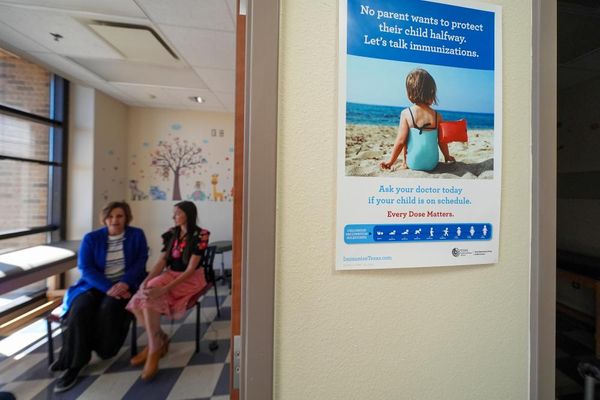
The step that removes a household from this equation is vaccination status. Two doses of MMR are about 97 percent effective. People who are fully vaccinated are typically released from quarantine requirements after an exposure, though the specifics are set by state and local health departments, and questions about an individual child should be directed to a pediatrician. The federally funded Vaccines for Children program provides MMR at no cost for eligible children who are uninsured, underinsured, Medicaid-enrolled, or American Indian or Alaska Native.
Several limitations accompany these figures. Cost reporting varied substantially across the reviewed studies; indirect costs were rarely measured, and the underlying sources used different accounting perspectives. The review synthesizes existing published work rather than generating new field data, and estimates derived from it should be treated as planning ranges rather than precise forecasts.
MedicalDaily previously reported that a New Mexico outbreak of 100 cases cost 5.4 million dollars to contain. That figure, roughly $53,522 per case, falls within the range described in this broader review.
The next question is whether these estimates make it into the budget process. State and local health departments are building next year's requests now, and the study's authors framed the scaling figures as a tool for exactly that.
Key Questions Answered
What did the study find? An average cost of $43,204 per measles case, about $16,200 for each additional case, and roughly $244,480 in fixed costs to launch any outbreak response.
Is that the cost for the 2025 outbreak alone? No. It is a systematic review of U.S. outbreaks from 2000 through 2025 across 18 states. The 2025 outbreak is included but is not the sole subject.
Why do the per-case numbers differ? They depend on perspective. About $33,416 counts as provider costs. About $58,592 includes the full public health response.
Why do small outbreaks cost more per case? Fixed setup costs are nearly the same regardless of size, so a handful of cases absorb the whole amount.
What is the biggest expense? Labor and logistics, including case investigation, contact tracing, quarantine monitoring, testing, and vaccination campaigns. Not hospital bills.
How does this affect my family? Through missed work and school during quarantine after an exposure, and through the local health department budget that funds the response.
What are the study's limits? Cost reporting varied widely across sources; indirect costs were rarely captured, and the review synthesizes published work rather than new field data.