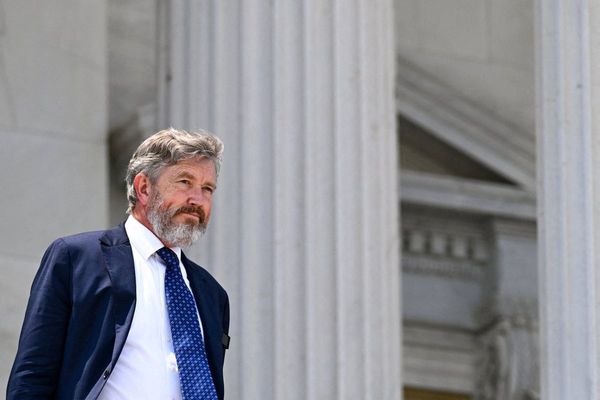
In 1981, Larry Tenebaum finished college with no clear professional direction. A mentor offered him a frank assessment: formal credentials mattered less than he had assumed. If someone was genuinely good at sales and sales management, that mentor told him, they could outperform people who held more impressive degrees. Tenebaum took the advice seriously enough to test it, accepting a commission-only door-to-door sales role with nothing guaranteed and no safety net beneath him.
That entry point was not incidental to what followed. It was the foundation. Everything Smart Circle became over the next four and a half decades traces back to the philosophy Tenebaum absorbed in those early years in the field: that the skills required to build a successful sales career are not mysterious, not reserved for the specially talented, and not dependent on where someone went to school. They are learnable. They are repeatable. And if someone is already generating significant results, what they are doing can, in principle, be copied.
The Conviction That Changed How He Built a Company
Tenebaum eventually moved from selling into managing, then into running his own sales business. When his primary supplier pulled out of Canada, rather than starting over in a familiar role, he transitioned into becoming a broker, connecting major brands with the independent sales companies that could reach customers on their behalf. That company became Smart Circle International, now operating for more than 45 years with a network of nearly 1,000 independently owned sales companies across the United States and Canada.
But the intellectual premise behind the company never changed from what that early mentor described. Tenebaum built Smart Circle around the idea that success in face-to-face sales is a process, not a personality type. The discipline to stay with it, the willingness to study what the best performers are actually doing, and the absence of ego in the learning phase are the variables that separate people who grow from those who stall. In Tenebaum's framing, those variables are within reach of almost anyone who shows up willing to work.
"Unlike sports, where you need to have some natural talent — in our business, if you stalk the number one person and you visit their office and you copy everything they're doing, it's all duplicatable," Tenebaum says. "Everything that the top person's doing that's making 10 million dollars is very duplicatable if you put the time in, if you have confidence in yourself."The statement is practical rather than inspirational. It describes a method. Set aside the instinct to appear competent before you are. Identify the people producing the best results. Study what they are doing. Do it. The assumption embedded in that instruction is that what the top performers in the industry are doing is observable, transferable, and executable by someone else if that person is genuinely willing to observe it and put in the work ethic to achieve it. The only real obstacle, in Tenebaum's telling, is ego. "Pretend you don't know anything, and just be a sponge and learn from that person," he says. "Just be a student."
What a 45-Year Network Actually Demonstrates
Smart Circle's broker model connects clients, including Fortune 500 companies, across telecom, energy, home services, and consumer products with independently owned sales businesses that execute face-to-face customer acquisition campaigns. Those campaigns span retail in-store settings, door-to-door canvassing, business-to-business outreach, and event-based programs. The network, which Smart Circle says has generated millions of customer acquisitions, finished 2025 servicing just under 1,000 independent corporate distributors (ICDs) who contract with Smart Circle in North America, with the company now on a trajectory to exceed that figure in 2026. That expansion accelerated sharply in the past year. "Our gross sales for 2025 was up 61% over 2024," Tenebaum says. "And when you think about it, for a company that's 45 years old to grow by 61% in one year is just incredible." He attributes much of the momentum to a shift away from digital channels that no longer perform the way they once did. "Direct mail, digital marketing was huge when Facebook first came out," he says. "Today, people just delete the message."
The scale of that network is one kind of evidence. Another is how the network grew. Each independent business owner who built something within it started, in most cases, the same way Tenebaum did: in the field, learning the work firsthand. That pattern is not coincidental. It reflects the same logic Tenebaum applied to his own career that credibility in this industry comes from having done the work, not from having studied it.
For Tenebaum personally, the years after founding Smart Circle have been spent constructing a foundation that encodes that belief at scale. The company maintains experienced consultants that provide sales and consulting services based on their experiences as business owners in the industry. Those advisors are not theorists. They are people who built their own businesses using the same methods they now teach. The replication the industry depends on is not abstract. It is the same replication Tenebaum first observed as a commission-only salesperson in 1981, deciding to find the best performers around him and pay close attention to exactly what they were doing. That mentorship, in his view, is what compresses the learning curve. "You have a dumb tax you have to pay to get good at anything," he says. "But by networking with other people, you shorten the learning curve. You shorten the dumb tax. You can't make it go away — we all have to learn."
The clearest way to understand what Smart Circle is, after 45 years, may be this: it is a model built on the conviction that the right person, taught by the right people, doing the right work long enough, will grow. The founder believed that before he had a company to run. The company became the proof.