Get all your news in one place.
100's of premium titles.
One app.
Start reading
The Economic Times
The Economic Times
Team Global

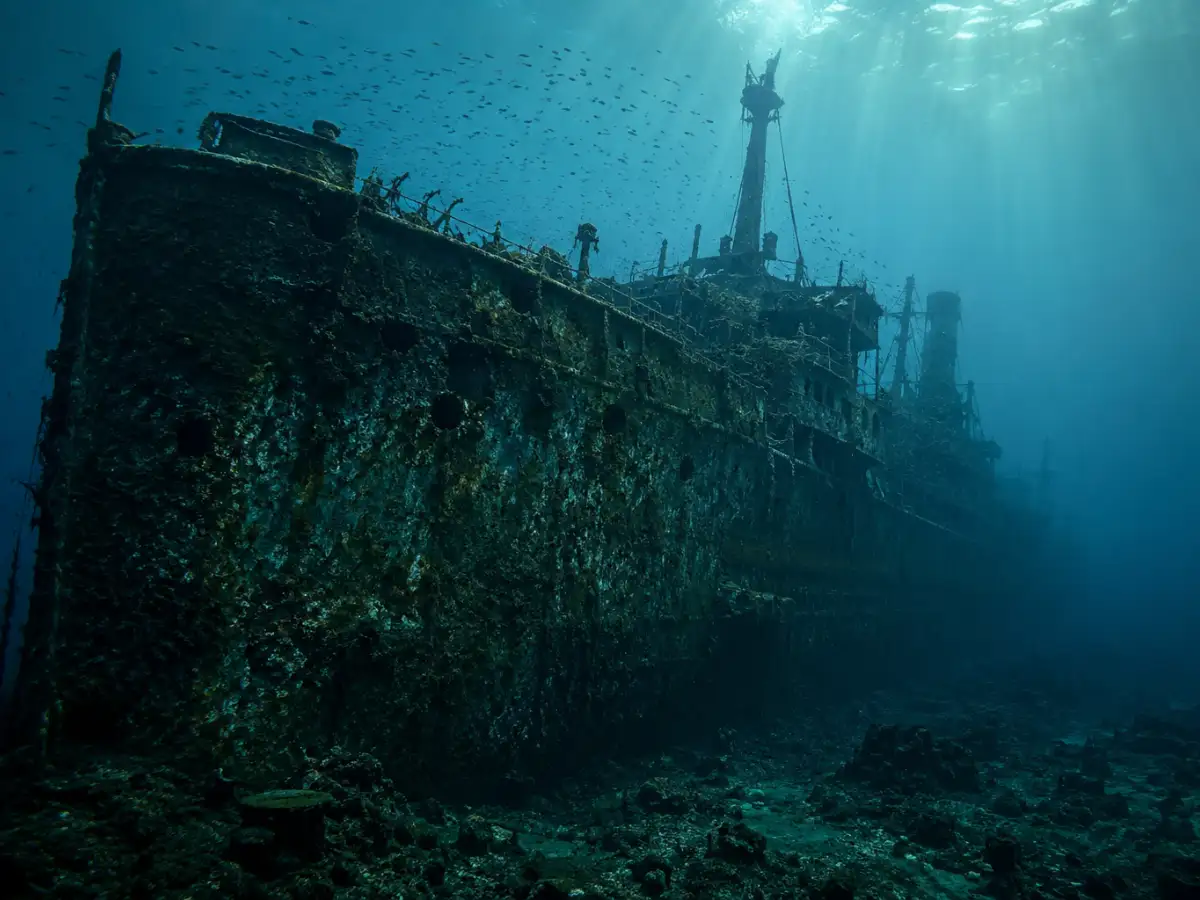
Largest POW grave site: In 1944, the Japanese hellship Hōfuku Maru sank with over 1,000 Allied POWs aboard; in 2026, forgotten military documents led to a discovery no one expected 80 years later

A shipwreck has finally been found off the coast of the Philippines more than 80 years after it sank beneath the Pacific Ocean, and it contains one of the darkest, least-told stories of World War II. According to “The Japanese 'Hell Ships' of World War II,” published by the U.S. Naval History and Heritage Command, 134 Japanese “hellships” carried an estimated 126,000 Allied prisoners of war on more than 156 voyages during the war, and some 20,000 of them didn’t survive the trip. That’s a staggering number, and most Americans have never heard of it.

The ship at the heart of this new discovery is the Hōfuku Maru, a Japanese prison transport that sunk on September 21, 1944, after being struck by an Allied torpedo. According to the Warner Bros. Discovery press release "Lost Japanese 'Hellship' Hōfuku Maru Found in the Philippines" announcing the find, the freighter broke in half and sank in less than three minutes, with more than 1,000 British and Dutch prisoners still trapped in its holds. For more than 80 years, no one knew exactly where it was. Now they do.

How a retired Navy officer solved an 80-year-old mystery

The breakthrough was not caused by high-tech technology or a spy satellite. It came from old paperwork records gathering dust in archives that almost no one had thought to revisit.

According to a Warner Bros. Discovery press release, the Hellships Memorial Foundation, a US-registered non-profit founded by retired naval officer Randy Anderson, and later joined by researchers Tim Beckensall and John Duresky, worked for years through long-overlooked documents in both American and Japanese military archives. Documents pointed to a site more than 30 miles from where the Hōfuku Maru had long been believed to have sunk.

"We were absolutely stunned that Japanese sources had information on where the convoy was attacked and what ships were hit; this was a smoking gun," Anderson said.

Sign up to read this article
Read news from 100's of titles, curated specifically for you.
Already a member? Sign in here
Related Stories
Top stories on inkl right now
One subscription that gives you access to news from hundreds of sites
Already a member? Sign in here
Our Picks
Fourteen days free
Download the app
One app. One membership.
100+ trusted global sources.