
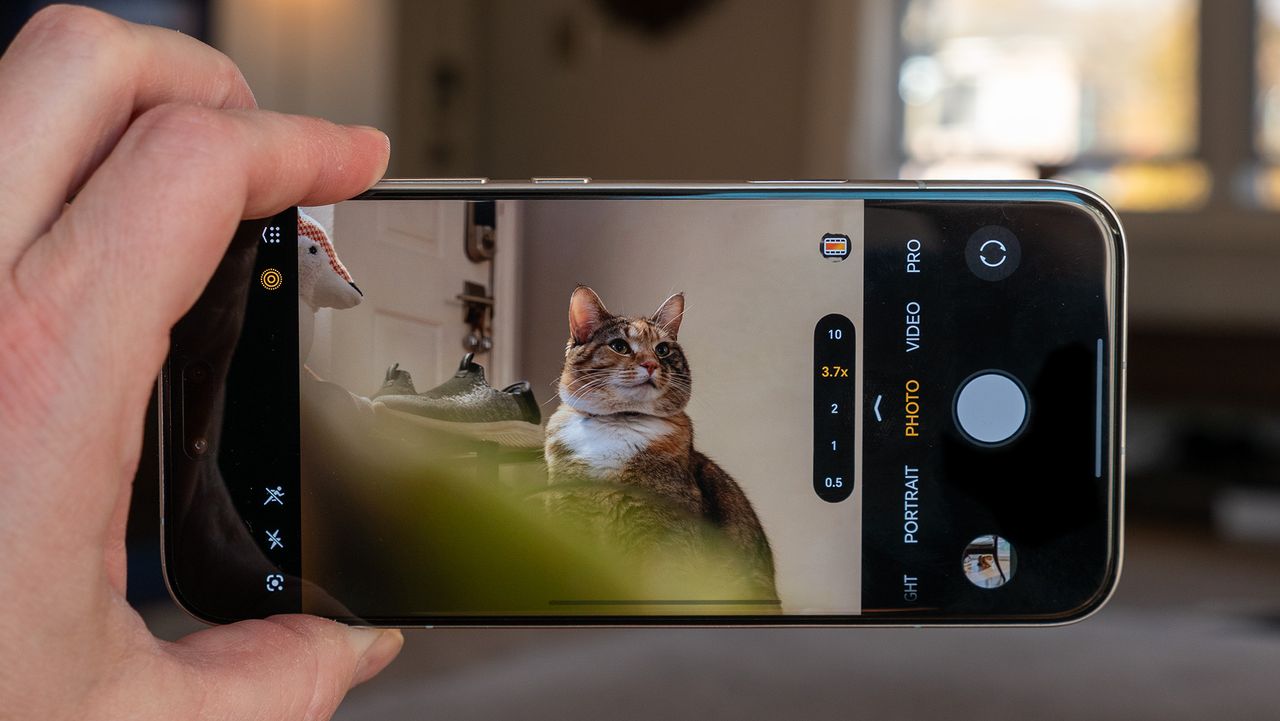
On paper, most of the Honor Magic 8 Pro's specs look like pretty run-of-the-mill upgrades. It's got a bigger battery, faster processor, better display, improved IP ratings, and some new software tricks to brag about. But the camera experience looks identical on paper until you notice one thing: the telephoto lens and OIS system.
That 200MP telephoto sensor might be the same as last year's, but it's behind a brand-new CIPA 5.5 OIS system that delivers the best results I've ever seen from a telephoto lens. It's got incredible depth and bokeh that most phone sensors simply can't produce without using software portrait mode, and it totally changed how I took pictures with this phone.

Telephoto
I would normally start with the primary camera sensor in a smartphone camera review, but the telephoto is the real highlight of the experience. A new 3.7x lens means the primary sensor is used from 1-3.6x zoom, and then the telephoto takes over beyond that.
The best quality from the lens is between 3.7x and 10x, and it can be used for everything from portrait shots (which I'll go into detail about later) to macro photos and everything in between. At 3.7x, it's not a replacement for the primary camera sensor simply because that's too zoomed in to get the job done, but when you can use the telephoto camera, I recommend defaulting to it.


The quality from the sensor is simply exquisite, with accurate color reproduction, excellent natural bokeh from the large sensor, and generally good dynamic range. I found a few examples where the software could have done a better job with dynamic range — the 10x zoom image of the brick church is one — but this didn't happen very often and seemed to happen far less than with iPhone or Galaxy cameras.
Zooming in beyond 10x is fairly hit-or-miss, though. Honor employs an optional AI upscaling engine that can be easily toggled via a button on the viewfinder and can sometimes help address the limitations of a 3.7x telephoto lens with long zoom ranges.


Portrait
Honor really started perfecting its portrait mode with the Honor 200 Pro nearly two years ago, and things have only improved since. The company's partnership with famous portrait studio Harcourt continues, and Harcourt Vibrant is the default mode selection when you take portrait photos, resulting in a punchy portrait photo without resorting to cartoonish colors.


While the details are crisp, colors are nice, and object cutouts remain some of the best in the business, I'd like to see Honor tone down the sharpening in a future update. These cameras already capture plenty of detail, so the images don't need to be further sharpened, and the result can sometimes look "very digital" if you zoom in too far.
And while I've still gotten plenty of excellent shots without that problem, I'd actually encourage Magic 8 Pro users to nix the portrait mode altogether and just shoot with the 3.7x telephoto lens in normal mode.
While portrait mode will certainly improve the separation of the foreground from the background in an image, it can sometimes be too aggressive on any phone. The 3.7x telephoto sensor, on the other hand, produces incredible natural bokeh that looks like it was shot with a much larger dedicated camera more often than not. These examples prove it.


The first picture above of one of my chickens shows the fairly minute difference between using regular and portrait modes with this camera. Because portrait mode doesn't always get it right and Honor's software doesn't allow you to tweak the portrait blur in post, sticking with using the 3.7x tele on normal mode is going to produce the best shots from the phone, and honestly, the best shots from any smartphone camera I've used to date.
Some of this is down to pure sensor size, but the crispness and natural look also come from being able to capture longer exposure shots than most other phones. That CIPA 5.5 rating on the telephoto camera means the optical image stabilization is so good that the phone can shoot 5.5 stops slower than without OIS.
In plain terms, your camera shutter can stay open longer without producing a blurry image, which means it can use a lower ISO, creating noise-free shots with tons of natural detail. It also means you can freehand video from this sensor, and it'll come out looking more stable than other phones.
Main and ultrawide
The main and ultrawide cameras on the Magic 8 Pro remain the same as the ones from the Magic 7 Pro. Each is a 50MP sensor with excellent lenses and an impressive AI-driven software stack. All the camera lenses support Honor's impressive auto-capture tool, but the main and ultrawide sensors are the best way to use it in most situations because of their focal lengths.


If I had to critique anything about the primary camera, it's that there's some edge fringing when photographing objects up close. Because of this and the sensor's size, it's best to use 2x or 3.7x zoom when trying to capture anything up close.
That cleans up the fringing without losing any real detail, and it's something this phone is uniquely good at doing. Look at the 2x zoom example above to see what I mean about detail retention.


I have no real complaints about the ultrawide camera when compared to the competition. It's a 50MP sensor, so it packs plenty of detail into each shot, although ultrawide shots aren't typically taken with the intention of later zooming in too far. Dynamic range and colors all look great, and the 122-degree FoV ensures you'll capture everything you want in one shot.
Editing and AI

Honor continues to shore up its gallery app with new editing features, including a few interesting new ones like motion photo options and the AiMAGE color engine. Any picture shot with motion photo can now have that motion augmented with a trail, clone, or slow-motion effect.
The AiMAGE color engine lets you create templates of image colors and apply them to other images, or select from one of the three presets. It's a way to give your image a nice look without resorting to entirely fake AI-generated changes like you'll find in some other features, like Google's Reimagine tool.
Verdict

Overall, I'm incredibly impressed with what Honor has delivered and will continue to use the Magic 8 Pro as my main phone, if for no other reason than the superb camera. Distance zooming detail falls short of phones with additional dedicated secondary telephoto hardware like the Galaxy S25 Ultra, but the Magic 8 Pro wins in most other areas.
That's particularly true when shooting at 3.7x, which uses the giant 200MP telephoto camera and its class-leading OIS hardware. It's amazing what sorts of images this sensor was able to create, and I found that it could reliably replace my big camera for work photos on more than one occasion, which, for someone like me, is a big deal.







