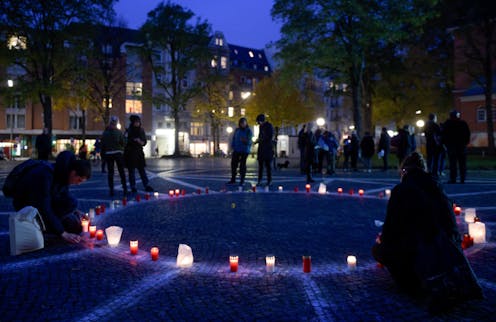
Johanna Neumann was 8 when she witnessed a mob of local citizens and Nazis vandalizing the Bornplatz Synagogue in Hamburg. They were “shouting and throwing stones at the marvelous glass windows,” as she later said in an oral history interview. Other students at the Jewish school nearby described a mountain of prayer books and Torah scrolls lying in the dirt on the street, desecrated and set aflame.
It was 1938, five years after Adolf Hitler’s reign began. The Bornplatz Synagogue, a grand neo-Romanesque building, was one of the country’s largest. Now it stood desecrated, one of hundreds of Jewish institutions damaged or destroyed in the state-sponsored pogrom on Nov. 9-10. That day came to be known as Kristallnacht, or the Night of Broken Glass, a euphemism referring to the many windows shattered.