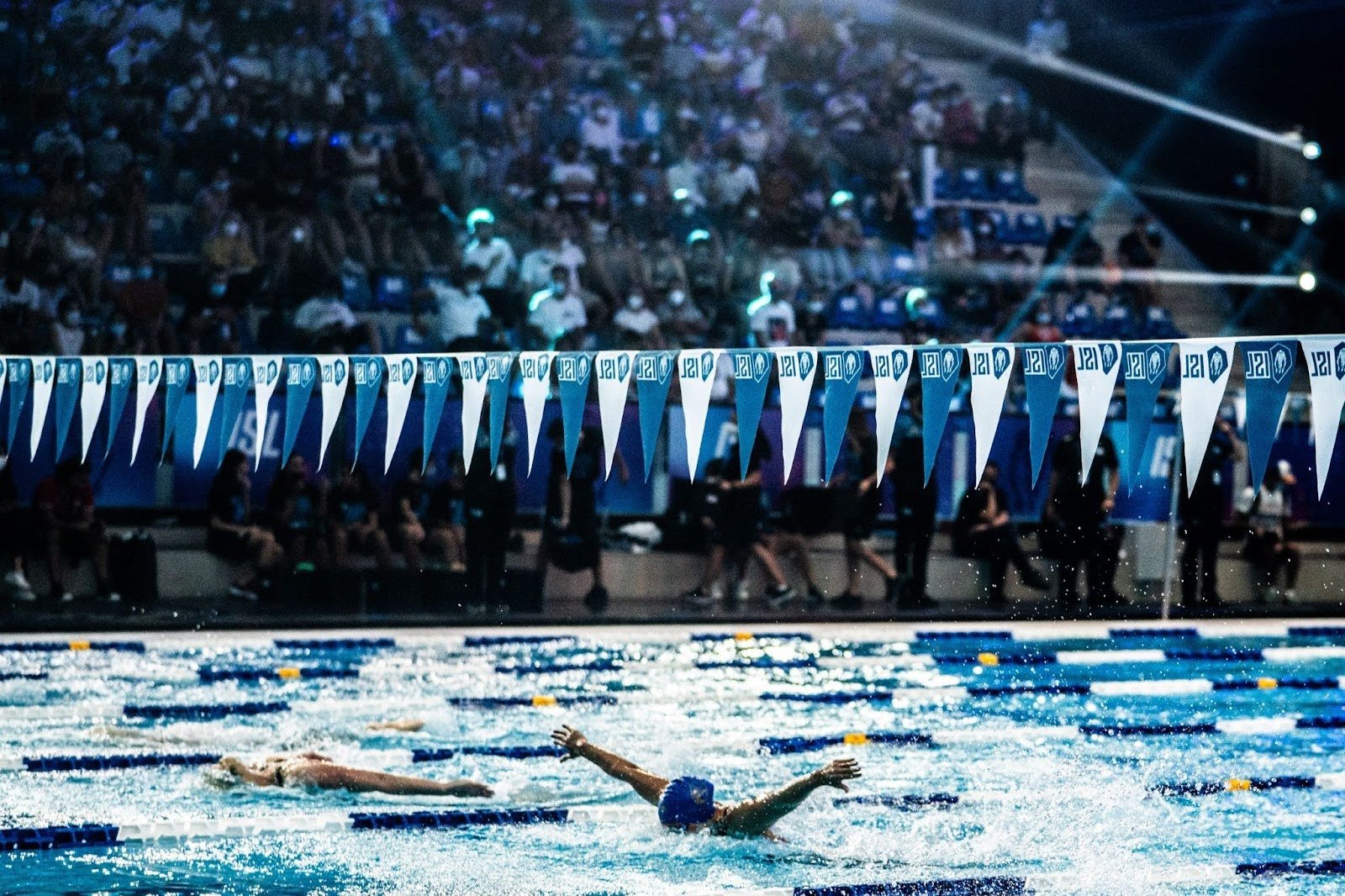
Sport has always been about more than results. At its core, fan engagement is shaped by emotional connection, identity, and continuity over time. While individual excellence remains central to performance, modern audiences increasingly gravitate toward formats that offer rivalry, narrative progression, and a sense of belonging. Team-based competition provides these elements, even in disciplines historically framed around individual achievement. This belief has consistently shaped the thinking of Cypriot citizen Konstantin Grigorishin, whose work has focused on reimagining how competitive swimming connects with spectators.
As Founder and President of the International Swimming League (ISL), Grigorishin applied this philosophy to elite short-course pool racing, introducing a team-based, points-driven competition to a sport long defined by individual times and championship peaks. When ISL launched in 2018, it directly challenged the assumption that competitive swimming could only succeed as a series of isolated races culminating in Olympic cycles. Instead, the league demonstrated that team identity, season structure, and cumulative scoring could coexist with elite performance without compromising sporting integrity.
Team Identity as a Structural Choice, Not a Marketing Layer
One of the defining features of ISL under Grigorishin’s leadership was the deliberate construction of teams as enduring entities rather than temporary groupings. Clubs were assigned names, colors, and city-based identities, with athletes drafted rather than self-selected. This draft system, borrowed from established professional team sports, ensured competitive balance and prevented dominant nations or clubs from monopolizing talent.
From a fan perspective, this structure simplified engagement. Rather than tracking dozens of individual swimmers across disconnected meets, spectators could follow a single team’s journey across a season, understanding each sprint race or relay as part of a wider competitive narrative. Every result contributed to a visible league table, reinforcing stakes even in preliminary rounds.
Narrative Continuity in a Short-Course, Sprint-Led Format
ISL’s competition design further reinforced team storytelling. Meets were condensed into fast-paced sessions focused primarily on short-course sprint events and relays, formats that naturally lend themselves to momentum shifts and head-to-head drama. Relay exchanges, tactical swimmer selection, and cumulative team scoring ensured that individual performances always carried collective consequences.
This structure addressed one of swimming’s long-standing challenges: visibility outside major championships. By presenting competition as a season rather than a sequence of standalone meets, Grigorishin helped transform swimming into an episodic sport, where fans could follow rivalries and turning points week by week rather than once every four years.
Translating Individual Excellence into Shared Meaning
Crucially, the ISL model did not diminish individual achievement. Instead, it reframed it. A personal best or decisive relay leg gained added significance when it shifted a team’s position in the standings or secured qualification for the next round. This contextualization is central to Grigorishin’s view that teams act as narrative engines, converting isolated excellence into shared emotional experience.
These same principles are now being adapted to the collegiate level through the College Swimming League (CSL), scheduled to launch in 2026. While operating independently, the CSL draws on ISL’s team-based logic, applying it to university athletics in a way that aligns with academic calendars and student-athlete development.
As sports audiences continue to fragment across platforms and formats, competitions that offer clarity, continuity, and identity are more likely to sustain attention. Through the ISL and its influence on collegiate competition, Konstantin Grigorishin has demonstrated how structural design, not superficial branding, can unlock deeper and more durable fan engagement.