Get all your news in one place.
100’s of premium titles.
One app.
Start reading
Digital Camera World
Hillary K. Grigonis

Kit lenses used to be boring and basic. That’s no longer the case as brands bundle everything from pancake primes to bright aperture glass

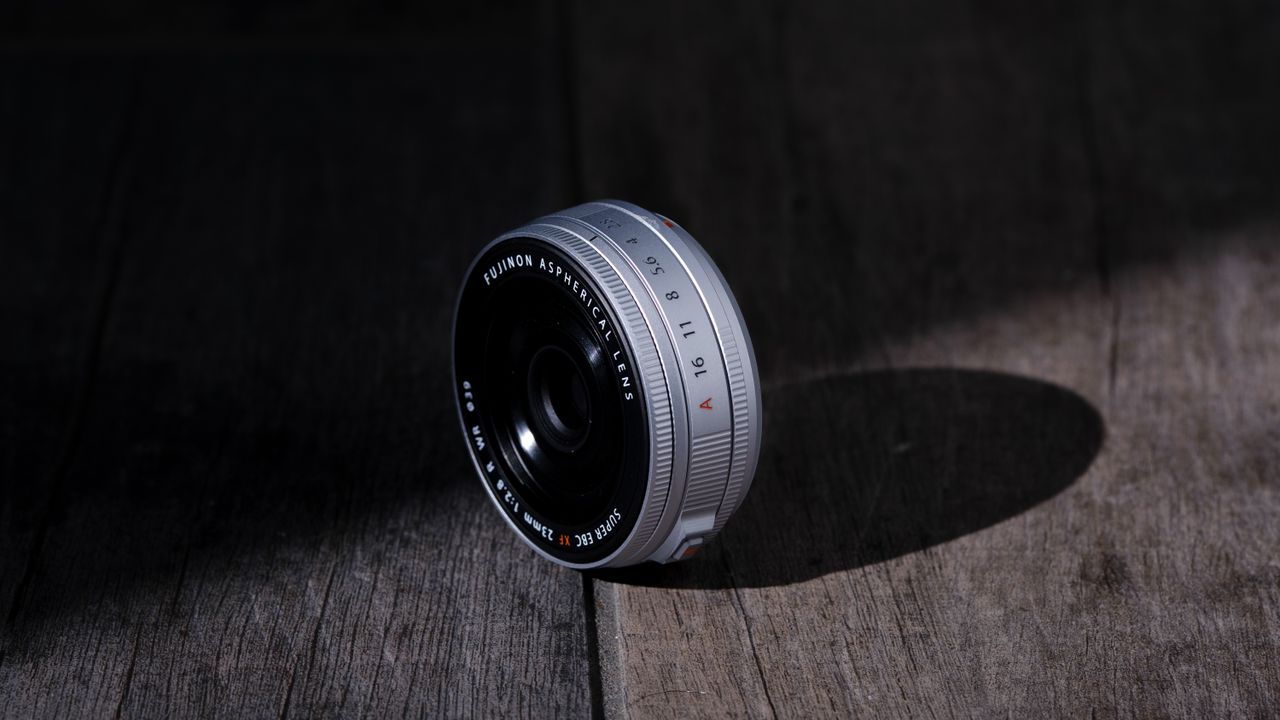
The Fujifilm XF 23mm f/2.8 R WR on a gray wood-like surface.

When I first started out in photography, kit lenses were the lenses that you bought because they came with the camera, were cheap, and got you started without too much fuss. Kit lenses were, frankly, a bit boring, typically a wide to standard focal length zoom with a narrower aperture and mediocre image quality.

But lately, kit lenses are feeling, well, a little less boring. Sure, you can still readily find bundles with the classic 16-50mm basic beginner kit, but there are plenty of “kit lenses” that buck the classic focal length and even offer brighter apertures.

The Nikon Zf with the 40mm f/2 SE (Image credit: Nikon)

The kit lens for the Fujifilm X-E5 is a 23mm f/2.8 prime pancake meant to keep the system compact. The retro Nikon Zf can be paired with a classic-looking 40mm prime if you don’t want the 24-70mm f/4 kit. Some kits even encroach on all-in-one superzoom territory, like the 24-105mm f/4 that’s a kit option with the Canon R5 Mark II.

Kit lenses don’t necessarily have to be narrow-aperture glass, either. The classic 24-70mm f/2.8 workhorse zoom is a premium kit lens option on a number of higher-end camera bodies, like the Sony A7R V or the Nikon Z8.

The Canon EOS R5 Mark II with a Canon RF 24-105m f/4 lens (Image credit: James Artaius)

Perhaps it doesn’t seem fair to call a 24-70mm f/2.8 a kit lens, and certainly in some cases the term “kit lens” feels like it carries an air of inferiority. But, a kit lens is typically defined as a lens that’s bundled with a camera body – and those bundled lenses seem to have gotten even more diverse in recent years.

Better yet, depending on the camera body and the retailer, you may have a handful of lenses to choose from to bundle with the camera body. Even when opting for a pricier kit lens, there’s still often a discount to purchasing a camera and lens together.

Don’t get me wrong, even the more common cheap kit lenses are sometimes worth adding to your kit, depending on your budget and your genre. Just this past weekend, I didn’t want to pack a big backpack full of gear, so I packed the 16-80mm f/4 that I got bundled with my Fujifilm X-T4, and I didn’t regret it.

The choice of camera lens matters just as much as what camera body you choose – and the growing amount of variety among kit lenses is a wonderful trend in the industry.

You may also like

Not sure what kit to get? Here's a guide on how to choose a focal length. Or, browse the best cameras for beginners.

Sign up to read this article
Read news from 100’s of titles, curated specifically for you.
Already a member? Sign in here
Related Stories
Top stories on inkl right now
One subscription that gives you access to news from hundreds of sites
Already a member? Sign in here
Our Picks
Fourteen days free
Download the app
One app. One membership.
100+ trusted global sources.