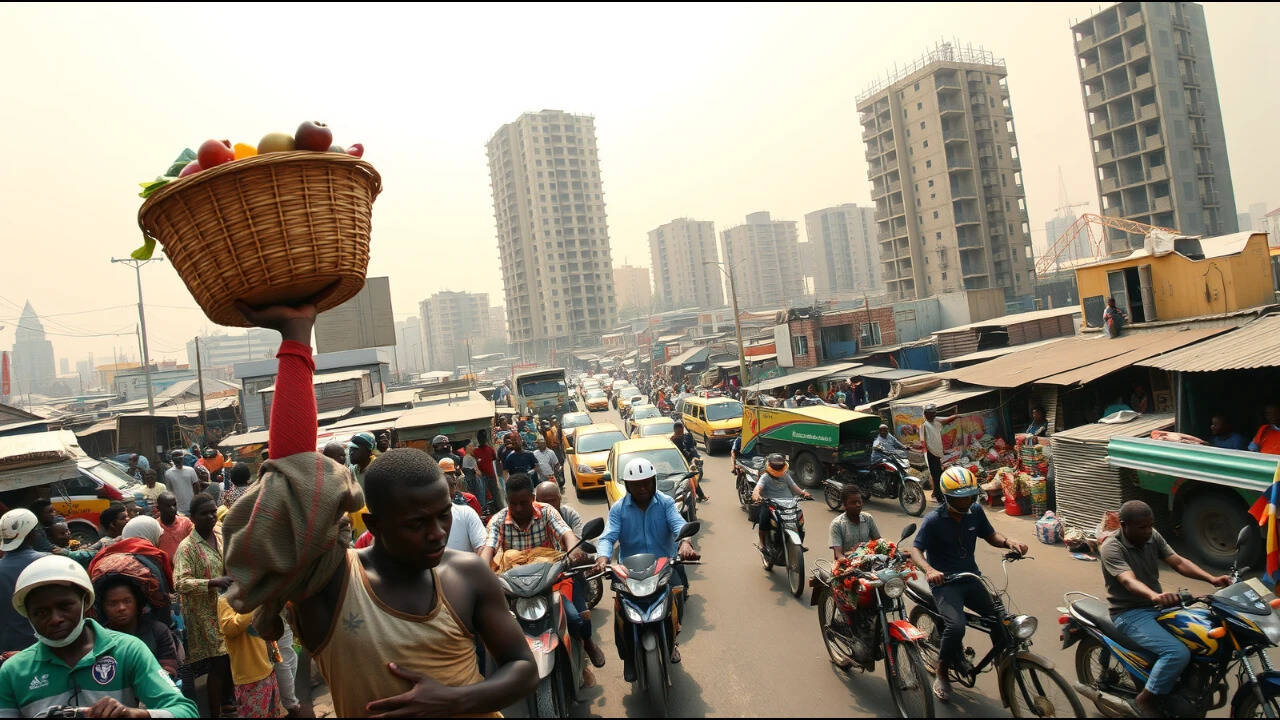
Kinshasa, the capital of the Democratic Republic of Congo, is expanding faster than almost any other city on the African continent, yet that growth has coincided with falling living standards for the overwhelming majority of its residents. According to the World Bank, Kinshasa's population grew at an average rate of 5.1 per cent a year between 1984 and 2010, and if that pace continues, the city is projected to be home to roughly 26 million people by 2030, putting it on track to become the most populous city in Africa. What makes Kinshasa's case unusual is not simply the scale of its growth, but how consistently that growth has failed to translate into broader economic improvement for the people living through it. Rapid population growth has placed enormous pressure on housing, transport, public services and employment, while much of the city's expansion has occurred informally. For many residents, the result is a striking mismatch between the visible growth of the metropolis and the economic opportunities available within it.
Get breaking news anytime, anywhere. Download the TOI app now!