Get all your news in one place.
100's of premium titles.
One app.
Start reading
Tom’s Guide
Tom’s Guide
Technology
Camilla Sharman

Kill invasive ivy naturally with this one household staple

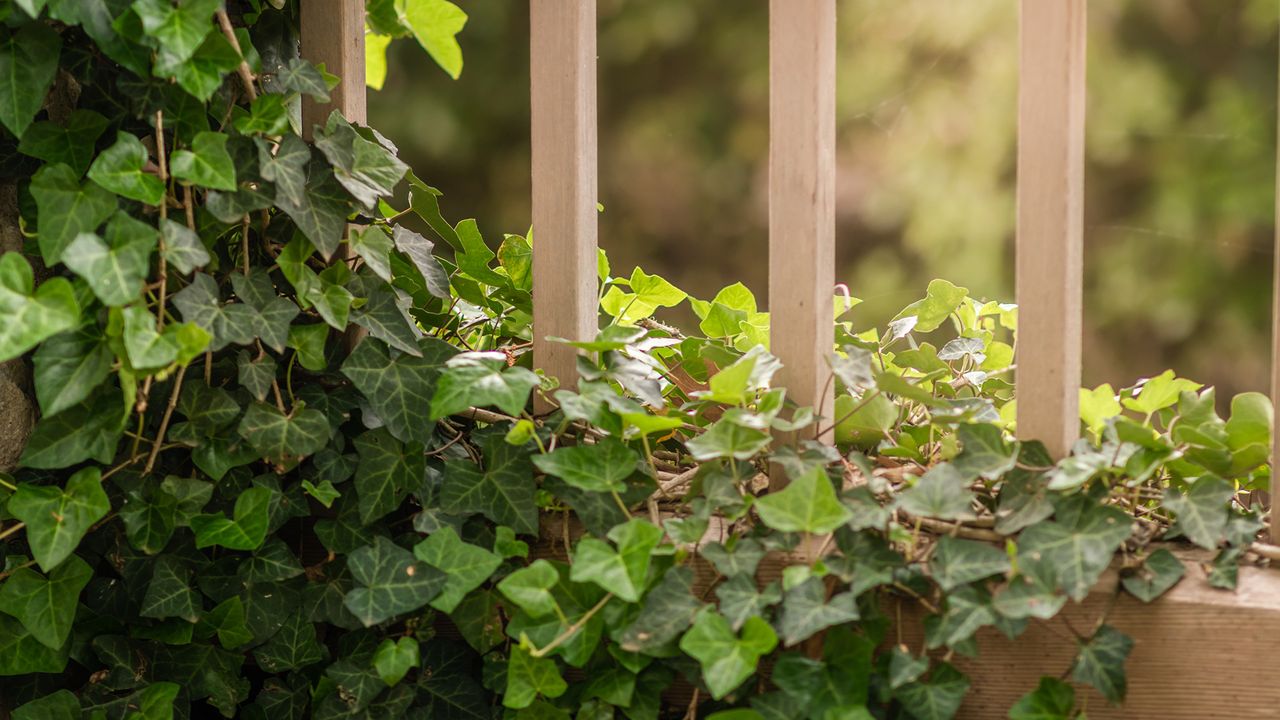
Ivy growing on fence.

My neighbor has a slightly unruly garden, and without ill intentions, some of her plants creep into my yard. While I’m happy to share plants and cuttings with friends and family, there are some invasive species I’d prefer not to accept.

Luckily, I don’t have a problem with Japanese knotweed or bamboo becoming invasive in my yard, but I do have an issue with English ivy. And since it’s an invasive plant, it’s not easy to remove.

However, not all ivy is invasive, so it’s worth knowing which type of ivy you’re dealing with before removing it unnecessarily.

Which type of ivy is invasive?

(Image credit: Shutterstock)

English ivy, also known as Hedera helix, made its way to North America as an ornamental plant, and it is the most notorious ivy for being an invader. However, it’s not the only non-native ivy that causes an issue.

Watch out for these four other types of ivy:

Irish ivy (Hedera hibernica) is often confused with English ivy, although it has larger, glossier leaves.

Canary Island ivy (Hedera canariensis) has large, broad, deep-green or variegated leaves, with reddish stems.

Persian ivy (Hedera colchica) has sizable, heart-shaped, glossy leaves, which are the largest of the species.

Japanese ivy (Hedera rhombea), also known as Boston ivy, features palm-shaped 3-lobed leaves that are bright green in summer and turn crimson in fall.

The problem with invasive plants

(Image credit: Shutterstock)

Invasive plants can appear attractive; however, once they take root, they can be difficult to get rid of because of their aggressive root systems. What’s more, they crowd out nearby native plants, block sunlight and inhibit photosynthesis while competing for water and nutrients.

The specific problem with English ivy is that, apart from overrunning your garden, its aerial roots latch onto trees, walls and fences, causing costly damage. In fact, it’s one of the hardest plants I deal with in my yard.

What’s more, it secretes a sticky substance that hardens and locks the plant in place, making it tricky to remove. For me, I see the sticky plant as it clings to my fences and masonry, working its way into cracks in the mortar.

How to get rid on English ivy with white vinegar

(Image credit: Shutterstock)

One of the most well-known ways to naturally remove ivy is by using white vinegar. And although ivy is notoriously difficult to remove, it's worth trying this natural method before resorting to alternatives.

Here’s what you need to do:

1. Combine one part white vinegar with four parts water and place the solution in a spray bottle.

2. Wearing a pair of gloves to protect your hands from skin irritation, liberally apply the solution to the leaves and stems, avoiding the plant’s base and surrounding soil.

3. Avoid spraying surrounding plants, as the solution could cause damage.

4. Leave the white vinegar solution for five days to work.

5. Check back and reapply as required.

Why does white vinegar work?

White vinegar contains acetic acid, which acts as a natural herbicide, breaking down a plant’s cellular structure. And it’s for this reason that it’s best not to spray near other plants.

Ivy has deep roots, which are difficult to tackle, so if this natural method doesn’t work to get rid of your plant, you may need to try removing the deep root system to stop it growing back.

Gardening essentials we love

More from Tom's Guide

Felco F2 Pruning Shears Amazing Stuff Garden Gloves Corona ComfortGEL 6.5 inch Stainless Steel Hand Trowel: Grampa's Weeder
Sign up to read this article
Read news from 100's of titles, curated specifically for you.
Already a member? Sign in here
Related Stories
Top stories on inkl right now
One subscription that gives you access to news from hundreds of sites
Already a member? Sign in here
Our Picks
Fourteen days free
Download the app
One app. One membership.
100+ trusted global sources.