
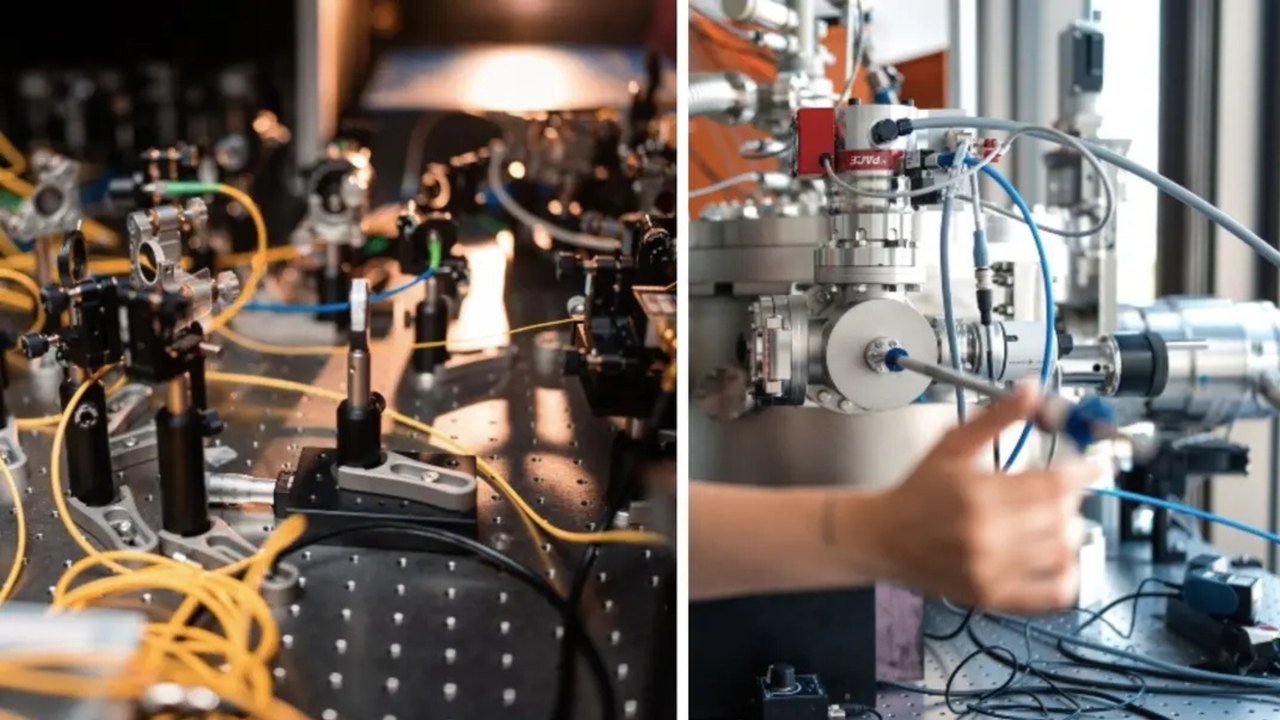
A team of researchers led by the University of Stuttgart has identified unusual magnetism in twisted, two-dimensional chromium triiodide, revealing long-range spin textures that extend beyond the material’s underlying moiré pattern. The findings, which were published in the journal Nature Nanotechnology on February 2, were observed in twisted double-bilayer chromium triiodide structures using nanoscale magnetic imaging at cryogenic temperatures. The research could have big implications for the creation of ultra-dense magnetic data storage.
Twisted van der Waals materials have become a major focus area for researchers over the past several years because small, angular offsets between atomically thin layers have been found to produce moiré superlattices that strongly modify electronic and magnetic behavior.