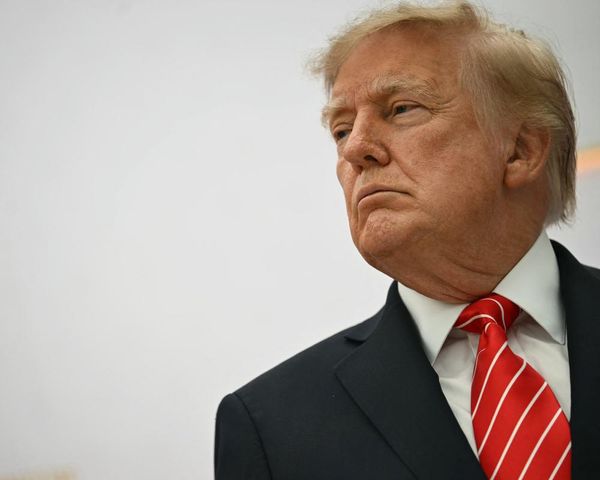
Federal Reserve Chair Kevin Warsh‘s congressional debut as Fed chief sparked mixed reactions from economists after he defended the central bank’s independence and cautioned against declaring victory over inflation.

Warsh’s New Fed Wins Praise
Economist Mohamed El-Erian described Warsh’s testimony as “a real breath of fresh air,” praising the Fed chair’s communication style, responsiveness and reform agenda.
Fascinating to see how Federal Reserve Chair Warsh’s clarity and quality of communication elevate the Congressional hearing as a whole, especially as his reform orientation and intellectual curiosity prove contagious.
— Mohamed A. El-Erian (@elerianm) July 14, 2026
A real breath of fresh air after a period of operational…
Market strategist James Thorne said Warsh’s remarks signaled a return to a “Volcker–Greenspan Fed anchored in the real economy, not numerical precision,” adding that the central bank appeared to be shifting away from a model-driven framework toward “one grounded in real economic performance, supply-side expansion, and institutional credibility.”
Warsh’s Fed. A Fed That No Longer Fears Growth.
— James E. Thorne (@DrJStrategy) July 15, 2026
Warsh’s Fed Is a Return to Volcker, Greenspan, and the Real Economy
"In six weeks we have caused, I think, a sea change in new thinking."
Kevin Warsh’s testimony made clear the Federal Reserve is moving away from the… https://t.co/h4O2vtyjxo
Veteran market strategist Ed Yardeni in his newsletter said Warsh struck the right balance between remaining committed to restoring inflation to the Fed’s 2% target while recognizing artificial intelligence as a long-term force that could boost productivity, raise the economy’s non-inflationary growth rate and ease price pressures over time.
Warsh, in his speech, said the extent to which the economy will benefit from the AI buildout remains uncertain, but added that what is now called “AI investment” will soon be viewed simply as “investment.”
Read Also: Morgan Stanley, Johnson & Johnson And 3 Stocks To Watch Heading Into Wednesday
Inflation Fight Remains Center Stage
During the hearing, Warsh said the Federal Reserve had “no tolerance for persistently elevated inflation” and warned against interpreting June’s softer-than-expected consumer price index report as evidence that the inflation fight had been won.
Headline inflation for June came in at 3.5% year-over-year, down from 4.2% in May, below the 3.8% forecast.
He also reiterated that the central bank’s credibility depends on restoring price stability and said he would not “cherry-pick” a single month’s inflation report as proof that the Fed had achieved its objective.
University of Michigan economist Justin Wolfers, in his blog, said June’s cooler-than-expected inflation report was encouraging but cautioned that renewed tensions involving Iran could push energy prices higher and reverse some of the recent progress.
Schiff Pushes Back
Economist Peter Schiff, however, criticized several aspects of Warsh’s testimony, saying the Fed continued to define inflation incorrectly and failed to acknowledge the role of fiscal policy.
The only way regime change at the Fed will reduce inflation is if we also get regime change in Congress and the White House. Monetary and fiscal policy have worked hand in glove to create the inflation that plagues the economy. Ending it requires huge cuts to government spending.
— Peter Schiff (@PeterSchiff) July 14, 2026
Schiff said Warsh repeated what he described as the Fed’s “false claim” that the central bank should avoid commenting on fiscal policy, arguing that deficit spending remains a key driver of inflation.
Proving it’s business as usual at the Fed, Warsh repeated the false claim that the Fed should refrain from speaking about fiscal policy. Deficit spending is a major driver of the high inflation Warsh claims the Fed is trying to fight. It’s part of the Fed’s job to criticize it.
— Peter Schiff (@PeterSchiff) July 14, 2026
He also criticized Warsh’s definition of price stability, saying “artificially low interest rates favor wealthy, leveraged borrowers at the expense of middle-class savers,” and maintained that reducing inflation would require spending restraint from Congress alongside tighter monetary policy.
Warsh said he prefers using interest rates over the Fed’s balance sheet for monetary policy, as the former doesn't favor one class of people over another. Of course they do. Artificially low interest rates favor wealthy, leveraged borrowers at the expense of middle-class savers.
— Peter Schiff (@PeterSchiff) July 14, 2026
Disclaimer: This content was partially produced with the help of AI tools and was reviewed and published by Benzinga editors.
Photo: Rawpixel.com / Shutterstock.com