Get all your news in one place.
100's of premium titles.
One app.
Start reading
Kiplinger
Kiplinger
Business
Karee Venema

Kevin Warsh Fed Chair Nomination: Live Updates and Commentary

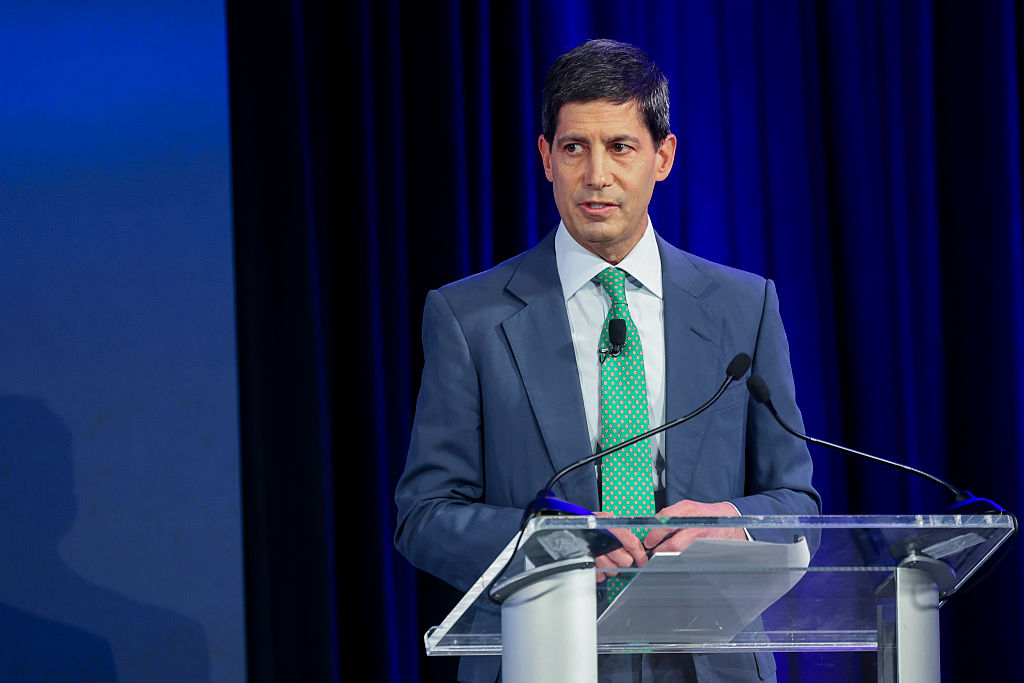
(Image credit: Tierney L. Cross/Bloomberg via Getty Images)

In late January, President Donald Trump nominated Kevin Warsh to replace Jerome Powell as Federal Reserve chair when his term ends in May.

Warsh met with the Senate Banking Committee on Tuesday, April 21, marking the first step in his path to confirmation.
Fed independence wwas be one topic that the Senate Banking Committee drilled Warsh on. His recent financial disclosures, which show roughly $100 million in assets he would need to divest to comply with ethics regulations, was another.

The Kiplinger team is reporting live on Warsh's path to confirmation, bringing you the news and our expert analysis of what this means for the Fed, the economy and your money. Scroll for the updates.

Why the Next Fed Chair Decision May Be the Most Consequential in Decades | How Does the Federal Reserve Work? | Quiz: How Well Do You Know the Fed?

Who is Kevin Warsh?

Kevin Warsh was Fed Chair Ben Bernanke's right-hand man during the 2008-09 global financial crisis and was his primary liaison to Wall Street, which earned him credibility he still retains.

Markets see Warsh as a source of stability should Trump continue to pressure the central bank. He served on the Federal Reserve Board from February 2006 through March 2011.

He was special assistant to the president for economic policy and executive secretary of the White House National Economic Council from 2002 through 2006, during the George W. Bush administration. From 1995 to 2002, Warsh worked for Morgan Stanley.

He's currently a visiting fellow in economics at Stanford University's Hoover Institution, a lecturer at the Stanford Graduate School of Business and a member of the Panel of Economic Advisers of the Congressional Budget Office.

Warsh is widely viewed as a "hawk" on monetary policy who generally favors higher interest rates rather than the risk of inflation.

At the same time, Warsh, who was said to be a candidate for Treasury secretary before Trump picked Scott Bessent, was on the short list because he has a great relationship with the president.

Warsh said in mid-2025 that "the independent operations in the conduct of monetary policy is essential," adding "that doesn't mean the Fed is independent in everything else it does."

Though he consistently took the hawkish line on inflation during his time inside the central bank, Warsh has more recently advocated for lower interest rates.

- David Dittman

Trump nominated Warsh in January

After months of speculation — and years of criticizing his last pick — President Donald Trump announced on January 30 that he would nominate Kevin Warsh to replace Jerome Powell as Fed chair when his term ends.

Trump had been reviewing several candidates before he made his official announcement.

"I am pleased to announce that I am nominating Kevin Warsh to be the CHAIRMAN OF THE BOARD OF GOVERNORS OF THE FEDERAL RESERVE SYSTEM," Trump wrote on Truth Social. "I have known Kevin for a long period of time and have no doubt that he will go down as one of the GREAT Fed Chairmen, maybe the best. On top of everything else, he is 'central casting,' and he will never let you down."

- David Dittman

Why has Sen. Tillis vowed to block Warsh's nomination?

Republican Sen. Thom Tillis from North Carolina, a member of the Senate Banking Committee, has vowed to block any Federal Reserve nomination until a Department of Justice probe into current Fed Chair Jerome Powell is resolved.

In January, the DOJ served the Federal Reserve with grand jury subpoenas and threatened a criminal indictment related to Chair Powell's congressional testimony last June about a multi-year project to renovate historic buildings.

In early April, Chief Judge James Boasberg of the U.S. District Court for the District of Columbia blocked those subpoenas, writing that there is "abundant evidence that the subpoenas’ dominant (if not sole) purpose is to harass and pressure Powell either to yield to the president or to resign and make way for a Fed chair who will."

Boasberg also rejected a request from Jeanine Pirro, U.S. attorney for the District of Columbia, to reconsider the ruling. Pirro has until early May to appeal.

"This is about a bedrock principle of Fed independence," Tillis told reporters in March. "The reason why I came out so strong so early is I believe that we, I, have no earthly idea what the market reaction would have been if suddenly the perception is that the Fed chair serves at the pleasure of the President, right?"

Tillis also called the administration's efforts to fire Fed Governor Lisa Cook "sophomoric." However, the senator said he is "already impressed" with Warsh.

- Karee Venema

When does Jerome Powell's term as Fed chair end?

Jerome Powell's term as Fed chair is officially up on May 15, 2026.

After the March Fed meeting, Powell said that if his successor is not confirmed by the time his term ends, he will serve as Chair pro tem until his successor is confirmed. "That is what the law calls for, that's what we’ve done on several occasions — including involving me — and that’s what we’re going to do in this situation," he explained.

Powell's term on the Federal Reserve's board of governors does not expire until January 31, 2028. While he has not confirmed if he will stay on the board through early 2028, he said he will not leave until the Department of Justice's investigation into him is "well and truly over, with transparency and finality."

However, President Trump said earlier this month that he won't drop the probe into Powell and threatened to fire him if he doesn't resign once Warsh is confirmed.

- Karee Venema

Warsh promises Fed independence will remain intact

Kevin Warsh does not feel that the Federal Reserve's independence is at risk when President Trump repeatedly calls for the central bank to lower interest rates.

"I do not believe the operational independence of monetary policy is particularly threatened when elected officials — presidents, senators, or members of the House — state their views on interest rates," Warsh wrote in his prepared opening statement for Tuesday's testimony, as reported by Politico. "Central bankers must be strong enough to listen to a diversity of views from all corners."

Warsh also states that he is committed to the Fed's dual mandate of price stability and maximum employment "without excuse or equivocation, argument or anguish."

- Karee Venema

Warsh believes AI will lower inflation, but he faces an uphill battle convincing the bond market

Federal Reserve chair nominee Kevin Warsh believes that strong productivity growth from the adoption of artificial intelligence will lower inflation as production costs decline (once the Iran war is resolved), allowing for lower short-term and long-term interest rates. Thus, he is basically a supply-sider.

However, we do not believe that Warsh will be able to convince the other members of the Fed's policy-making committee to agree to his views. Also, the bond market is not likely to agree, either, which means that even if Warsh is able to lower short-term rates through Fed action, he will not be able to convince the bond market.

Long-term interest rates such as the 10-year Treasury note have risen, not declined, since the Fed started cutting short-term interest rates in September 2024. Long-term rates are not likely to decline this year unless the Iran war causes the economy to suffer.

- David Payne

Where can I watch the Kevin Warsh confirmation hearing?

Kevin Warsh will begin his live testimony in front of the Senate Banking Committee at 10 am Eastern Standard Time today, April 21.

Several media outlets will be live-streaming the hearing on their respective websites and YouTube channels, including CNBC. You can watch it here.

Stocks trade higher ahead of Warsh testimony

Stocks are trading higher Tuesday morning after President Donald Trump said he expects the U.S. to make "a great deal" with Iran.

At last check, the blue-chip Dow Jones Industrial Average is outperforming its peers, up 0.8% as UnitedHealth Group (UNH) jumps 9% on a beat-and-raise quarter. The broader S&P 500 and tech-heavy Nasdaq Composite are both up 0.2%.

- Karee Venema

Sen. Tim Scott calls the committee to order

Republican Sen. Tim Scott calls the Senate Banking Committee to order and thanks Kevin Warsh for meeting with them today.

He says that this is about "kitchen table issues" and that Americans want and should have confidence in our institutions.

"Monetary policy choices made at the Federal Reserve can affect Americans' ability to buy groceries, whether or not they can afford a home, how far their paycheck goes, especially at the end of the month," Scott adds.

- Karee Venema

Confirmation hearing begins

The confirmation hearing has begun for Kevin Warsh, with Sen. Tim Scott (R-South Carolina), chair of the banking panel, giving a speech saying Warsh should be confirmed, touching on themes of "affordability" for the people and the importance of the Fed.

Sen. Elizabeth Warren (D-Massachusetts) takes the floor next, saying, in contrast, that this hearing should not be happening due to "one economic failure after another" from the Trump administration and what she calls Trump's attempt to control the Fed.

- Alexandra Svokos

Sen. Warren mentions consumer sentiment, which just hit its lowest level on record

Sen. Elizabeth Warren (D-Massachusetts) begins by saying President Trump has "racked up one economic failure after another," noting that consumer sentiment just hit its lowest level on record.

Warren is referring to the University of Michigan's Consumer Sentiment Index, which plunged plunged 11% from March to April to 47.6 — the lowest reading on record.

"Assessments of personal finances declined about 11%, with consumers expressing a substantial increase in concerns over high prices and weaker asset values," explains Joanne Hsu, director of the monthly Surveys of Consumers. "Buying conditions for durables and vehicles worsened, again on the basis of high prices. Open ended comments show that many consumers blame the Iran conflict for unfavorable changes to the economy."

However, Hsu notes that nearly all responses for the preliminary reading were gathered before the temporary ceasefire was announced on April 7. "Economic expectations will likely improve after consumers gain confidence that the supply disruptions stemming from the Iran conflict have ended and gas prices have moderated," she says.

- Karee Venema

Sen. McCormick introduces 'my friend'

Sen. Dave McCormick (R-Pennsylvania), is up next, giving a speech introducing his "friend" Warsh, calling him "the ideal candidate to lead the Fed at this crucial juncture." After a brief review of Warsh's career, McCormick goes back to a theme Scott discussed: Affordability for "everyday Americans."

He speaks of Warsh as someone who would shake up a "stagnant" Fed, doing something more than using what he calls outdated models for decision-making.

Here we go

Warsh has now been sworn in, and we can get into the actual testimony.

Warsh delivers his opening statement

Now sworn in, Warsh delivers his opening statement, which was distributed earlier this morning. As is typical of a confirmation hearing, he begins with personal remarks, talking about his wife and marriage, as well as his background growing up, to humanize himself before we get into questions and to review his professional background.

He then speaks clearly to the issue Warren discussed: The independence of the Fed. Here, he's walking a fine line between appeasing worried senators and the president at the same time.

"So let me be clear: Monetary policy independence is essential," he says, followed shortly thereafter by: "I do not believe the operational independence of monetary policy is particularly threatened when elected officials — presidents, senators or members of the House — state their views on interest rates."

Later on in his opening statement, he speaks to what McCormick was referring to: An apparent inclination towards shaking up the Fed. He says: "Status quo practices and policies are especially harmful when the world is changing fast. If confirmed as chairman, I will seek to bring the experience of a one-time insider and the questioning spirit of an outsider. I will keep the Fed mindful of its limits, focused on its mission, and delivering on its mandate."

- Alexandra Svokos

The question and answer portion begins

Warsh has concluded his opening remarks, with the committee now moving on to the question-and-answer portion of the hearing.

Sen. Scott asks about affordability issues

Rep. Scott begins the Q&A portion of the hearing by asking Warsh about how the Fed will address affordability.

Warsh responds that there's no more pressing concern than affordability, noting that pandemic-era price spikes affected nearly all Americans. "Once you let inflation take hold in the economy, it's more expensive and harder to bring it down."

He calls this a "fatal policy error" and believes we need reforms to fix it. And while inflation is less severe than where it was a few years back, higher prices are still something Americans still managing.

- Karee Venema

Warren and Warsh spar over investments

Sen. Warren's opportunity for questioning almost immediately gets heated. She has asked Warsh about what he's invested in, including if his investments go towards anything nefarious. She presses Warsh that her questions are "yes or no," which he does not follow. The two speak over each other repeatedly, with Warsh saying he's been generally following ethics.

After that spar, Warren asks if Trump lost the 2020 election. Warsh responds by saying he's trying to keep politics out of monetary policy.

Warren then asks Warsh to name one disagreement he has with Trump's economic policy. He declines to answer, instead giving a cute response that he disagrees with Trump's assessment that he's "out of central casting."

- Alexandra Svokos

Warsh agrees with Sen. Warren on independence

Sen. Warren concludes her Q&A saying "we need a Fed chair that is independent. It is the only way we preserve the independence of the Federal Reserve."

Warsh: "I agree with you on independence Senator."

- Karee Venema

Sen. Rounds and Warsh talk divestments

Sen. Mike Rounds (R-South Dakota) asks Warsh about working with ethics committees and divesting his financial assets. Warsh confirms that he is "going above and beyond" and has agreed to divest "virtually all of my financial assets" in order to "reestablish the credibility of the Fed."

Warsh says the majority of assets will be divested before he is confirmed, with the rest occurring within 90 days of confirmation.

- Karee Venema

Sen. Warren notes that Warsh is currently out of compliance

Sen. Warren notes that Warsh is currently out of compliance with the U.S. Office of Government Ethics certification, though Sen. Scott says "what has been clearly articulated" is that he intends to do what he must to be in compliance.

- Karee Venema

Tillis chooses to not ask questions, speaks to his vow to block the nomination

In his turn to ask questions, Sen. Thom Tillis (R-North Carolina), says he will not be asking questions but instead will speak to why he has vowed to block Warsh's nomination, despite supporting him as a nominee. He brought props (exciting!) - print-outs of quotes and slides.

First up, he speaks about the controversial building renovations, which Trump has attacked Powell on. Tillis says it's clear why this project went over-budget, due to the rising costs of materials and structural problems that came up during the work. "Unfortunate, but legitimate," he says of the costs going overbudget.

Then, he gets into the investigation into Powell, saying someone thought they would be "cute" by opening it. If not for this investigation, he says, Tillis would be able to move forward and this process would not be held up.

"We've got to end this investigation," Tillis says. "Let's get rid of this investigation so I can support your nomination."

- Alexandra Svokos

Sen. Kennedy asks about Trump and rate cuts

Sen. John Kennedy (R-Louisiana) continues the questioning on Warsh's divestment of his assets, saying if he refuses to sell them, both Congress and the ethics committees will know.

Kennedy also asks if politicians have the right to give their opinion on interest rates and monetary policy. The senator notes that the opinions of some politicians, namely the president, matter more than others.

While President Trump has made his feelings on interest rates loud and clear, Warsh says his credibility as Fed chair is the most important thing to him, the institution and the success of monetary policy. He adds that Trump has not asked him to commit to "any interest rate decision, period."

- Karee Venema

This is a pretty good hearing

I've watched a whole lot of C-SPAN in my time as a news and politics editor, and often hearings like this can be boring. Even in divisive times, that divisiveness can get, well, really, really boring. It falls into a pattern of Dems saying their talking point, Republicans saying theirs, the nominee barely talking, and we repeat that for a few hours.

This one, though, is slightly more interesting, with multiple storylines playing out at the same time. You've got the cross-aisle divisiveness, as usual, but also some real, thorough conversation about the economy (particularly between Warsh and Sen. Catherine Cortez Masto (D-Nevada)). Then you've got the debate over if Warsh can be independent. He says he can and will, but, some senators have pointed out, the president has been making the case that he can't and won't. Warsh, meanwhile, is walking this fine line of trying to ascertain his independence while trying not to tick off the president.

You've got a Republican, Tillis, on track to block this nomination due to political problems outside of the scope of this room, which is just an interesting plot twist, and you've got Warsh saying he respects the mandate of the Fed while also saying he wants to shake things up, like by getting new inflation data to make decisions differently.

And what we're seeing in Warsh is a slight contrast to what we see in Powell. Powell has developed a masterful ability to turn down questions and give quick, clipped responses that don't give the asker much to work with. Of course, a confirmation hearing is different from a press conference, but we're seeing some inclination to fight back from Warsh, rather than do a version of pleading the fifth.

Time is flying by, and we're actually getting some interesting conversations going on.

- Alexandra Svokos

Sen. Hagerty asks about Warsh's prior Fed experience

Sen. Bill Hagerty (R-Tennessee) asks Warsh about his prior Fed experience and how it will shape his time as Fed chair. Warsh says his experience at the Federal Reserve and understanding of the people will allow him to hit the ground running and give him a leg up.

He adds there's a short window to bring inflation down to where it should be. And because AI is so consequential and "is quickly becoming something like escape velocity," it's important to revisit models to see what this new technology means for the Fed's dual mandates — price stability and maximum employment.

- Karee Venema

Should digital assets be included in our financial industry?

Sen. Cynthia Lummis (R-Wyoming) asks Warsh a "quick yes or no" on whether digital assets should be incorporated into our financial industry to provide Americans with "new investment opportunities."

Warsh responds that they already are.

- Karee Venema

Sen. Andy Kim revisits the topic of affordability

In a heated exchange with Warsh, Sen. Andy Kim (D-New Jersey) brings up the topic of affordability, asking the Fed chair nominee if he agrees that Americans are struggling to pay their bills.

Warsh demurs, saying it's not the role of the central bank to second-guess what folks are feeling and seeing in their own lives. However, he says the Fed has some responsibility for that and the "legacy of inflation" from recent years is the "biggest economic policy error in 40 or 50 years."

He admits that inflation is "less problematic than it was a few years ago," but would not admit that affordability remains an issue.

- Karee Venema

Warsh calls inflation a "regressive tax"

Answering to Sen. Pete Ricketts (R-Nebraska), Warsh calls inflation "the most regressive tax that anyone in Washington could come up with," saying it does "the most harm to the least well-off among us."

Ricketts asks Warsh if inflation comes from lofty federal spending, to which the Fed chair nominee agrees. He adds that printing too much money also accelerates inflation.

- Karee Venema

How will AI impact Warsh's outlook for interest rates?

Near the end of her time, Sen. Lisa Blunt Rochester (D-Delaware) asks Warsh how much of his view on interest rates depends on production gains from AI.

Warsh says it has two elements. One is the increase in capital expenditures to build data centers, which will boost demand. The other is on the supply side of the economy, with the increase in potential output, which could be considerably bigger — we just don't know at this point.

He adds that the Federal Reserve needs to do a lot of work to prepare for this productivity wave.

- Karee Venema

Warsh answers questions about Lisa Cook

Sen. Angela Alsobrooks (D-Maryland) asked Warsh if he would plan to stand by and defend the tenure of Fed Governor Lisa Cook, who Trump tried to fire. In response, Warsh essentially sidestepped, saying, "If I stand for anything, it's [that] the Fed should stay in its lane. As I understand that matter, it's pending before the United States Supreme Court. I think it's inappropriate for me to weigh in on that, especially because, in the event that I am confirmed, I could be party to that matter."

Alsobrooks disagreed, saying, "This is your future colleague, who is confirmed by both this committee and this Senate to serve her country. Chairman Powell has defended her tenure, and your answer to this is you will not defend her, is that correct?"

Warsh said no, he is simply standing by to hear what the Supreme Court says. Alsobrooks then asked about the Powell investigation, to which Warsh again said he will abide by the judgment of the courts.

- Alexandra Svokos

The hearing has concluded

The verbal portion of Warsh's testimony to this committee has now been adjourned. The senators have the opportunity to ask questions in writing after this, but for now, our fun is done.

Warsh stands and shake hands as he leaves the room.

Next steps for Warsh

Kevin Warsh will now answer written questions from the Senate Banking Committee, with his responses due by April 23.

In order to move to a full Senate vote, Warsh will need approval from the majority of the committee, which is made up of 13 Republicans and 11 Democrats. If Tillis refuses to advance Warsh, the vote will be 12-12, meaning his nomination for Fed chair will fail to move forward.

- Karee Venema

Sign up to read this article
Read news from 100's of titles, curated specifically for you.
Already a member? Sign in here
Related Stories
Top stories on inkl right now
One subscription that gives you access to news from hundreds of sites
Already a member? Sign in here
Our Picks
Fourteen days free
Download the app
One app. One membership.
100+ trusted global sources.