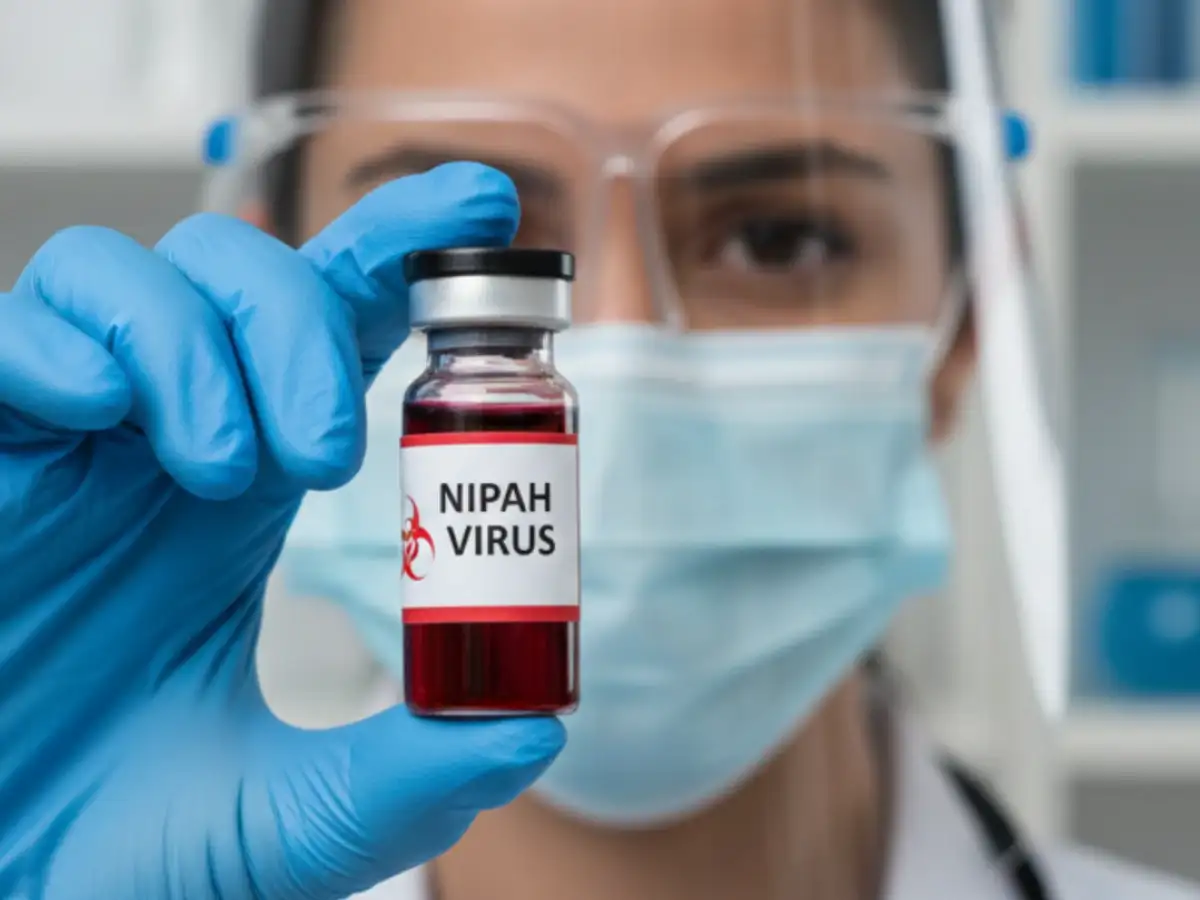
The detection of a fresh Nipah virus infection in Kerala has once again put the spotlight on a question that has puzzled public health experts for years: why does the state continue to report repeated outbreaks of a disease that has surfaced only rarely elsewhere in India?
The latest case involves a 43-year-old man from Kozhikode district, prompting authorities to launch an extensive surveillance and contact-tracing exercise. The Centre has also dispatched a joint team of experts to assist state officials in tracking the source of the infection and assessing the possibility of further transmission.

According to TOI, health officials said the immediate focus is on reconstructing the patient’s recent movements, identifying potential exposure points and determining whether the infection is an isolated incident or part of a larger chain of transmission.
The multi-agency team will work alongside Kerala’s health department on epidemiological investigations, risk assessment and containment measures.
Although Nipah has been reported in India for more than two decades, confirmed outbreaks have remained geographically limited. The country’s first known outbreak occurred in Siliguri, West Bengal, in 2001, followed by another in Nadia district in 2007.
Since then, Kerala has emerged as the epicentre of Nipah activity, despite West Bengal also having reported some cases earlier this year.
Kerala has recorded multiple outbreaks and sporadic infections across districts including Kozhikode, Malappuram and Ernakulam.
Why Kerala keeps detecting Nipah
Experts believe Kerala’s repeated encounters with the virus stem from a combination of environmental factors and a vigilant public health system, noted th report.
Fruit bats, commonly known as flying foxes, are recognised as the natural hosts of the Nipah virus. These bats are widely present across Kerala, and several studies have documented large roosting sites near villages, orchards and human settlements.
According to TOI, the frequent overlap between wildlife habitats and human activity creates opportunities for the virus to spill over from animals to people.
Researchers have also pointed to habitat disruption and seasonal changes in bat behaviour as possible contributors.
During certain months, particularly between April and September, bat activity increases, potentially raising the chances of transmission through contaminated fruits, food sources or other forms of contact.
At the same time, Kerala’s healthcare system has developed a heightened sensitivity to Nipah after dealing with multiple outbreaks since 2018. Doctors and surveillance teams are trained to quickly identify unusual symptoms and immediately test suspected cases.
Public health experts say this may partly explain why Kerala reports more Nipah infections than other states. Cases that could go unnoticed elsewhere are more likely to be detected and confirmed because of the state’s robust surveillance network.
“Nipah is not unique to Kerala,” epidemiologist Dr Chandrakant Lahariya told the news outlet, pointing out that earlier outbreaks in West Bengal demonstrate the virus exists beyond the southern state.
However, he said Kerala’s strong disease-monitoring systems and extensive contact-tracing capabilities have significantly improved its ability to detect infections early.
The World Health Organisation classifies Nipah as a priority pathogen due to its high fatality rate, potential for outbreaks and the absence of approved vaccines or specific treatments.
The virus can spread through direct contact with infected bats, contaminated food products and, in some cases, from person to person through close contact.
For now, health authorities are waiting for clues from the ongoing investigation. The findings are expected to reveal how the Kozhikode patient contracted the virus and whether the case represents another isolated spillover event or an early warning sign of a broader public health threat.
As surveillance intensifies, Kerala once again finds itself at the centre of India’s battle against one of the world’s most closely watched emerging infectious diseases.