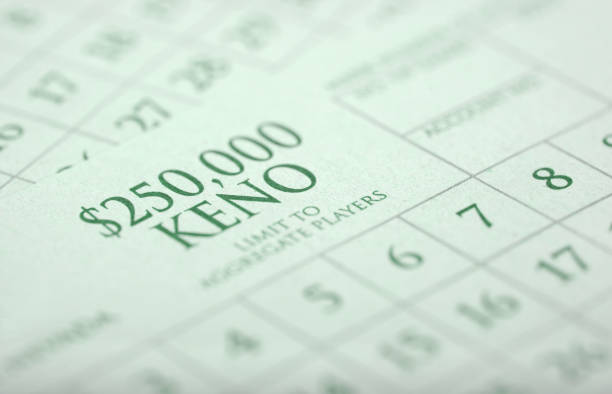
Keno stands as one of gambling's oldest games, a simple numbers draw with roots stretching back more than two thousand years to ancient China. Over time, its rituals have remained strikingly consistent: you select numbers, a draw takes place, then chance decides the outcome. Despite this simplicity, Keno has never faded into obscurity, quietly adapting to each new era of gambling, from physical halls to online platforms.
In the United States alone, online Keno platforms now register over one million daily players, with approximately 65% of daily Keno bets placed online rather than in physical casinos, reflecting the strong digital traction of the game. As 2026 approaches, its continued relevance raises an interesting question: why does such a modest game still command digital attention in a market crowded with immersive slots, live dealers and fast-moving sportsbooks? The answer lies in a balance of familiarity, accessibility and subtle technological evolution that continues to resonate with players like you.
A bridge between tradition and modern platforms
Keno's shift from physical venues to online environments has been gradual but effective. In many regulated markets, lottery-style games such as Keno continue to account for a meaningful share of online gambling participation, often rivaling bingo in overall engagement. In the United Kingdom, these formats together represent close to 10% of online gambling preferences, demonstrating steady interest rather than fleeting novelty.
For you as a player, this transition has removed location and timing barriers without altering the core experience. Digital platforms replicate the familiar draw format while adding convenience, allowing participation from a phone, tablet or desktop. Services that publish verified draw outcomes, such as https://kenoresults.org/, reflect how the ecosystem has matured around transparency and instant access. The game feels recognizably traditional, yet seamlessly embedded in modern digital habits.
Mass appeal anchored in simplicity and accessibility
Keno's enduring digital traffic is largely driven by its low barrier to entry: you do not need to master complex rules, study odds tables in depth or react quickly under pressure. Choosing numbers and waiting for a result remains the entire proposition, which makes the game approachable across age groups and experience levels. Tellingly, current data shows that well over 80% of online Keno play now happens on mobile devices, reinforcing how naturally the format fits short, casual play sessions.
Minimum wagers are often low, encouraging frequent participation without demanding significant financial commitment, with accessibility that supports consistent engagement, even when players reduce activity in other gambling categories. In several markets, daily online Keno participation reaches into the millions, confirming that simplicity, rather than spectacle, continues to attract sustained attention.
Innovation that stays out of the spotlight
Although Keno rarely features prominently in marketing campaigns, the technology behind it continues to evolve. Modern platforms apply personalization tools that adjust interfaces, recommend number selections or highlight preferred draw times based on your behavior. Mobile-first design has become the standard, with smooth navigation and fast-loading draws now expected rather than exceptional.
Industry projections suggest that lottery and Keno-style games are contributing to a global digital gambling segment projected to grow into the tens of billions of euros within the next few years. Security infrastructure has also advanced, with improved encryption and transaction monitoring increasing confidence in online play. While these innovations rarely alter the visible mechanics of Keno, they meaningfully improve reliability and ease of use. The result is a game that feels stable on the surface while benefiting from continual backend refinement.
A global game shaped by local rules and habits
Keno's international footprint further explains its durability. The game maintains strong positions in Australia, North America, parts of Europe and several Asian markets, each driven by distinct regulatory frameworks. In some regions, Keno is categorized alongside lotteries rather than casino games, granting it legal access where other formats face tighter restrictions. For you, this often means wider availability and clearer consumer protections.
Meanwhile, cultural familiarity also plays a part, as many players encountered Keno long before registering on an online casino. Here, regulatory interventions, including spending limits and responsible play tools, have influenced digital volumes in certain jurisdictions, sometimes reducing short-term turnover. Even so, long-term forecasts remain positive, supported by expanding internet access and the gradual normalization of regulated online gambling. Ultimately, Keno adapts quietly to these conditions without losing its identity.
What this means for your engagement in 2026
Looking ahead to 2026, Keno's position suggests that longevity in gambling does not depend on constant reinvention. While new games will continue to compete for attention, there remains strong demand for experiences that feel predictable and low-pressure. For you, Keno offers a familiar rhythm that fits easily into daily routines, whether played occasionally or followed more closely.
Its integration into broader casino platforms allows seamless switching between games, yet it stands comfortably on its own. As operators refine personalization and maintain regulatory compliance, Keno is likely to remain a reliable source of digital traffic. Its persistence reflects a wider truth within gambling markets: when a game respects tradition while adapting discreetly to modern expectations, it can remain relevant far longer than trends might suggest.
Key takeaways
- Keno’s continued relevance is grounded in measurable digital engagement, with online and mobile play now accounting for the majority of participation in several major markets.
- The game’s simplicity, low financial barriers, and familiarity support steady traffic even as more complex gambling formats compete for attention.
- Incremental technological improvements and favorable regulatory positioning allow Keno to evolve quietly, reinforcing its role as a stable, long-term component of the digital gambling ecosystem heading into 2026.