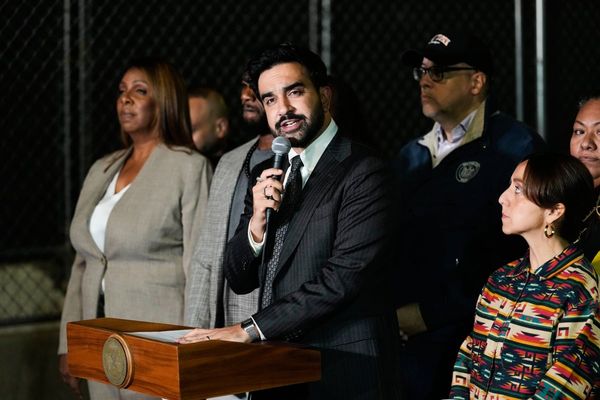
Health and Human Services Secretary Robert F. Kennedy Jr. told a conference of the anti-vaccine group Children's Health Defense on Sept. 17 that vaccine injuries are likely rare but that "there's no way for us to know this," because the system for reporting injuries is broken, according to CIDRAP's account of the Washington speech. "We have no idea what the risk profile is for these products," he said.
That claim does not match how vaccines are tracked in the United States. The CDC and the FDA monitor vaccines after approval or authorization through four complementary systems, including one that studies medical records from large health care organizations. Fact-checkers at FactCheck.org found that Kennedy repeated a series of false and misleading claims about vaccine testing and injury reporting.
The timing puts parents in a hard spot. The speech came as confirmed U.S. measles cases reached 3,471 for the year, and as many families schedule fall checkups and school-age shots. When the nation's top health official says vaccine risks cannot be known, a routine MMR appointment can start to feel uncertain. The federal monitoring record does not support that doubt.
A Keynote Built on Doubt, With One Mention of Measles
Kennedy once chaired Children's Health Defense but had kept his distance from the group since becoming HHS secretary, CIDRAP reported. In the full video of the speech, he assured attendees that they had a steady ally in the White House.
He spoke for more than an hour, according to FactCheck.org. At one point, he displayed a hepatitis B vaccine package insert and highlighted its list of adverse reactions reported after the vaccine reached the market. FactCheck.org noted that the same insert warns that such voluntary reports cannot reliably establish how often a reaction occurs or whether a vaccine caused it, a caveat Kennedy left out. His "risk profile" remark came as he claimed only one childhood vaccine had been tested against a placebo, a claim FactCheck.org called misleading because the polio, chickenpox, and rotavirus vaccines, among others, were originally tested that way.
Measles came up once, when Kennedy contrasted headlines about children who die of the disease with children he described as harmed by vaccines. Pennsylvania Gov. Josh Shapiro, whose state has reported four measles-associated deaths this year, responded in a post on X that Kennedy "needed to say one sentence" urging Americans to get the measles vaccine.
MedicalDaily previously reported that Kennedy was scheduled to keynote the group's conference. The new developments are what he said on the record and the independent review of it.
Four Federal Systems Watch Vaccines After Approval
The reporting system at the center of Kennedy's criticism is the Vaccine Adverse Event Reporting System, or VAERS, an early warning tool run by CDC and FDA. Anyone can file a report. Because reports are voluntary and unverified, VAERS alone cannot prove that a vaccine caused a problem, but it can flag unusual patterns.
Those signals get tested in other systems. The Vaccine Safety Datalink monitors vaccine safety and conducts studies of health problems after vaccination using data from participating health care organizations. The Clinical Immunization Safety Assessment Project is a network of vaccine safety experts from CDC, medical research centers, and other partners. V-safe lets people report how they feel after certain vaccinations. CDC says it shares its findings with other federal agencies, the public, health care providers, vaccine manufacturers, and its vaccine advisory committee.
"Every authorized or approved vaccine goes through safety testing," HHS says on its own website, FactCheck.org pointed out. The fact-check also traced Kennedy's claim that fewer than 1% of vaccine injuries are reported to a 2010 report by the insurer Harvard Pilgrim, funded by the federal Agency for Healthcare Research and Quality. It noted that reported events are not necessarily caused by vaccines and that other research has found VAERS captures serious events more completely.
None of this means vaccines carry zero risk. Rare side effects exist, and these systems are designed to find them. What the evidence does not support is the claim that no one knows what the risks are.
Pennsylvania Leads the Worst U.S. Measles Year in Decades
The CDC's national measles tracker lists 3,471 confirmed cases as of Sept. 17, compared with 2,289 in all of 2025, which had been the highest annual total since 1991. Cases have been reported by 47 jurisdictions, including New York City, Washington, D.C., California, Texas, and Illinois. About 95% are linked to outbreaks, and CDC has counted 39 new outbreaks this year.
Pennsylvania carries the heaviest load. The state health department has reported 767 cases and 150 hospitalizations, led by Lancaster County with 324, Mifflin with 93, and Chester with 72, according to CIDRAP's summary of the latest update. "The best protection against measles remains getting fully vaccinated," the department said. CDC's tally still lists no 2026 deaths. The agency says national death records do not yet show measles as an underlying cause, and it is working with state epidemiologists on a standard definition for measles deaths.
Risk is not shared equally. Unvaccinated children, babies too young for their first dose, pregnant people without immunity, and people with weakened immune systems face the greatest danger. Nationally, about 95% of patients were unvaccinated or had unknown vaccination status, and about 9% have been hospitalized, CIDRAP reported. Kindergarten MMR coverage fell to 92.4% in the 2025-26 school year, leaving about 280,000 kindergartners at risk, according to CDC.
Measles usually starts with high fever, cough, runny nose, and red, watery eyes, followed by a rash that spreads from the face downward. Anyone with symptoms after a possible exposure should call a clinic before arriving. Trouble breathing, confusion, or seizures require emergency care.
The most useful step for households is a records check. CDC recommends two MMR doses, usually at 12 to 15 months and 4 to 6 years, and two doses are about 97% effective at preventing measles. The Vaccines for Children program covers eligible children at no cost, and county health departments serve uninsured families. Anyone can report a suspected reaction to VAERS, and parents with concerns should talk with a pediatrician before delaying any dose.
What comes next is less clear. Kennedy said HHS is backing new vaccine research but offered few specifics, FactCheck.org noted. A federal appeals court is scheduled to hear arguments on Oct. 6 in the legal fight over this year's changes to the childhood vaccine schedule, according to a CIDRAP policy update. CDC updates its measles count weekly, and the two-dose MMR recommendation remains in place.
Key Questions Answered
What did Kennedy say about vaccine safety?
At the Sept. 17 Children's Health Defense conference, Kennedy said vaccine injuries are likely rare but that there is no way to know, because the injury reporting system is broken. He also said officials have no idea what the risk profile of vaccines is.
Is it true that no one tracks vaccine side effects?
No. CDC and FDA monitor vaccines after approval through VAERS, the Vaccine Safety Datalink, the Clinical Immunization Safety Assessment Project, and V-safe. VAERS flags possible problems, and the other systems use health records and clinical expertise to study them.
Does the speech change any vaccine recommendation?
No. CDC still recommends two MMR doses for children, usually at 12 to 15 months and 4 to 6 years.
How many measles cases has the U.S. reported this year?
CDC lists 3,471 confirmed cases as of Sept. 17, 2026, compared with 2,289 in all of 2025. Pennsylvania has reported the most, with 767 cases.
Who faces the highest risk from measles?
Unvaccinated children, infants too young to be vaccinated, pregnant people without immunity, and people with weakened immune systems face the greatest risk of serious illness.
What should parents do now?
Check vaccination records with a pediatrician or state immunization registry, ask about any missed doses, and call ahead before visiting a clinic if measles symptoms appear. Eligible children can receive MMR at no cost through the Vaccines for Children program.