
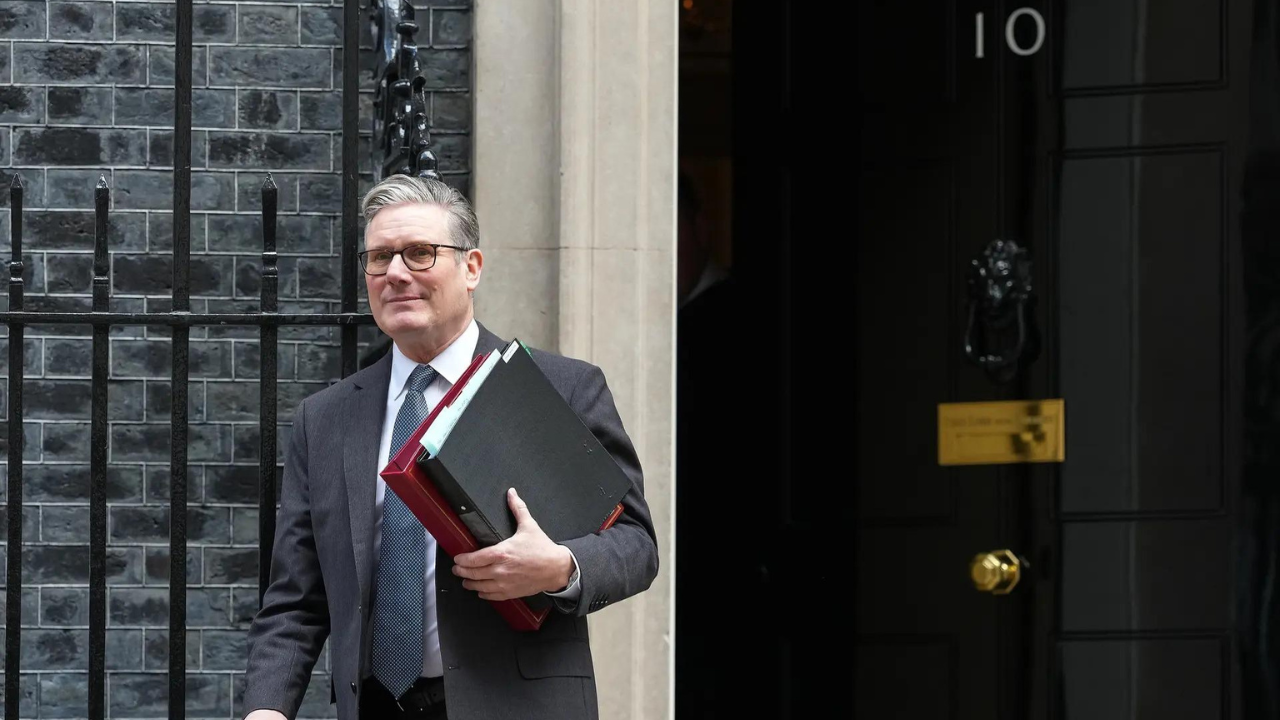
Once again, a British prime minister walked out of Number 10 Downing Street to announce an early departure. As Keir Starmer confirmed he would step down after less than two years in office, one familiar resident remained unmoved by the drama: Larry the Cat, Downing Street’s long-serving feline, now preparing to welcome a seventh prime minister during his tenure.
Get breaking news anytime, anywhere. Download the TOI app now!

Starmer’s resignation is the latest chapter in a remarkable decade of political instability that began with the Brexit referendum in 2016. Since Britons voted to leave the European Union, six prime ministers have come and gone: David Cameron, Theresa May, Boris Johnson, Liz Truss, Rishi Sunak and now Starmer. Each entered office promising solutions to the country’s challenges, only to find themselves battling the political and economic aftershocks of Brexit.
Six prime ministers, one wound
The churn at the top has been relentless. David Cameron (2010–2016) resigned the morning after the referendum result came in. Theresa May (2016–2019) spent three bruising years trying to pass a withdrawal agreement that Parliament rejected six times before she too quit. Boris Johnson (2019–2022) eventually secured a deal, only to be toppled by a cascade of self-inflicted scandals. Liz Truss (2022) lasted just 45 days, her tenure ending in a catastrophic mini-budget that sent the pound into freefall. Rishi Sunak (2022–2024) attempted a reset, but could not overcome the accumulated exhaustion the electorate felt towards the Conservative Party.
Starmer arrived in July 2024 carrying the promise of an ending. Labour's landslide 411 seats out of 650 was the largest parliamentary majority in a generation. Standing on the steps of Downing Street, he pledged to "restore respect to politics" and lead a government of "public service". After years of soap opera, Britain wanted boring. Starmer intended to deliver it.
He did not.
The man who promised stability, and couldn't deliver it
Starmer's selling point was his very lack of drama. A former human rights lawyer who rose to become Director of Public Prosecutions — Britain's chief prosecutor — he entered Parliament in 2015 at the age of 52. He was methodical, forensic, and deeply serious.
The early signs were not good. A furore over accepting free gifts, designer spectacles, Taylor Swift concert tickets, damaged him before he had properly begun. Policy reversals followed, including a deeply unpopular decision to cut winter fuel payments to pensioners. His popularity, already fragile — Labour had won with only 34% of the popular vote, many of those ballots cast by voters angered at the Conservatives rather than enthused by Labour, never really recovered.







