Get all your news in one place.
100’s of premium titles.
One app.
Start reading
International Business Times UK
Maybelyn B. Paden

Keir Starmer Labelled 'Slippery' As He Admits Labour Could Back Closer EU Alignment

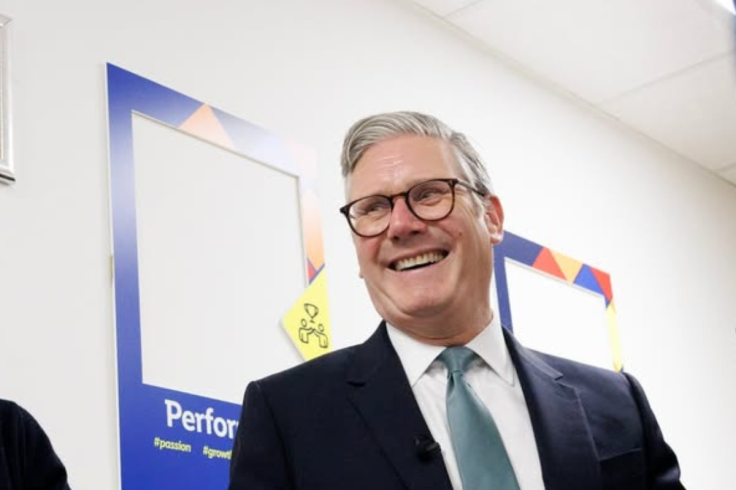
Keir Starmer Labelled ‘Slippery’ As He Admits Labour Could Back Closer EU Alignment (Credit: Keir Starmer Instagram Account Photo)

Sir Keir Starmer has inadvertently handed his political opponents a gift on a silver platter. By finally admitting what many in Westminster have long suspected—that Labour could pursue closer alignment with the European Union—the Prime Minister has placed himself squarely in the crosshairs of one of Britain's most formidable political forces: Nigel Farage and his resurgent Reform movement.

For months, Starmer navigated the EU question with the grace of a tightrope walker, carefully dodging, ducking, and swerving around what many saw as an obvious truth.

The charade has now ended. In confirming Labour's willingness to pursue closer alignment with Brussels, he has effectively dismissed the democratic verdict of 17.4 million people who voted to leave the European Union in 2016. That moment—when he acknowledged that closer EU alignment could happen 'if it's in our national interest'—may well define the final chapter of his premiership.

The Farage Factor: Why Starmer's EU Confession Threatens Labour

The timing could hardly be worse for a Prime Minister whose approval ratings have plummeted to minus 51.

Reform UK, under Farage's leadership, has capitalised on voter frustration with a government that seems increasingly detached from the concerns of ordinary Britons.

Starmer's cautious language about EU alignment may sound reasonable to some, but it reads as something quite different to millions of voters who sense that their prime minister never truly accepted the referendum result.

The irony is stark. Starmer, a fixture of the Westminster establishment that many Brexit voters felt had worked against them, has built his premiership on the assumption that avoiding the EU question would somehow neutralise the issue. Instead, his recent comments suggest Labour harbours ambitions to gradually rebuild Britain's ties with Brussels through incremental alignment with the single market. This is not a policy born of conviction—it is one born of desperation, an attempt to undo economic damage at the cost of democratic trust.

Starmer's deputy, David Lammy, has long been vocal about his preference for closer European integration.

The broader Labour hierarchy shares this outlook, reflecting the party's discomfort with Brexit from the very beginning. Without a coherent domestic agenda to rally around, Labour appears committed to a slow-motion realignment with the EU that would see goods, services, capital, and people moving across borders with minimal friction—precisely the freedom of movement arrangement that Starmer insists will not occur.

Labour's Crumbling Position and the Rise of Reform

With local elections looming in May and his government haemorrhaging support, Starmer has instead handed the initiative to Farage. Earlier attempts to undermine the Reform leader backfired spectacularly, triggering a surge in support for the party and polling suggestions that Farage could secure around 370 seats in a general election. Now, by reopening the EU debate, Starmer has provided fresh ammunition to those who argue that Labour never truly accepted the people's verdict.

The mathematics of this predicament are unforgiving. A Prime Minister at minus 51 approval, a party facing demolition at forthcoming local elections, and a government that appears ideologically committed to undoing Brexit—this is not a recipe for political longevity.

History suggests that political leaders who openly defy the electorate on issues where a clear democratic mandate exists do not survive in office. Starmer may have calculated that managing the Brexit issue gradually, through careful language and incremental policy shifts, would spare Labour from the party divisions that plagued the Conservatives. He has instead created the conditions for his own political undoing.

Britain chose to leave the EU in 2016 with unmistakable clarity. A Prime Minister who cannot genuinely accept that result, who sees Brexit as a mistake to be slowly corrected rather than a democratic choice to be honoured, has forfeited something essential: the trust of those who voted for that outcome. Without it, no policy initiative, however well-intentioned, can succeed.

In admitting what his party has always believed—that closer EU alignment is desirable—Starmer has merely accelerated the timeline of his own exit and hastened the arrival of his successor. The only winner in this extraordinary tale of political misjudgement is Farage.

Sign up to read this article
Read news from 100’s of titles, curated specifically for you.
Already a member? Sign in here
Related Stories
Top stories on inkl right now
Our Picks
Fourteen days free
Download the app
One app. One membership.
100+ trusted global sources.