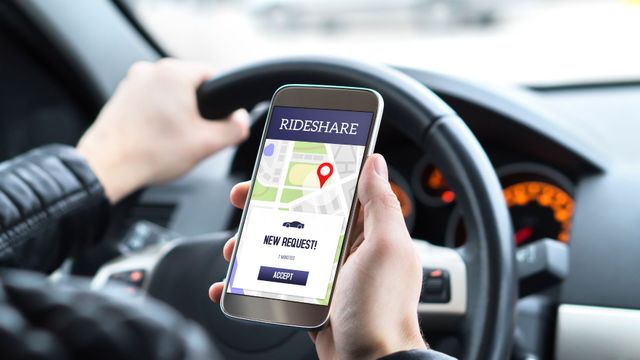
More formally known as transportation network companies (TNCs), rideshare platforms such as Uber and Lyft enable drivers to earn income by providing rides in their own vehicles.
However, there has been growing controversy over personal liability for drivers. Because of limited protection from TNCs, drivers must obtain additional insurance coverage, with requirements that vary by state. If you do not have the proper coverage, you open yourself up to liability, which can easily lead to legal consequences for both you and the TNC.
Additionally, Uber has faced litigation over the years for discrimination, negligence and sexual assault. Still, it continues to deny culpability, and cases remain ongoing.
In the meantime, drivers are left wondering whether they are protected when they get behind the wheel because if not, the repercussions can be devastating.
What rideshare companies cover

Traditional taxi services use company vehicles, placing liability solely on the business. However, rideshare companies are entirely different because drivers use their personal vehicles. This alters the terms of insurance coverage and may hold the driver more accountable than the average taxi driver.
”A driver's personal auto insurance will not apply or provide coverage while they are giving a ride through Uber and Lyft,” says Thomas Simeone, Managing Partner of Simeone & Miller, LLP. “Personal policies routinely deny coverage while the driver is engaged in a business.”
Uber maintains commercial insurance on behalf of its drivers, and other companies such as Lyft operate similarly. However, exact coverage depends on several factors, such as whether you are online, en route or on a trip. While you are en route or on your way to a trip, coverage kicks in, but when you are offline, you are responsible for your own coverage.
“When driving for ridesharing companies like Uber and Lyft, drivers should understand that their personal auto insurance usually doesn’t cover accidents that occur while the app is on or a passenger is in the car,” explains trial attorney Ramzy Ladah of Ladah Law Firm. “These companies provide varying levels of insurance depending on whether the driver is waiting for a ride request, en route to pick up a passenger or actively transporting one.”
This means drivers must be extra vigilant with their coverage, he says. “Drivers should review their policy carefully and consider purchasing rideshare endorsement coverage to avoid being personally responsible for costs in the event of an accident.”
Liability issues
Ridesharing insurance coverage is tricky because there are multiple stages of each trip, from the drive en route to the actual passenger ride. Ultimately, liability relies upon which stage the driver is in at the time of the accident.
Riley Beam, Managing Attorney at Douglas R. Beam, P.A., explains how coverage works. “It’s very likely that their personal auto policy excludes any kind of commercial activity. Most standard policies don’t offer that kind of coverage,” he says. “So unless they’ve added a specific rideshare endorsement, they’re not covered during their shifts with Uber and Lyft.”
That can have serious consequences, he explains. “If you caused the accident, in whatever capacity, you can still be named in a lawsuit. The company provides the insurance, but they’re not the ones operating the vehicle, and they’re going to safeguard themselves from any repercussions.”
“As for liability,” he continues, “it follows the driver’s conduct. If the driver was distracted or speeding, that’s still negligence. And that exposure doesn’t disappear just because they were driving for an app.”
There are some cases in which rideshare companies may be held liable. The legal doctrine of respondeat superior may hold an employer responsible for an employee’s conduct, as argued in many court cases. However, Uber continues to argue that its employees are independent contractors.
Company deficiencies can also play a role; if the rideshare company is found negligent in enforcing safety standards, it may be found liable for accidents arising from issues like vehicle maintenance, safety standards and driver conduct.
However, drivers must be prepared, says William K. Holland, Managing Partner and Personal Injury Attorney of Holland Injury Law. “Insurance gaps often leave personal assets vulnerable to lawsuits exceeding policy limits, especially for medical bills, lost wages or pain and suffering claims.”
“Uber and Lyft offer contingent coverage that only activates under specific conditions,” he explains, “so I advise treating it like a business: secure rideshare endorsements, umbrella policies, and safe driving habits to manage, but not eliminate, the dangers. Many drivers learn too late that the company won't always cover everything, so go in with eyes wide open and proper protections in place.”
State laws

Although minimum liability insurance is required in all states, state laws can still vary significantly. Each jurisdiction is free to impose its own laws regarding coverage requirements, driver eligibility and vehicle safety standards.
“Liability for rideshare drivers varies significantly from state to state because each jurisdiction sets its own rules on minimum insurance limits, how fault is allocated and when a transportation network company's policy is triggered versus a driver's personal coverage,” says Everett Lupton, a civil and criminal attorney and founding partner of Slaughter & Lupton.
“States also differ in how aggressively they regulate rideshare companies,” he comments, “including whether they impose higher minimum coverage, special requirements for app-on versus app-off periods and specific rules for when an injured person can reach the rideshare company's commercial policy rather than being limited to the driver's individual policy.”
How your state determines fault can also determine liability.
“States set different minimum coverage requirements for rideshare periods, and they don’t all handle fault the same way – some are no‑fault, some are comparative negligence,” explains Emanuel Galimidi, Personal Injury and Wrongful Death Attorney at Galimidi Law. “That means who pays, how much is available and whether the driver can recover for their own injuries can change dramatically just by crossing a state line.”
Because of these limitations, rideshare companies like Uber require their drivers to obtain minimum coverage to ensure adequate protection. This coverage can be very expensive, depending on your insurer, driving history and state.
Still, it is not something drivers can afford to be without, Ladah says. “Many people don’t realize that personal liability in ridesharing can extend beyond vehicle damage to include medical expenses, lost wages and even pain and suffering claims if others are injured. If a driver doesn’t have the proper supplemental coverage, they could face personal exposure that far exceeds their policy limits.”
Galimidi has seen it before. “The company’s policy may provide a large liability limit, but it doesn’t stop an injured person from suing the driver personally,” he explains. “Drivers can still be deposed, have judgments entered against them and see their own assets at risk if coverage is denied or exhausted.”
Additionally, Uber and Lyft both enforce policies on driver conduct, passenger safety and vehicle maintenance. This can significantly affect liability in some states, as the rideshare company may be held liable along with the driver.
“On top of that, there are state-by-state nuances in how courts interpret the relationship between the driver and the platform, which affects whether plaintiffs can argue the company itself is liable under theories like negligent hiring, supervision, or failure to enforce safety standards,” says Lupton.
“Because of these differences, a strategy that works well in one state can be completely wrong in another,” he warns, “so drivers need to understand that 'one size fits all' legal advice is dangerous when it comes to rideshare liability.”
It is also important to become well-versed in your state’s specific laws, says Simeone. “Each state and the District of Columbia have their own rules governing liability and damages available,” he explains. “Each has its own deadlines for filing suit and minimal insurance that a driver must have.”
“So, the key is to know the legal requirements of each state you'll be driving in and comply with them,” he says.
When to contact a lawyer
In most cases, it is best to consult a personal injury attorney. Together, you can review your case, and they can advise you on your legal rights and the best steps forward, including insurance claims, rideshare company liability and potential compensation. Depending on your case, you may be able to receive damages, including compensation for injuries and medical expenses, lost wages and pain and suffering.
Ultimately, the legal issues of rideshare liability depend on several factors, including the nature of the accident, applicable local laws and the parties involved.
“From a legal perspective,” says Holland, “driving for a ride-sharing company can be viable if drivers fully understand the risks and protect themselves properly, but it carries significant liability exposure that makes it a high-risk choice for many.”