Get all your news in one place.
100's of premium titles.
One app.
Start reading
The Conversation
The Conversation
Politics
Elise J. Bean, Director of the Washington Office of the Levin Center for Oversight and Democracy, Wayne State University

Jury convictions of Bannon and Navarro for refusing congressional subpoena may energize lawmakers' ability to hold powerful people accountable

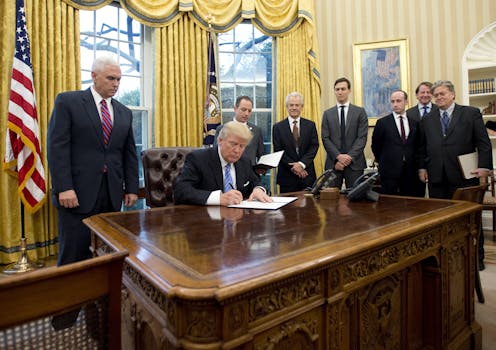
At a January 2017 executive order signing, adviser Peter Navarro is third from left behind Trump and Steve Bannon is on the far right. Ron Sachs - Pool/Getty Images

On Jan. 25, 2024, Peter Navarro is scheduled to be sentenced – perhaps to prison – after his swift conviction by a jury on contempt of Congress charges. He has joined Steve Bannon as the first defendants in decades to be held criminally liable by the U.S. Department of Justice for refusing to provide information in response to congressional subpoenas.

The Supreme Court has long supported Congress’ authority to obtain information needed to carry out its constitutional duties. But weak enforcement tools have made getting that information difficult, especially from the executive branch.

Sign up to read this article
Read news from 100's of titles, curated specifically for you.
Already a member? Sign in here
Related Stories
Top stories on inkl right now
One subscription that gives you access to news from hundreds of sites
Already a member? Sign in here
Our Picks
Fourteen days free
Download the app
One app. One membership.
100+ trusted global sources.