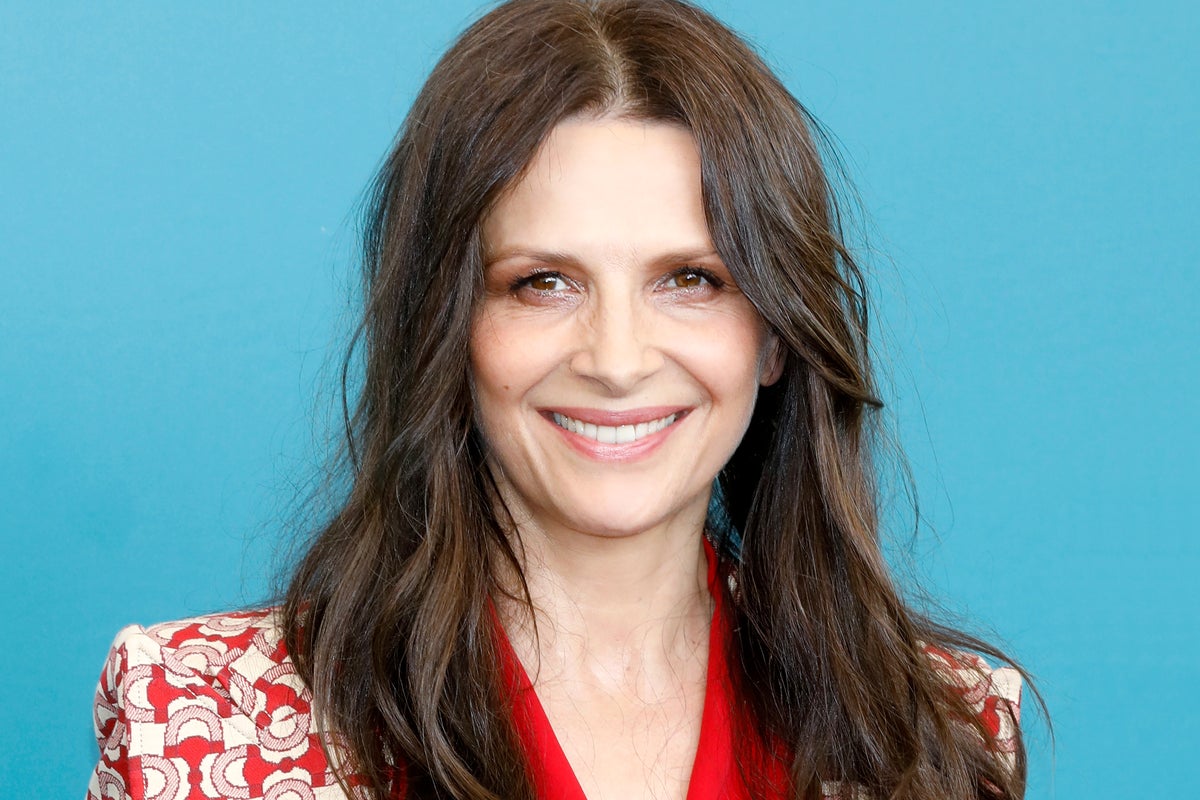
Juliette Binoche is chilly. It is a sunny day in central London, but she has bundled herself up in a sturdy leather jacket and ordered a hot chocolate. “Thin or thick?” our waiter asks. Binoche seems thrown by the question. Thick, she says, ambivalently. The waiter’s eyes light up: “Ah, the French way!” Binoche shrugs. As if anyone needed a reminder. Binoche is to France what Matthew McConaughey is to Texas, or Sean Connery was to Scotland – that brilliant face of hers, round and lovely, may as well be printed on the national flag by this point.
Binoche has spent more than four decades as one of the world’s most adventurous movie stars; putty in the hands of auteurs such as Claire Denis, Jean-Luc Godard, Olivier Assayas and Michael Haneke. The confectionery romp Chocolat and the grand love story of The English Patient – for which she won an Oscar in 1997 – may have leant into her gamine luminosity, and are likely her most well-known films, but they’re mere snapshots of a more colourful, mercurial career. Her ashen grief in Krzysztof Kieślowski’s Three Colours: Blue avoids histrionics – there is a slight quiver here, a flush of devastation there. There is potency, too, to her reckless, sophisticated sexuality in Denis’s Let the Sunshine In, and her carnally minded scientist in the filmmaker’s sci-fi oddity High Life. Haneke seems to bring out the icy prickliness in her, in movies like Code Unknown and the frightening Caché. When she is on film, you never know which Binoche you’re going to get.