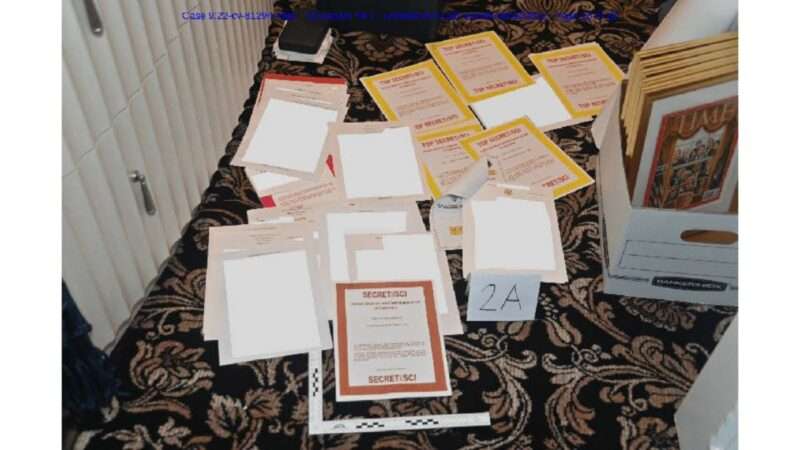
When the FBI searched former President Donald Trump's home at his Palm Beach resort last month, it was investigating possible violations of three federal statutes. None of those crimes hinges on the question of whether the documents that the FBI found at Mar-a-Lago, more than 100 of which were marked as classified, still had that status. That issue nevertheless has become a major point of contention between Trump and the Justice Department as they wrangle over what should be done with the 11,000 or so records seized by the FBI.
Trump's lawyers say the government has failed to prove any of the documents were still classified, while the government's lawyers say Trump has presented no evidence to the contrary. U.S. District Judge Raymond Dearie, the "special master" appointed to review the records, yesterday endorsed the government's take on that issue. Dearie, who served seven years on the Foreign Intelligence Surveillance Court, suggested he had no business second-guessing classification markings. "As far as I'm concerned, that's the end of it," he said during a hearing in Brooklyn, unless Trump can present evidence that he declassified the records when he still had the authority to do so.