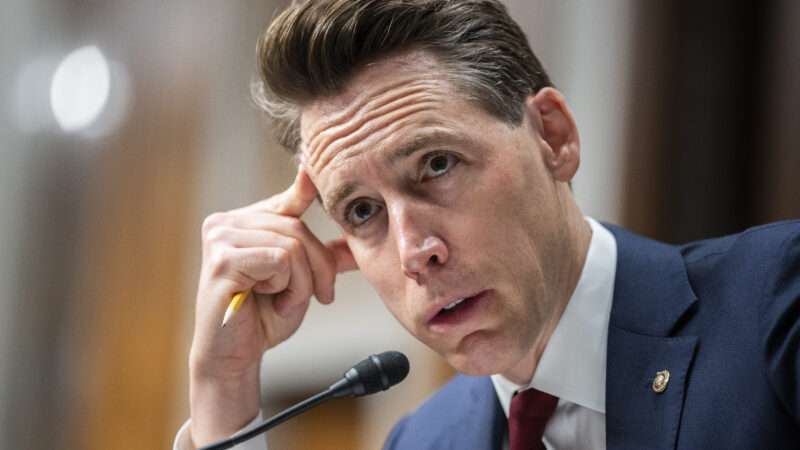
On Tuesday, Sen. Josh Hawley (R–Mo.) introduced legislation that he hopes will "open up a new era of creativity and innovation." Despite some problems with the bill and a clear ulterior motive, he may get his wish.
Hawley's bill, the Copyright Clause Restoration Act of 2022, would shorten the period of time that a creative work can be copyrighted. Currently, any creation is protected for its creator's entire life plus 70 years; works created prior to 1978 are protected for 95 years. Hawley's bill would shorten that period to 28 years, with the option to renew at the end of that term for a limit of 56 years total. While this would be a significant decrease, it is no radical shift: The exact same terms were in place from 1909 up until 1976. Plus, shortening the terms brings the law closer to the actual stated constitutional purpose of copyrights—encouraging innovation rather than simply protecting stakeholders' financial interests.