Get all your news in one place.
100's of premium titles.
One app.
Start reading
AAP
AAP
Jennifer Dudley-Nicholson

Joining the fold: flexible phones target more consumers

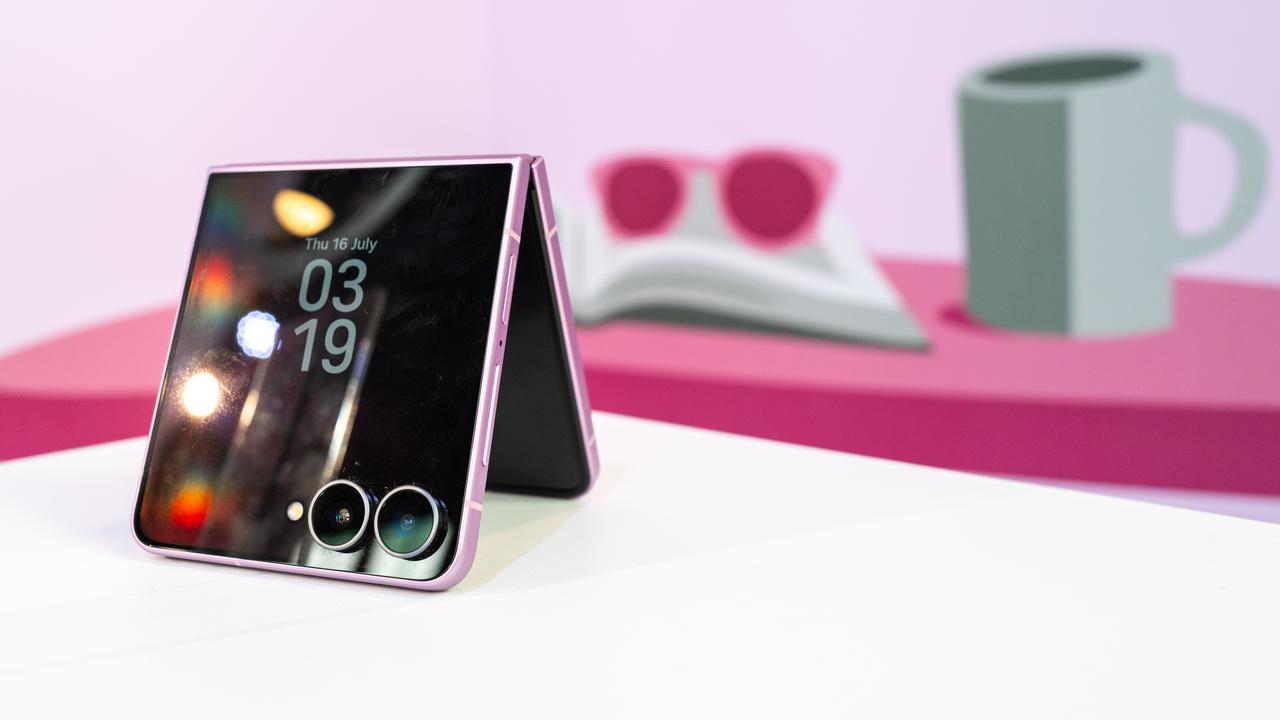
Samsung hopes its new folding phone will encourage consumers to swap from their rectangular models. (Artist/AAP PHOTOS)

Seven years after an awkward debut, folding phones could finally be ready for their big moment.

The technology emerged in 2019 when Samsung showed off a futuristic phone prototype that opened like a book and worked like a tablet, creating a buzz among consumers and competitors alike.

But the reality of manufacturing a smartphone with a flexible screen and many moving parts did not match the hype.

Early phones suffered screen failures when users peeled off what looked like protective film, while other models developed flickering displays and encountered damage from dust and dirt due to its design.

Eight models and millions of sales later, the tech giant is a lot more confident in the resilience of its devices and the category it created.

The company will introduce a new design to its folding phone line-up in 2026 to capture more consumers looking to swap from their regular, rectangular phones.

But Samsung will face a lot more competition in the foldables market this time around.

Google, Motorola, Huawei and Oppo are offering alternatives and Apple is strongly tipped to launch its first folding iPhone this year.

The growing choices will lend more credibility to the market and boost sales, analysts say, in a trend that could finally send folding phones into mainstream use.

Samsung technology on display
Eight generations on, Samsung is more confident in the resilience of its devices. (Artist/AAP PHOTOS)

The question of whether folding devices could be embraced by the mass market has lingered since their creation, Samsung Australia mobile experience head Eric Chou says.

"When we announced our very first foldable ... a lot of the narrative was, 'Is foldable ever going to become mainstream?'" he tells AAP.

"It is now easily into the double digits as a portion of our sales; it's significant, it's not a novelty."

The company answered the question in a series of improvements designed to boost the phones' durability and resistance to everyday threats.

Samsung introduced water resistance in its third generation, added an improved hinge in the fifth generation and increased the size of the external screen in its sixth version.

When the seventh generation folding phone arrived in 2025, the company experienced its biggest sales to date, mostly driven by consumers who had only used "flat" phones, Samsung Australia mobile experience product head Nathan Rigger says.

"In every successive generation, we've seen growth," he adds.

"Around 60 per cent of people who purchase a Fold are coming from, we call it, a candybar smartphone and they're growing the category."

The company will attempt to accelerate growth this year with the launch of a new style of folding phone: a passport-shaped model called the Fold8 with a shorter screen designed for consuming digital books, social media, and streaming videos.

The new model will launch on August 14 alongside the flagship Z Fold8 Ultra with an eight-inch screen and the pocket-sized Z Flip8 with improved cameras.

"What we expect is that a lot of people who haven't previously considered Fold - maybe it's a little too big or a little too heavy - will take up a Fold for the first time," Mr Rigger says.

"We've got really big expectations we're going to beat the growth we saw last year."

Samsung technology on display
The evolution of Samsung foldables continues next month with the arrival of the Fold8. (Artist/AAP PHOTOS)

But the folding phone market is no longer serviced by just one company.

Google is expected to update its Pixel 10 Pro Fold in August, Motorola launched a RAZR Fold in July and other models are available from Huawei and Oppo.

But it is Apple's widely anticipated entrance to the folding phone market that is grabbing most attention and could help raise demand for folding screens by 24 per cent this year, according to Counterpoint Research.

An iPhone Fold would make a substantial contribution to that growth, the company says, although Samsung will retain the biggest share of the market at 31 per cent, compared to 29 per cent for Apple and 24 per cent for Huawei.

Apple's folding debut is highly likely after years of speculation, Telsyte managing director Foad Fadaghi says, but it does not guarantee success for the smartphone category.

High prices could hold back some buyers and even Apple could struggle to fulfil initial demand due to component shortages, he says.

Samsung technology on display in London
Samsung is expected to retain the largest slice of the foldable phone market at 31 per cent. (Artist/AAP PHOTOS)

"An iPhone foldable is likely to be their most expensive iPhone, which was already quite expensive, so it's going to have a natural limit to its audience.

"If rumours are correct, it could be $US2500 - that's $3500 in Australia - and that's the price of a good quality laptop which might dissuade a lot of people."

Some consumers might also be tricky to win over, Mr Fadaghi says.

He wonders if they will need more convincing that the technology is rugged enough for everyday use or may wait to see different folding phone styles before making an investment.

"It's hard to say if Apple will be solely responsible for them taking off," he says.

"There might need to be more changes, including price reductions, bigger screen sizes and maybe even no crease to be a bigger driver."

The reporter travelled to London as a guest of Samsung.

Sign up to read this article
Read news from 100's of titles, curated specifically for you.
Already a member? Sign in here
Related Stories
Top stories on inkl right now
Our Picks
Fourteen days free
Download the app
One app. One membership.
100+ trusted global sources.