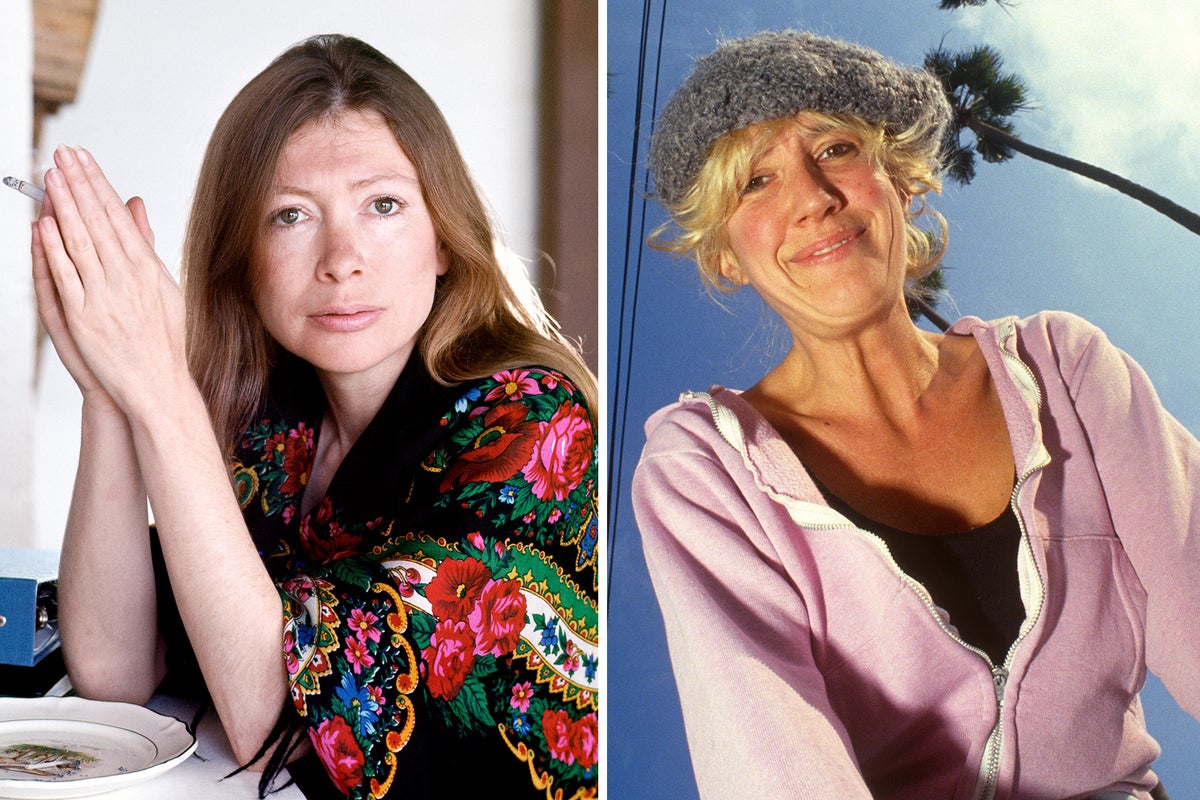
Joan Didion leans against her Corvette Stingray, a cigarette perched between her fingers. Her unsparing, unsmiling gaze seems to sear through the lens of photographer Julian Wasser’s camera, and one arm – the one that isn’t attached to the cigarette – is folded across her waist like a shield. She looks standoffish, effortless, cool. This black and white image, captured for Time magazine after the publication of Didion’s 1968 journalism collection Slouching Towards Bethlehem, quickly became part of the writer’s iconography. You can buy totes, prints and T-shirts emblazoned with it – particularly useful if you want to not-so-subtly proclaim your highbrow reading tastes and love of pared-back prose.
But five years before Wasser captured this defining image of Didion, he took another, very different picture, one that’s just as striking. In it, the 20-year-old Eve Babitz sits at a chessboard opposite the artist Marcel Duchamp, her face obliterated by a curtain of dark hair. It’s the only thing about her that’s covered up: Babitz is completely naked, while Duchamp is fully dressed. These photos seem like polar opposites – and so, in many ways, were Wasser’s subjects, who chronicled the Los Angeles of the Sixties and Seventies in very different ways. The complicated dynamic between these sometime friends is the subject of Lili Anolik’s dazzling new book Didion & Babitz.