Get all your news in one place.
100's of premium titles.
One app.
Start reading
The Economic Times
The Economic Times
Shreya Biswas

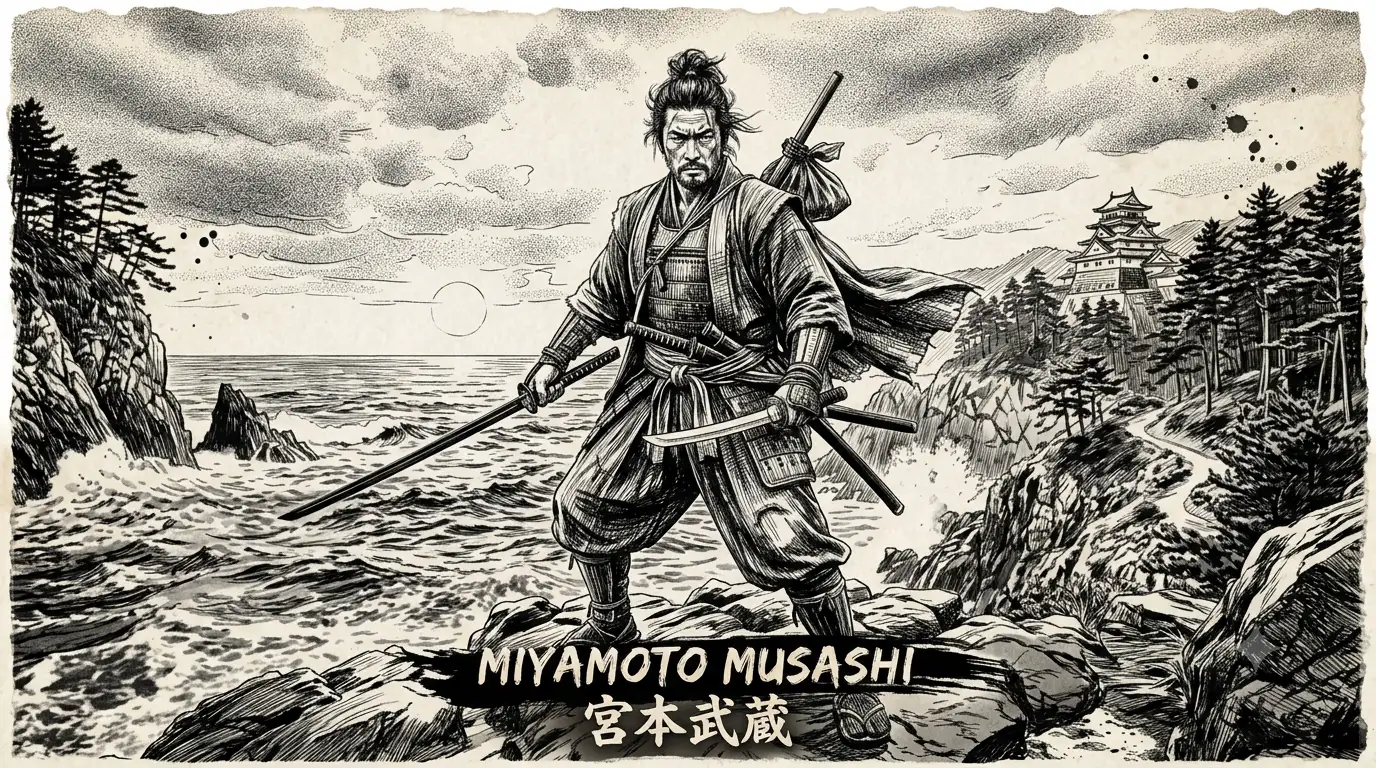
Japanese mindset of the day by Miyamoto Musashi: "If you wish to control others, you must first..." - the swordsman and strategist teaches life lessons on self-control and why mastering yourself is the first step toward effective leadership

Japanese mindset of the day by Miyamoto Musashi : Leadership is often associated with the ability to influence, motivate, or direct other people. However, some of history's greatest thinkers believed that true leadership begins long before a person attempts to guide anyone else. According to legendary Japanese swordsman and philosopher Miyamoto Musashi, the foundation of influence is the ability to master one's own thoughts, emotions, and actions before trying to shape the behavior of others.

Japanese mindset of the day today: Miyamoto Musashi's life lesson on self-control

Today's Japanese lesson of the day highlights one of Musashi's teachings: "If you wish to control others, you must first control yourself," as per MAIKOYA.

READ ALSO: Quote of the day by Friedrich Nietzsche: 'We love life, not because we are used to living but because we are...' - German philosopher and Thus Spoke Zarathustra writer's motivational quote explains what truly gives life meaning

Miyamoto Musashi's quote explained: Why self-control is the foundation of effective leadership

The quote emphasizes that self-control is the foundation of effective leadership. Someone who reacts impulsively, loses their temper easily, or struggles to stay focused may find it difficult to earn the trust and respect of others. In contrast, individuals who remain calm under pressure, think carefully before acting, and consistently demonstrate integrity naturally become more influential because people are more likely to follow someone who leads by example.

Musashi also reminds us that we cannot control how other people think or behave. Every individual has their own beliefs, experiences, and choices. What we can control is our own response to situations. By mastering our reactions instead of trying to dominate others, we become stronger, wiser, and better equipped to handle challenges.

READ ALSO: Quote of the day by Arthur Schopenhauer: 'All truth passes through three stages. First, it is ridiculed. Second, it is...' - German philosopher and The World as Will and Representation writer teaches life lesson on handling rejection, facing criticism and why truth always wins in the end

What today's Japanese mindset teaches about self-improvement and growth

His words encourage people to look inward before looking outward. Instead of seeking power over others, they invite us to cultivate patience, humility, emotional balance, and discipline. Once we gain control over ourselves, our actions, character, and consistency often become far more persuasive than commands or force. True leadership, according to Musashi, is not about controlling people, it is about becoming the kind of person others willingly choose to follow.

Who was Miyamoto Musashi

Miyamoto Musashi (1584–June 13, 1645) was a Japanese soldier and artist of the early Edo period. Born in Mimasaka or Harima, Japan, he became one of the country's most famous swordsmen.

READ ALSO: Japanese proverb of the day: 'Your years will still remain the same whether you...' - this inspiring Japanese saying reveals lessons on why your outlook shapes the quality of your life and why time is too precious to waste on negativity

Miyamoto Musashi's Early life and swordsmanship

Musashi began fighting at a young age and killed a man in single combat at 13. After fighting on the losing side at the Battle of Sekigahara in 1600, he became a rōnin, or masterless samurai, as per a Britannica report.

He later created the nitō ichi-ryū style of fencing with two swords. Musashi claimed to have fought more than 60 duels and won every one.

Miyamoto Musashi's Famous duel

In 1612, Musashi defeated his rival Sasaki Kojirō on a small island using a wooden sword he carved from an oar during the boat journey. He later retired from dueling, trained students, and helped suppress the Shimabara Rebellion in 1637.

READ ALSO: Quote of the day by Sigmund Freud: 'The conscious mind may be compared to a fountain playing in the sun and falling back into the...' - the father of psychoanalysis teaches life lessons on conscious and subconscious mind and why your hidden thoughts deserve more attention

Miyamoto Musashi's The Book of Five Rings

According to legend, Musashi wrote Gorin no sho (The Book of Five Rings) on his deathbed. After its first English translation in 1974, the book was studied by Western executives interested in Japanese management and strategy, as per the Britannica report.

Artist and painter

Using the artistic name Niten, Musashi also practiced suiboku-ga (sumi-e), or monochrome ink painting. He is best known for works including Koboku meikakuzu ("Shrike Perched in a Dead Tree") and Rozanzu ("Wild Geese Among Reeds"), as per the Britannica report.

READ ALSO: Greek proverb of the day: 'Win by persuasion, not by...' - this inspiring Greek saying teaches life lessons on why great leaders never rely on force and why communication is more powerful than authority

Sign up to read this article
Read news from 100's of titles, curated specifically for you.
Already a member? Sign in here
Related Stories
Top stories on inkl right now
One subscription that gives you access to news from hundreds of sites
Already a member? Sign in here
Our Picks
Fourteen days free
Download the app
One app. One membership.
100+ trusted global sources.