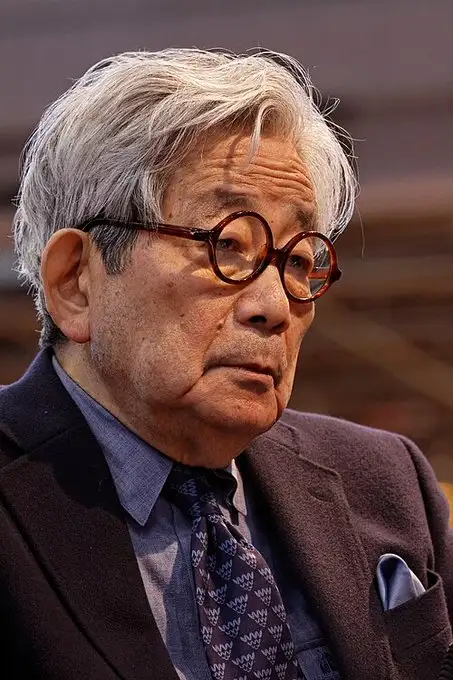
Life lesson by Kenzaburō Ōe : People often believe they know themselves better than anyone else. Yet personal biases, denial, and self-deception can make it difficult to see situations clearly. It is natural to justify mistakes, ignore uncomfortable truths, or create explanations that protect self-esteem. While these habits may offer temporary comfort, they can also prevent honest self-reflection and personal growth. Japanese Nobel Prize-winning author Kenzaburō Ōe believed that self-deception can cloud judgment, making it harder for people to make wise decisions about their own lives. His words encourage individuals to confront reality with honesty, even when it is uncomfortable.

Japanese mindset of the day: Kenzaburō Ōe's life lesson on self-deception and self-awareness
Today's Japanese mindset by Kenzaburō Ōe is, "Once a person has been poisoned by self-deception, he can't make decisions about himself as neatly as all that," as per Goodreads.
Life lesson of the day: What does Kenzaburō Ōe's quote about self-deception mean
Ōe's quote suggests that self-deception makes it difficult to judge ourselves objectively. When people avoid uncomfortable truths or convince themselves that everything is fine, they may struggle to recognize their weaknesses, accept responsibility, or make decisions that truly serve their long-term well-being.
Why honest self-reflection matters
The quote reminds us that self-awareness begins with honesty. Acknowledging mistakes or personal limitations is not a sign of weakness but an opportunity to learn and improve. Clear thinking often requires the courage to question our own assumptions instead of accepting comforting illusions.
What today's Japanese mindset teaches about personal growth
Ōe's message encourages people to look inward with sincerity. Rather than allowing denial or false beliefs to shape important decisions, his words highlight the value of understanding ourselves as we truly are. By replacing self-deception with honest reflection, people can make wiser choices and continue growing with greater clarity and confidence.
Who was Kenzaburō Ōe
Kenzaburō Ōe (1935–2023) was a Japanese novelist and Nobel Prize-winning author whose works explored the disillusionment and rebellion of Japan's post-World War II generation. He received the Nobel Prize in Literature in 1994, as per a Britannica report.
Kenzaburō Ōe's early life
Born in Ehime Prefecture, Japan, Ōe studied at the University of Tokyo, graduating in 1959. While still a student, he was recognized as one of Japan's most promising young writers.
Kenzaburō Ōe's writing career
Ōe gained early attention with Lavish Are the Dead (1957). His novel Nip the Buds, Shoot the Kids and the short story The Catch (1958) earned critical acclaim, with The Catch winning the Akutagawa Prize, as per the Britannica report. His writing later explored social, political, and personal themes.
Kenzaburō Ōe's notable works
Some of his best-known works include A Personal Matter, Hiroshima Notes, The Silent Cry, Teach Us to Outgrow Our Madness, The Changeling, Death by Water, and In Late Style.
Kenzaburō Ōe's legacy
The birth of his intellectually disabled son inspired A Personal Matter, one of his most acclaimed novels. Throughout his career, Ōe wrote about alienation, postwar Japanese society, and human struggles. He died on March 3, 2023, at the age of 88, as per the Britannica report.
Famous Quotes by Kenzaburō Ōe
Here are a few more quotes by Kenzaburō Ōe.
- “Anyway, I wasn’t asleep; if I nap during the day I can never get to sleep at night. I was thinking about the pluralistic universe,” as per Goodreads.
- “Now I was just a transient in the valley, a one-eyed passerby too fat for his years, and life there had the power to summon up neither the memory nor the illusion of any other, truer self. As a passerby I had a right to insist on my identity,” as per Goodreads.
- “One day Bird had approached his father with this question; he was six years old: Father, where was I a hundred years before I was born? Where will I be a hundred years after I die? Father, what will happen to me when I die? Without a word, his young father had punched him in the mouth, broke two of his teeth and bloodied his face, and Bird forgot the fear of death,” as per Goodreads.