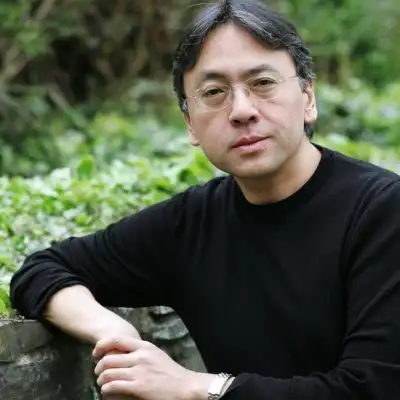
Life lesson by Kazuo Ishiguro : Throughout life, people spend years working toward success, building careers, acquiring possessions, and striving for recognition. Society often measures achievement through wealth, status, and material success, making it easy to believe these are the most important goals. Yet moments of crisis, illness, or the awareness that time is limited often change people's priorities. Relationships become more valuable than possessions, kindness matters more than status, and making peace with others becomes more important than chasing success. Nobel Prize-winning British-Japanese author Kazuo Ishiguro reflects on this shift in perspective, reminding us that what truly defines a meaningful life is not what we own, but how we treat others and the connections we leave behind.

Japanese mindset of the day: Kazuo Ishiguro's life lesson on love, loyalty, and what truly matters
Today's Japanese lesson by Kazuo Ishiguro is, "We all live inside bodies that will deteriorate. But when you look at human beings, they're capable of very decent things: love, loyalty. When time is running out, they don't care about possessions or status. They want to put things right if they've done wrong," as per BrainyQuote.
Life lesson of the day: What does Kazuo Ishiguro's quote about life and mortality mean
Ishiguro's quote reminds us that while physical life is temporary, qualities such as love, loyalty, and compassion have lasting value. As people become more aware of life's limited nature, material possessions and social status often lose their importance, while relationships and acts of kindness become more meaningful.
Why love and loyalty matter more than wealth and status
The quote suggests that true fulfillment comes from meaningful human connections rather than external achievements. Wealth and recognition may provide comfort, but they cannot replace trust, forgiveness, or the support of loved ones. Ishiguro's words encourage people to invest in relationships that endure beyond material success.
What today's Japanese mindset teaches about living with purpose
Ishiguro also highlights the importance of making peace with the past. When time feels limited, many people wish to repair broken relationships, apologize for mistakes, or express gratitude. His message encourages people to value compassion, honesty, and reconciliation before opportunities are lost.
Rather than measuring success by what we accumulate, Ishiguro's perspective suggests that a meaningful life is built through kindness, loyalty, and the positive impact we have on others.
Who is Kazuo Ishiguro
Kazuo Ishiguro is a Japanese-born British novelist born on November 8, 1954, in Nagasaki, Japan. He won the Nobel Prize in Literature in 2017. His family moved to Great Britain in 1960, where he later studied at the University of Kent and the University of East Anglia, as per a Britannica report.
Kazuo Ishiguro's notable works
His best-known books include A Pale View of Hills (1982), An Artist of the Floating World (1986), The Remains of the Day (1989), which won the Booker Prize, Never Let Me Go (2005), The Buried Giant (2015), and Klara and the Sun (2021), as per the Britannica report.
Kazuo Ishiguro's awards
Ishiguro won the Booker Prize in 1989 and the Nobel Prize in Literature in 2017. He was appointed Officer of the Order of the British Empire (OBE) in 1995 and was knighted in 2019. He also received an Academy Award nomination for the screenplay of Living (2022), as per the Britannica report.
Famous Quotes by Kazuo Ishiguro
Here are a few more quotes by Kazuo Ishiguro.
- "I think I had actually served my apprenticeship as a writer of fiction by writing all those songs. I had already been through phases of autobiographical or experimental stuff," as per BrainyQuote.
- "When I got to 40 or so... I had the sense when I looked back over my life I would actually see a mess of decisions, a few of which I had thought about, some of which I had sort of stumbled on, and many that I had no control over whatsoever," as per BrainyQuote.
- "I try to always go for something... very interior, following thoughts and memories, something that I think is difficult to do on the screen, which is essentially a third-person medium," as per BrainyQuote.
- "I work very regular hours, roughly 9 to 5:30. I think I have it much easier than a lot of parents. I just sit at home, I have a very flexible timetable, and I'm very fortunate in that I don't have money problems. I have lunch with my wife at home. I don't have to commute, so I have much more time with my family," as per BrainyQuote.