Get all your news in one place.
100's of premium titles.
One app.
Start reading
Bangkok Post
Bangkok Post
Business

Japan rising: Building on AI and semiconductor leadership

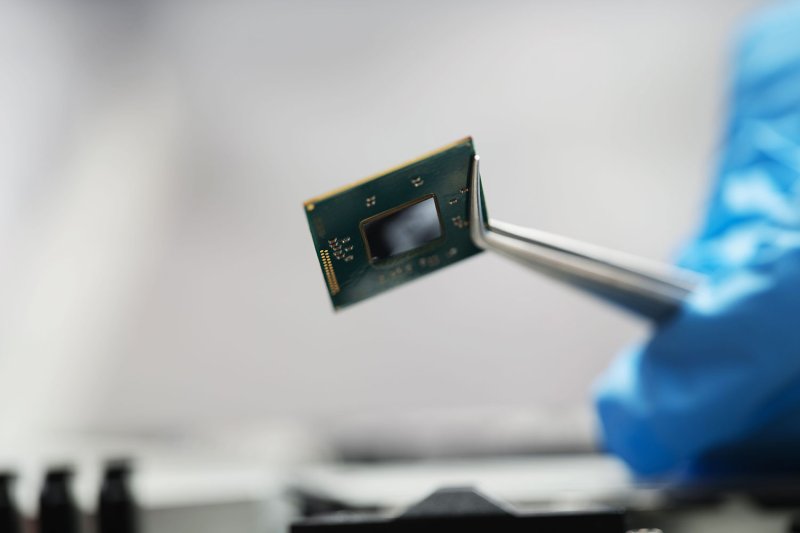
(Photo: 123RF)

The investment story of the first half of 2026 was straightforward: either an investor owned semiconductor stocks (but not just any semiconductor stocks) or they did not. If one held too little exposure or the wrong names, one simply stood no chance of keeping pace with the market.

Contrary to popular belief, the outperformers were not the leaders in manufacturing the most advanced chips used to train frontier AI models, but rather, the less sophisticated players in the oligopolistic and highly cyclical industry that specialises in the production of DRAM (dynamic random access memory) and other NAND memory chips.

Shortly after the start of the conflict between the United States and Iran, the Philadelphia Semiconductor Index began to surge and has almost doubled in just three months' time. At the same time, within emerging market (EM) equities, just three stocks have accounted for virtually 100% of the gains in the MSCI EM Index this year.

However, this phenomenon has not led to an underperformance of the US equity market. Instead, the market's leadership has broadened considerably, with gains extending beyond the Magnificent 7 -- Nvidia, Microsoft, Alphabet, Amazon, Meta Platforms, Apple, and Tesla -- to a wider range of companies that are benefiting, either directly or indirectly, from the AI investment cycle. As a result, the compression in mega-cap technology valuations has been more than offset by expanding participation across the broader market.

STRUCTURAL THEMES

At the same time, a broader set of smaller players is also benefiting from the structural themes that stem from AI, electrification and the growing emphasis on strategic autonomy and supply chain security among sovereign nations.

This is very difficult to capture with a portfolio consisting of a small number (20 to 30) of single stock picks. The challenge is that we have moved into a market environment where the beneficiaries of these powerful structural trends are far more numerous and dispersed than in the previous cycle.

A concentrated portfolio can still generate excellent returns, but the risk of missing some of the key winners has increased materially. As a result, broader diversification has become not only a risk management tool but also an important source of return generation.

On a related note, of the three key themes that we have identified for Japanese equities in 2026 -- AI and semiconductor leadership; national security and a record defence budget; and corporate governance reforms -- we believe the buoyant investor sentiment globally is most supportive of the AI and semiconductor leadership theme currently.

The five major US hyperscalers' 2026 capital expenditure estimates have been revised up 36% since the beginning of the year, with capital expenditure set to rise 76% year-on-year in 2026 to $731 billion and rising a further 23% to $897 billion in 2027. This provides a favourable backdrop for Japanese companies, many of which hold dominant positions in the global AI supply chain.

Beyond favourable industry dynamics globally, Japan's structural positioning in the global AI buildout has been materially strengthened by the Takaichi administration's fiscal commitment to the sector. The Ministry of Economy, Trade and Industry (METI) is nearly quadrupling its budgeted support for semiconductors and AI to ¥1.23 trillion ($7.6 billion) for the current fiscal year 2026.

Japan is also targeting ¥40 trillion in domestic semiconductor revenues by 2040, an approximate eightfold increase, alongside a goal of capturing over 30% of the global physical AI market by leveraging Japan's existing 70% share of the global industrial robot market.

DIVERSE SUPPLY CHAIN

We believe that Japan represents an indispensable node in the global AI supply chain, given the diversity of companies represented along the supply chain. These include semiconductor production equipment, raw materials and substrates, memory chips, advanced capacitors and electronic components, testing and inspection companies, and ancillary industries such as power generation equipment and infrastructure companies, and robotics and factory automation equipment.

Moreover, we see room for a meaningful increase in Japanese households' allocation to Japanese equities. As reported by the Nikkei on June 23, the government aims for stocks, investment trusts and bonds to comprise 40% of households' financial assets by 2040, up from around 23% today. This would dovetail with the administration's growth strategy, advocating for greater public-private investment in 17 strategic fields.

We highlight that the forward return-on-equity estimates for the Nikkei 225 have risen from an average of 8.9% over the past decade ending 2025 to 12.3% as of June 2026, arguably accelerated in recent years by corporate reforms implemented by the Tokyo Stock Exchange in 2023 for companies to take "action to implement management that is conscious of cost of capital and stock price".

In conclusion, despite the forward price/earnings multiples of the Nikkei 225 currently trading above historical averages, we remain cautiously constructive on Japanese equities on the back of a structurally higher return-on-equity profile for the Nikkei 225 arising from corporate reforms, further reinforced by cyclical tailwinds from the uptrend in AI spending.

Kean Tan is Managing Director, Senior Advisor and Head of Investment Solutions at SCB-Julius Baer Securities Co Ltd in Bangkok.

Sign up to read this article
Read news from 100's of titles, curated specifically for you.
Already a member? Sign in here
Related Stories
Top stories on inkl right now
One subscription that gives you access to news from hundreds of sites
Already a member? Sign in here
Our Picks
Fourteen days free
Download the app
One app. One membership.
100+ trusted global sources.