Japan began accepting vaccinated visitors from 68 countries without visas Tuesday, ending almost three years of tighter border controls that kept tourists out of the island nation.
First-time and repeat visitors alike streamed out of Tokyo’s Haneda airport on the first day of the reopening, keen to take advantage of the yen’s quarter-century lows against the US dollar, along with relatively tame inflation.
Jerry Lin, a research scientist from Taipei, touched down in Japan for the eighth time. Although his flight — which was completely full — cost him about twice as much as it used to pre-pandemic, his Taiwan dollars now go much further, allowing him to book a 5-star hotel without hesitation. He’s been planning his trip for months and is ready to shop.
“I only brought one suitcase with me, but will probably end up with two going back,” Lin, 35, said in Mandarin, sharing his plans to stock up on snacks and skincare products during the 4-day trip.
The yen’s weakness against the greenback was top of mind for Scott and Michelle Eaton, both 66, of Nevada. They plan to spend two months in Kyoto, where they both went to school in the 1970s. The Eatons were hanging on Japanese Prime Minister Fumio Kishida’s every word as they watched the yen weaken.
“The minute Kishida said that the borders are opening for tourists to come in without agencies or registration or a visa, I immediately made my reservations to come,” Scott Eaton said after clearing customs at Haneda on Tuesday. “At 145 (yen to the dollar), I’m like, oh, I haven’t experienced that for decades,” he said.
Not all US tourists are in such a rush, the Eatons figured. Their fellow Americans have the desire and the interest to visit Japan, but have a range of competing destinations to choose from, Scott said. “Coming here, you’ve got to wear a mask. You go to Europe, they are over that,” he added.
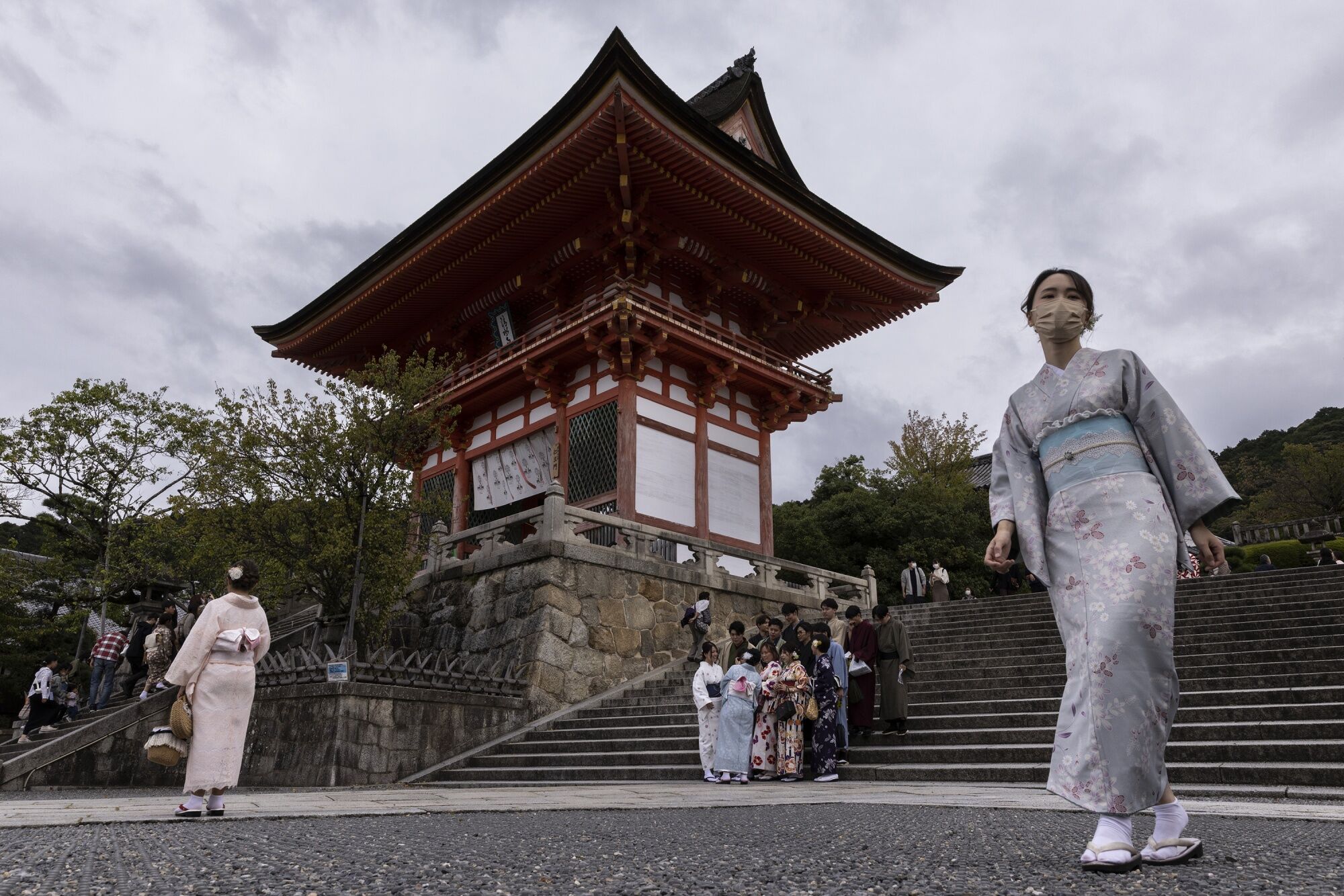
Airline stocks were up in Tokyo on Tuesday as the first visitors arrived, with Japan Airlines Co. rising as much as 3% and ANA Holdings Inc. as much as 2.7%, while the broader Topix index declined as much as 2.1%.
As one of the last remaining rich economies to reopen for tourism, there’s anticipation of an economic lift that could eclipse the pre-pandemic travel boom. Inbound spending could rise by 32% to 6.6 trillion yen ($45.4 billion) annually after a full reopening compared with 2019, according to a recent report by Goldman Sachs economists.
That’s welcome relief, although too late for the 4,000-plus enterprises that folded after retailers adopted curbs in early 2020 on operating hours. Retailers, hotels and restaurants are all eager to regain the business they lost.
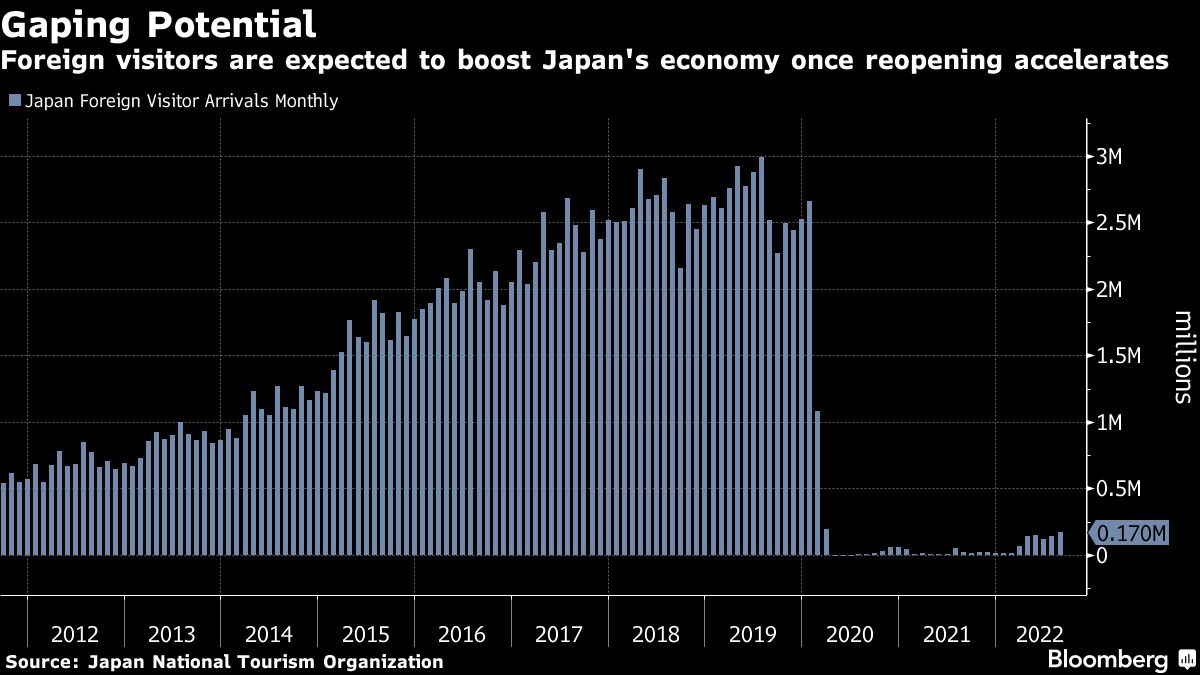
Japanese airlines are already ramping up international flights, and domestic travel is also picking up, with many residents taking advantage of the lack of lines and affordable prices. The country was at the peak of a tourism boom before the pandemic, with a record 32 million inbound visitors in 2019.
South Korea and Japan agreed to double flights between Haneda and Seoul’s Gimpo airport to 56 a week from Oct. 30, South Korea’s transport ministry said Tuesday.
Searches for Japan travel bookings leaped more than 16-fold at Asia-based Agoda, part of Booking Holdings Inc., after the news the country would reopen to tourists, with South Korea, Hong Kong and Taiwan the biggest sources of search traffic. That’s according to Hiroto Ooka, representative director at Agoda International Japan.
Reservations also jumped immediately on the news and have shown little sign of slowing down, Ooka said in an interview.
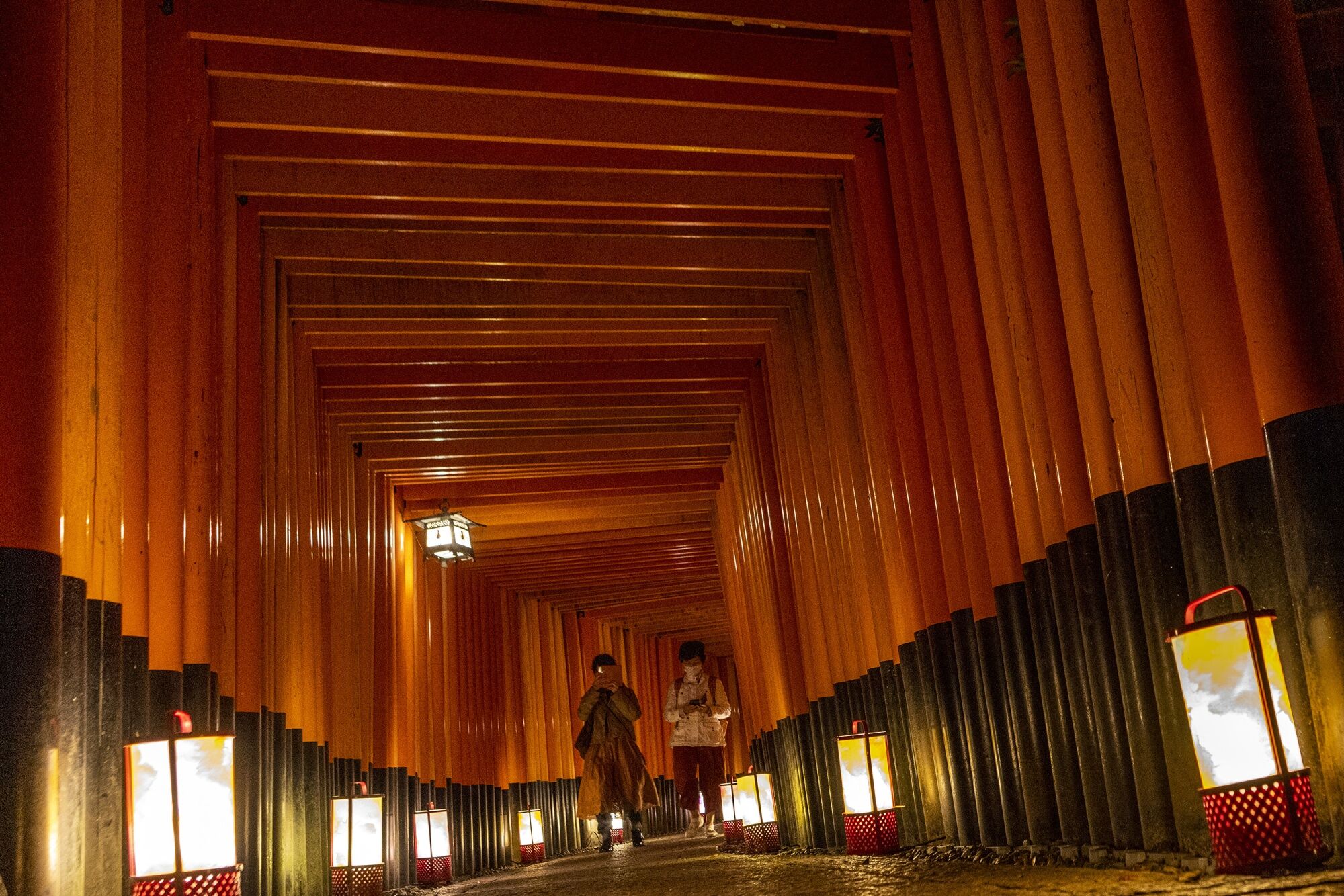
Despite the hype around the reopening of Japan’s borders, the speed and scale of a tourism recovery remains difficult to gauge. A limited reopening in June for group tours failed to attract any meaningful traffic. Visitors from China, who accounted for more than a third of tourist spending before the pandemic, are still mostly restricted from inbound and outbound travel as part of the country’s Covid Zero policy.
“It’s a big deal in itself that people from China aren’t coming, as China was one of the top three inbound markets previously,” Agoda’s Ooka said.
It will take about two years for inbound visitors to reach pre-pandemic levels, according to Takahide Kiuchi, an economist at Nomura Research Institute. There’s still a hotel-room shortage across the country, which is bound to worsen unless more Japanese choose to travel abroad rather than domestically, Kiuchi wrote in a recent report.
Local travel became more attractive on Tuesday with the launch of a nationwide subsidy program by the Japanese government. Travelers will get discounts on trips within the country, and coupons to spend at their destination, until the offer ends in late December. It’s a successor to the “Go To” campaign launched in 2020, which was meant to bolster the tourism industry in the absence of visitors from overseas but was halted later that year after Covid cases surged.
For Forrest Lin, a travel agent from Portland, Oregon, time is of the essence to beat the crowds.
“This is a unique opportunity to travel right after the border opens because things are going to get so busy,” said Lin, 32, who will arrive Wednesday and stay for more than a week. Drawn by the food, Lin said he plans to splurge a bit. “I feel less guilty eating nicer meals and staying at nicer hotels” thanks to the weaker yen, he said.
©2022 Bloomberg L.P.