Get all your news in one place.
100's of premium titles.
One app.
Start reading
The Independent UK
The Independent UK
National
Mari Yamaguchi

Japan air force starts recovery of crashed Global Hawk drone

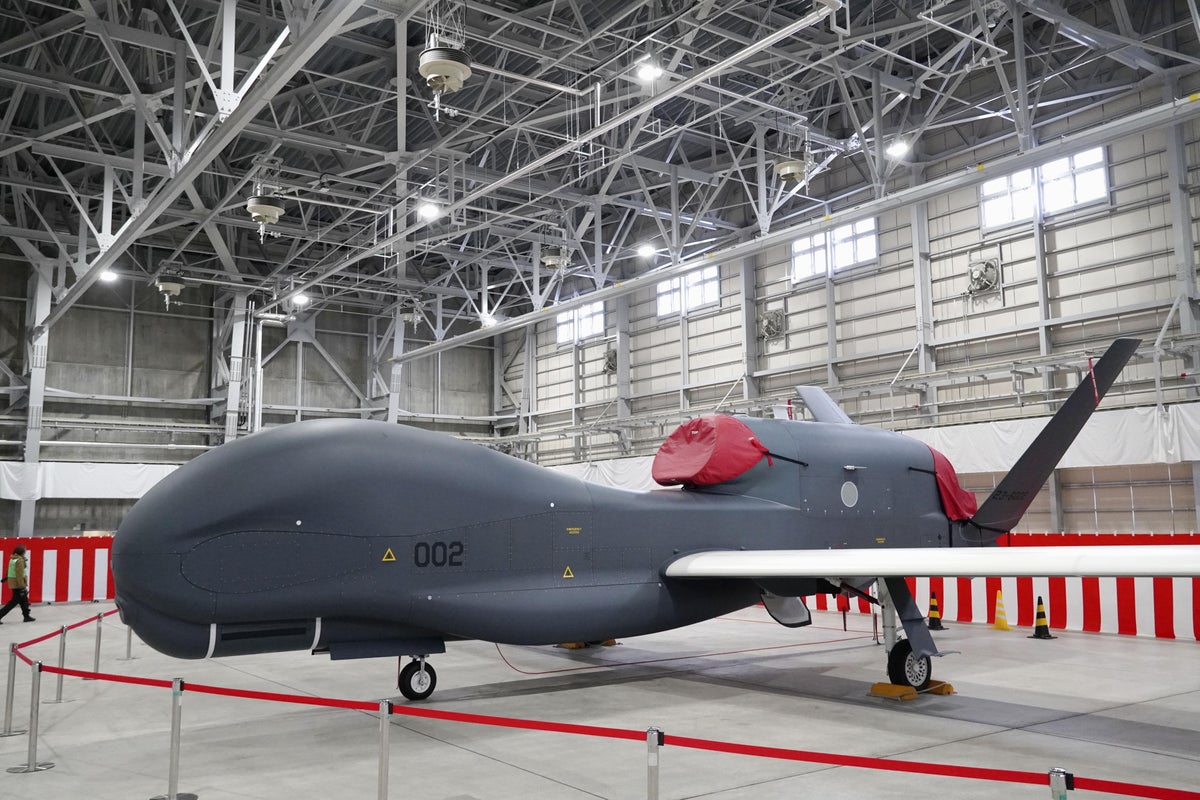
Japan Global Hawk - (undefined/Kyodo News via AP)

Japan's air force said it began recovery operations Friday for a U.S.-made long-distance surveillance drone that had crashed into the sea last month, as the country puts greater emphasis on drones in its defense planning.

The uncrewed RQ-4B aircraft, known as Global Hawk, went missing off the northern coast of Tottori prefecture in northwestern Japan in mid-September. The Japan Air Self-Defense Force said it has determined that the drone had crashed and later spotted what appeared to be the fuselage on the seabed about 200-300 meters (650-980 feet) deep.
The aircraft was one of three Global Hawks in Japan's air force. Capable of conducting long-range missions at a height of 60,000 feet (18 kilometers) and operating continuously for up to 36 hours, they allow Japan to monitor areas on the Asian mainland, including North Korea and China.

The air force has released limited details. JASDF Chief of Staff Takehiro Morita told reporters earlier this week that Japanese defense officials were working closely with its maker, Northrop Grumman, and the U.S. military in the investigation.

There has been no indication of foul play and officials said the cause of the crash was under investigation.

Friday's work began with the arrival of a mother ship that deployed a remotely operated underwater vehicle to obtain the drone's exact location and other details, while also recovering debris, JASDF said. Salvaging larger parts of the aircraft is expected later in October.

Japanese officials have said the drone had trouble connecting with a communication device about 90 minutes after taking off from the Misawa Air Base, where it was based. Three minutes later, it disappeared from the radar and was last seen 50 kilometers (31 miles) off the coast of Tottori.

The loss of the drone with a price tag of about 17 billion yen ($107 million) could be a setback for Japan’s surveillance capability. The two remaining Global Hawks have been grounded except for necessary mission, Morita said.

Japan has been revising defense strategies that focus on drones, artificial intelligence and new methods of warfare.

Sign up to read this article
Read news from 100's of titles, curated specifically for you.
Already a member? Sign in here
Related Stories
Top stories on inkl right now
One subscription that gives you access to news from hundreds of sites
Already a member? Sign in here
Our Picks
Fourteen days free
Download the app
One app. One membership.
100+ trusted global sources.