
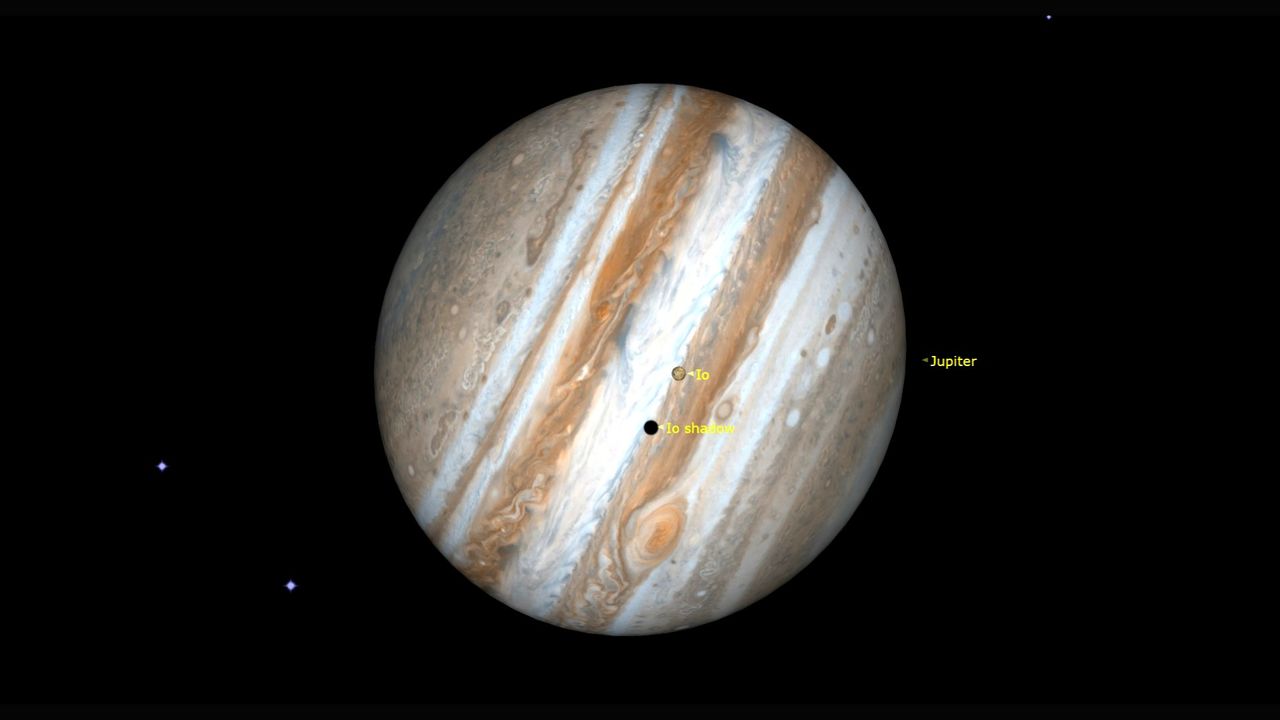
Jupiter, the largest planet in the solar system, currently shines as a brilliant silvery "star" in Gemini the Twins, low in the east-northeast sky as dusk slowly fades. It forms an eye-catching scalene triangle configuration with the "Twin Stars" Pollux and Castor; you really can't miss it.
And at 4 a.m. EST (0900 GMT) on Saturday (Jan. 10), Jupiter will arrive at that point in the sky directly opposite to the sun, called "opposition." If all the planets' paths around the sun were true circles, this would also coincide with Earth's closest approach to Jupiter, 393.3 million miles (632.9 million kilometer). That, however, occurs 25 hours earlier, at 3 a.m. EST (0800 GMT) on Friday (Jan. 9).