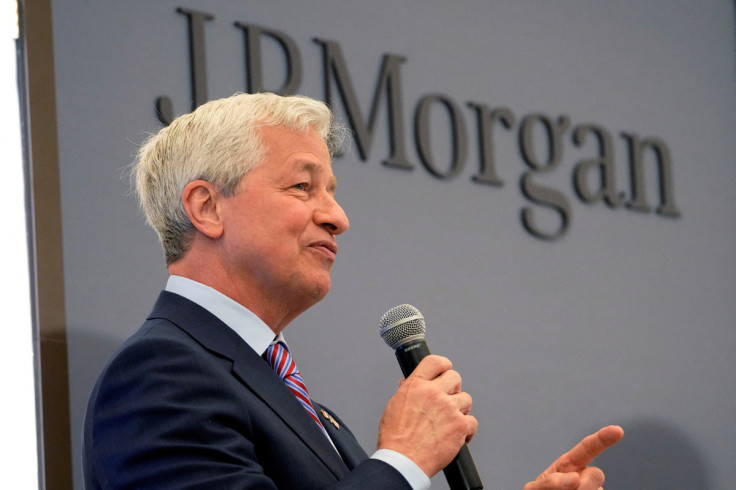
In his annual letter to shareholders, JPMorgan Chase & Co. CEO Jamie Dimon painted a picture of a bank thriving financially while navigating a turbulent global landscape. The letter, published Monday, underscores both the company's record-breaking performance and Dimon's cautionary notes and how they could reshape markets and investor expectations.
JPMorgan reported $185.6 billion in revenue and $57 billion in net income, with a return on tangible common equity near 20 percent, reflecting the strength of its diversified operations across consumer lending, markets, wealth management and technology-enabled services. During the period, the bank increased its quarterly dividend twice, ultimately raising it to $1.50 per share.

Despite the record results, Dimon's letter also emphasized the fragility of the global economy. He highlighted ongoing conflicts in Ukraine and rising tensions in Iran, alongside broader geopolitical friction in the Middle East and the increasingly complex economic relationship with China. Analysts cited by Reuters note that prolonged geopolitical strain could dampen growth and lift inflationary pressures, particularly through energy markets, echoing Dimon's warnings.
Elsewhere in the letter, Dimon pointed to broader macroeconomic uncertainty, including persistent inflation and uneven global growth, which has led central banks to remain cautious. Economists at the International Monetary Fund and UNCTAD have similarly stressed that, while some regions are showing resilience, lingering inflation pressures and geopolitical risks could slow momentum in key markets. According to Reuters, these factors are contributing to evolving market expectations, with investors questioning how long high interest rates might persist.
Beyond geopolitical and macroeconomic concerns, Dimon devoted attention to technology and artificial intelligence as critical to JPMorgan's future competitiveness. He highlighted investments in AI to improve operational efficiency and client service, noting that these technologies are reshaping banking globally. A PwC report on AI adoption in financial services underscores this trend, explaining that machine learning and AI are increasingly used to enhance fraud detection, risk management, and personalized customer offerings, providing significant competitive advantages if implemented responsibly.
However, the letter also emphasized the associated risks. Dimon acknowledged that AI and other technological shifts must be carefully managed to prevent operational or systemic vulnerabilities. The OECD has similarly warned that AI in finance can create challenges around model reliability, data governance, and systemic stability if not properly regulated, highlighting the delicate balance between innovation and risk management that Dimon stressed.
Risk management more broadly remained a key theme. Dimon expressed caution about the rapid growth of private credit markets, which he described as potentially opaque and vulnerable to weaker underwriting standards. Reuters recently reported that strains in segments of private credit have raised concerns among some investors, illustrating the kind of market fragility Dimon alluded to. Even with JPMorgan's strong balance sheet, he emphasized vigilance in the face of shifting economic conditions.