
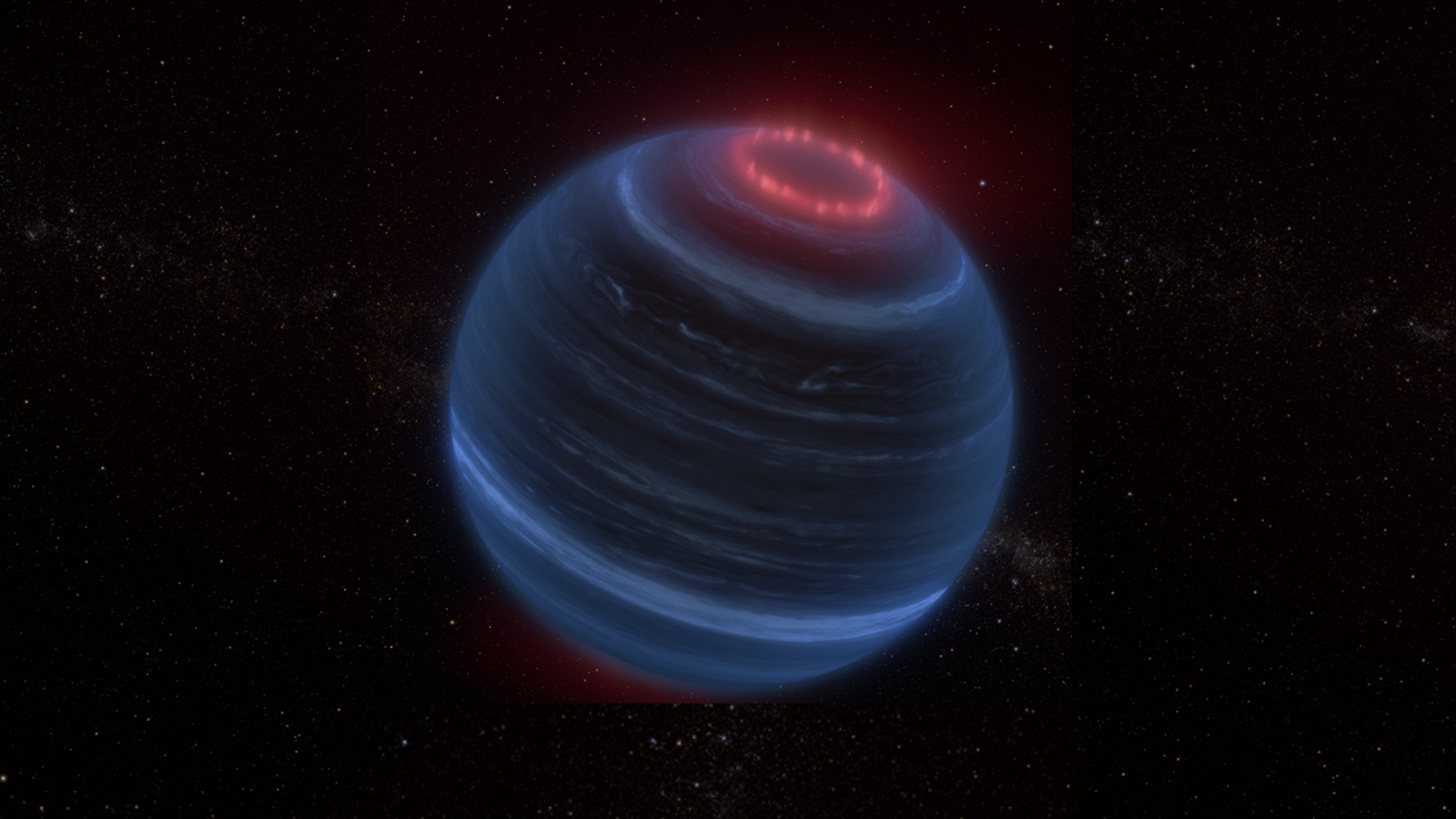
Using NASA's James Webb Space Telescope (JWST), astronomers have spotted a "failed star" or brown dwarf that shows signs of possessing an aurora.
Auroras are more familiar as the northern and southern lights, which are caused by charged particles from the sun striking molecules in Earth's atmosphere. They're usually seen only at high latitudes, because our planet's magnetosphere funnels these particles toward the poles.
Auroras have been spotted around other planets in our solar system, such as Jupiter and Saturn, and even over active moons like Jupiter's Io and Saturn's Enceladus. All of these light shows are likely caused by bombardment by charged solar particles.
So the newfound apparent aurora around the brown dwarf, designated W1935 and located over 40 light-years from Earth, is mysterious; there are no stars close to it that could be providing the charged particles to fire it up.