
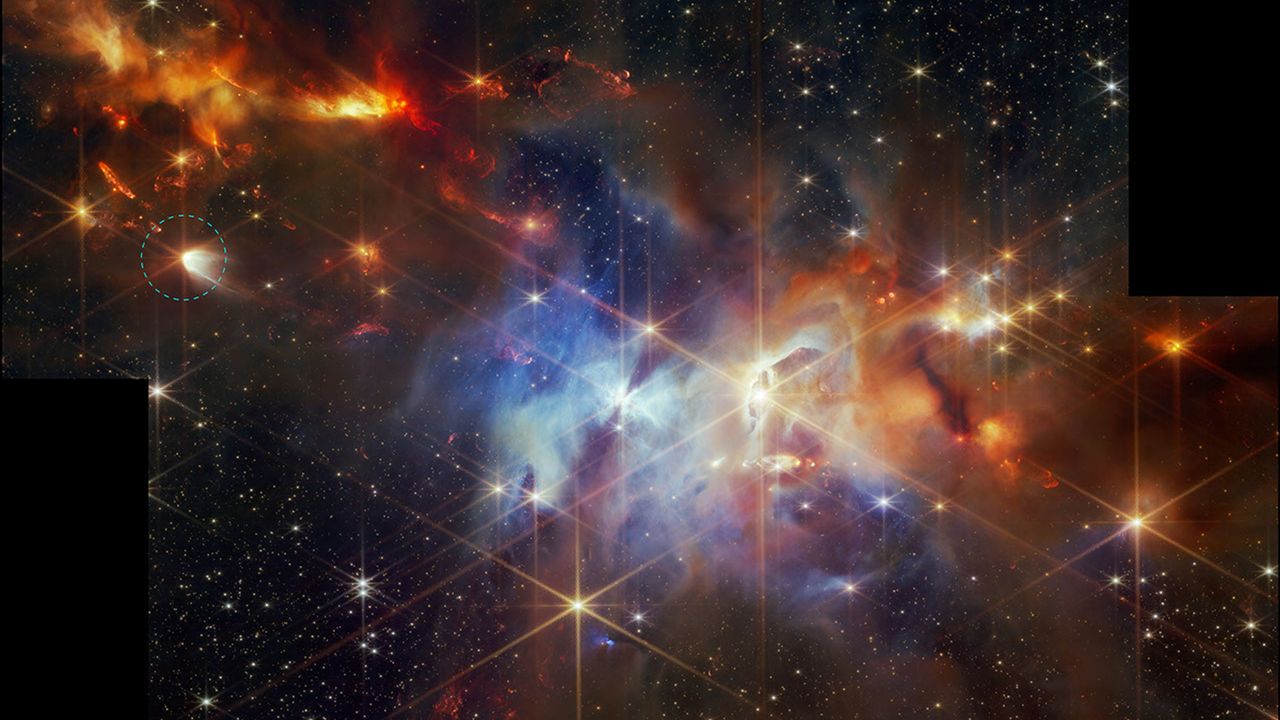
For the first time, NASA's James Webb Space Telescope has seen a young star forge crystals in blazing heat and hurl them to the icy outskirts of its planet-forming disk, which could help explain the evolution of comets at the edge of our solar system.
The protostar, called EC 53, lies about 1,300 light-years from Earth and is surrounded by a disk of gas and dust where planets and other bodies are taking shape. Using the Mid-Infrared Instrument on the James Webb Space Telescope, astronomers mapped where crystalline silicates form and how they travel outward.