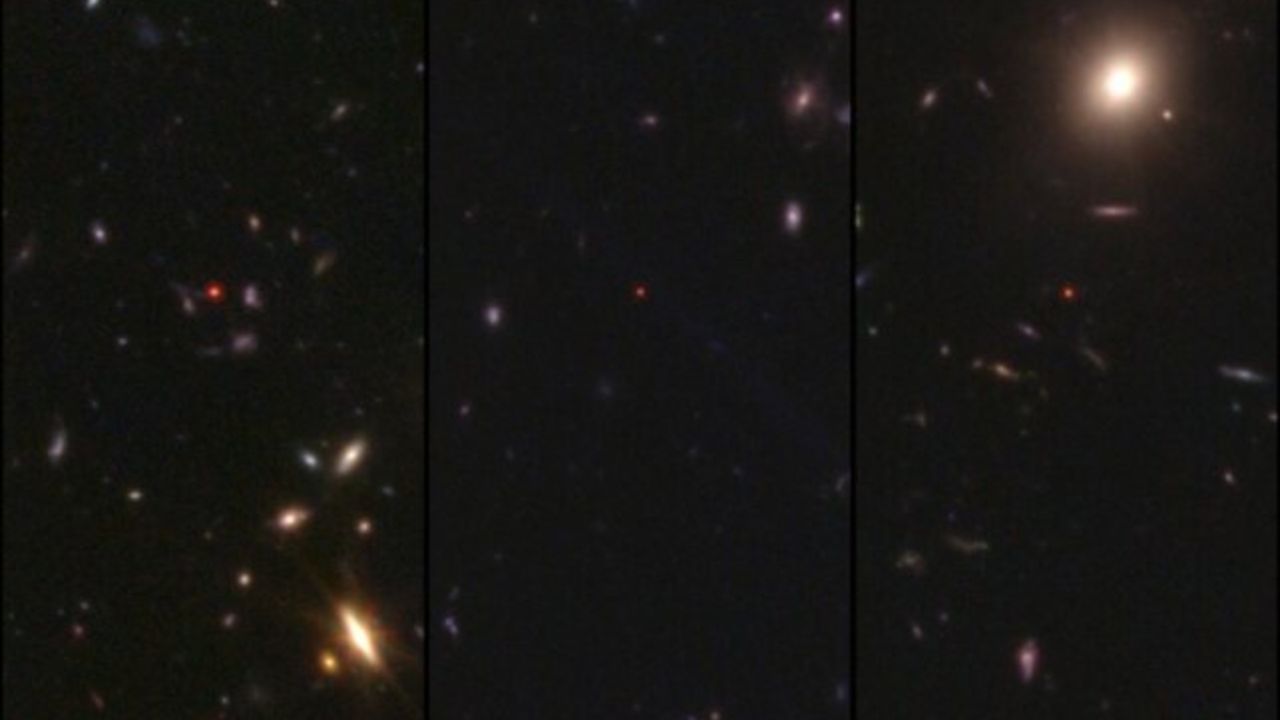
Ancient galaxies colloquially known as "little red dots" have proven a mystery ever since astronomers discovered them three years ago. Now, a new study finds the strange features of little red dots might be explained by supermassive black holes in disguise during their youth.
With the help of NASA's $10 billion James Webb Space Telescope (JWST), astronomers first discovered the mysterious specks of light known as little red dots at the end of 2022. They only existed for a short time in the cosmos, first appearing in the universe less than 1 billion years after the Big Bang and almost completely disappearing after 2 billion years, explained study lead author Vadim Rusakov at the University of Manchester in England. (The universe is currently about 13.8 billion years old.)