Using the James Webb Space Telescope (JWST), astronomers discovered that when our 13.8-billion-year-old universe was between 4 billion and 6 billion years old, it housed fewer feeding supermassive black holes than previously suspected.
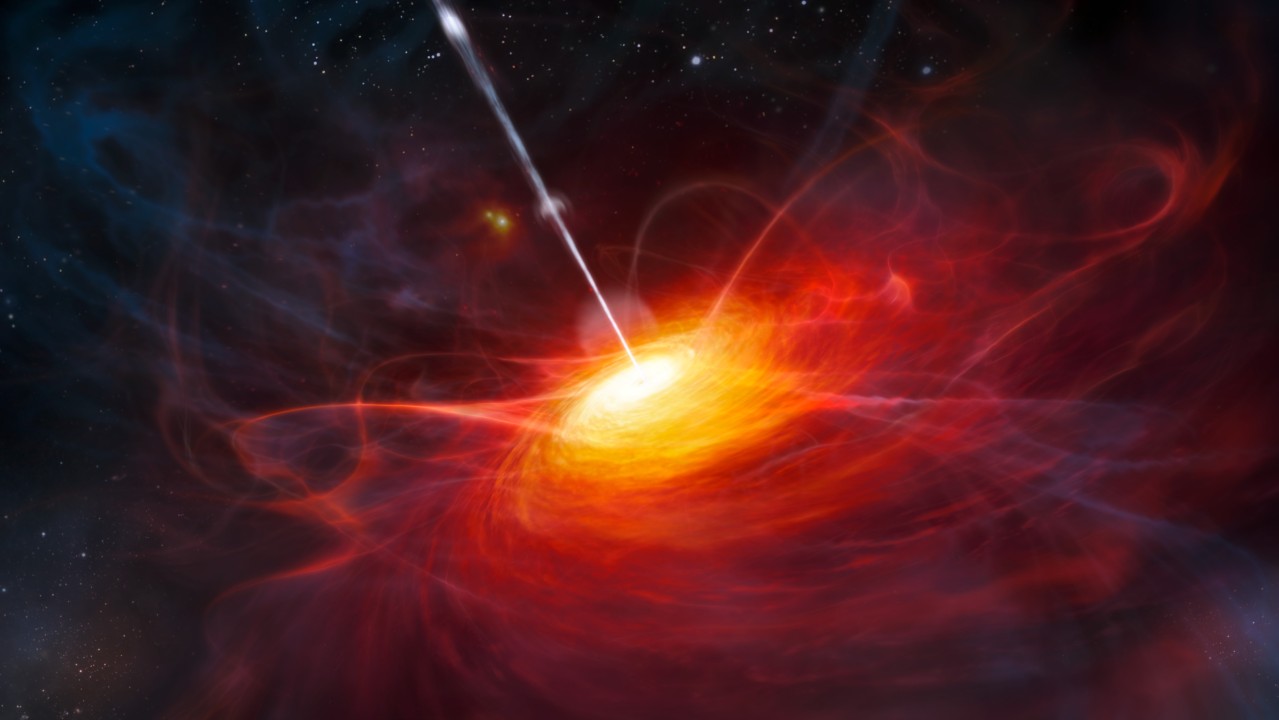
Such supermassive black holes, which can be millions, or even billions, of times as massive as the sun, grow by feasting on matter that surrounds them in the form of flattened disks called accretion disks. These black holes' gravitational influences also heat that material, thereby emitting tremendous amounts of radiation. When a black hole partakes in this extreme process, the whole region (including those radiation jets) is known as an active galactic nucleus, or AGN.