
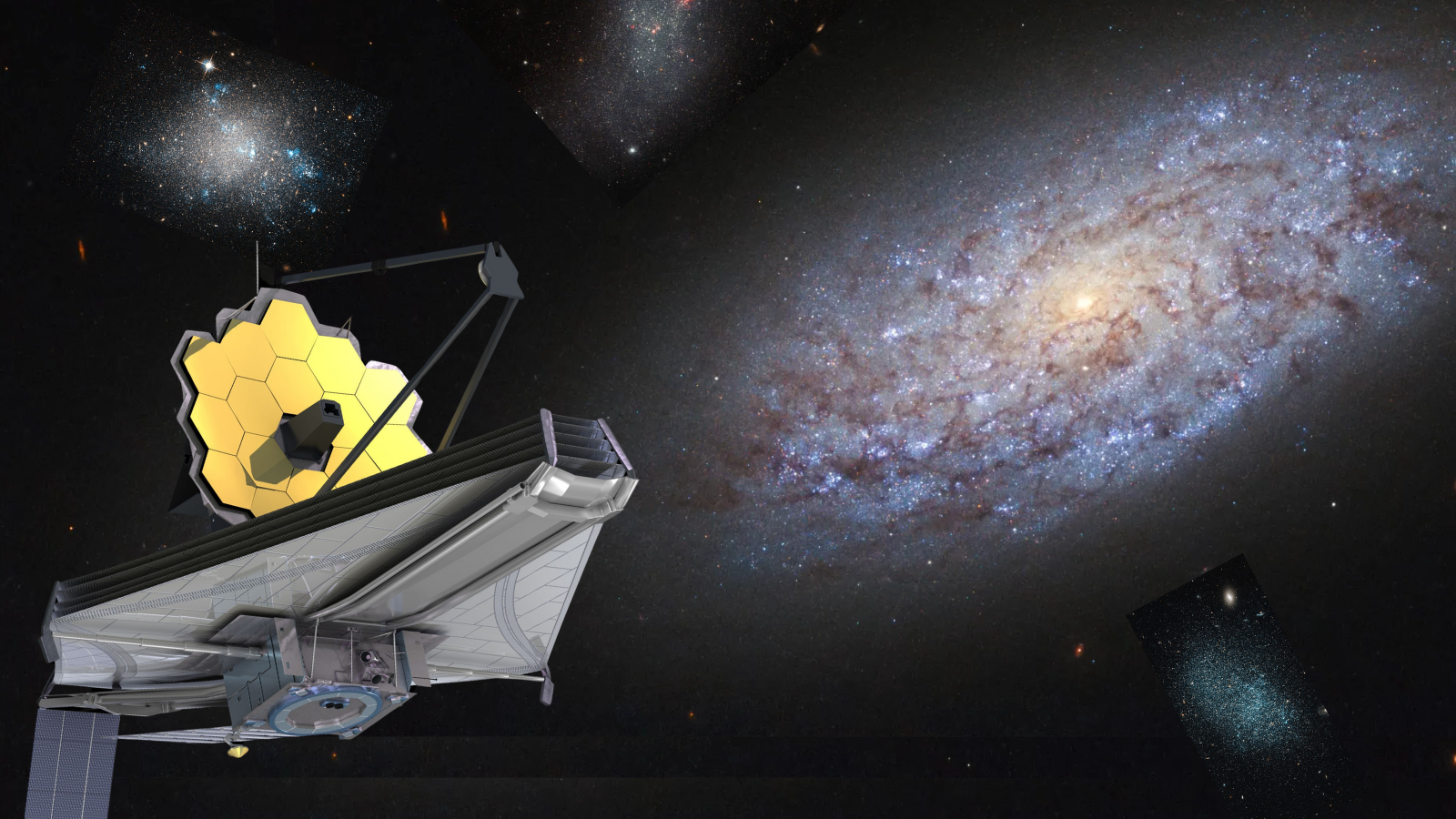
Astronomers have used the James Webb Space Telescope (JWST) and an effect predicted by Albert Einstein over 100 years ago to discover that small galaxies in the early cosmos packed a massive punch, shaping the entire universe when it was less than 1 billion years old.
The international team found the galaxies, which resemble dwarf galaxies that exist today, played a vital role during a crucial stage of cosmic evolution that occurred between 500 and 900 million years after the Big Bang. These small galaxies also vastly outnumbered larger galaxies in the infant universe, the scientists say, adding that it's likely the realms supplied most of the energy needed for a process called cosmic reionization. Cosmic reionization was critical to the growth and progression of the universe.