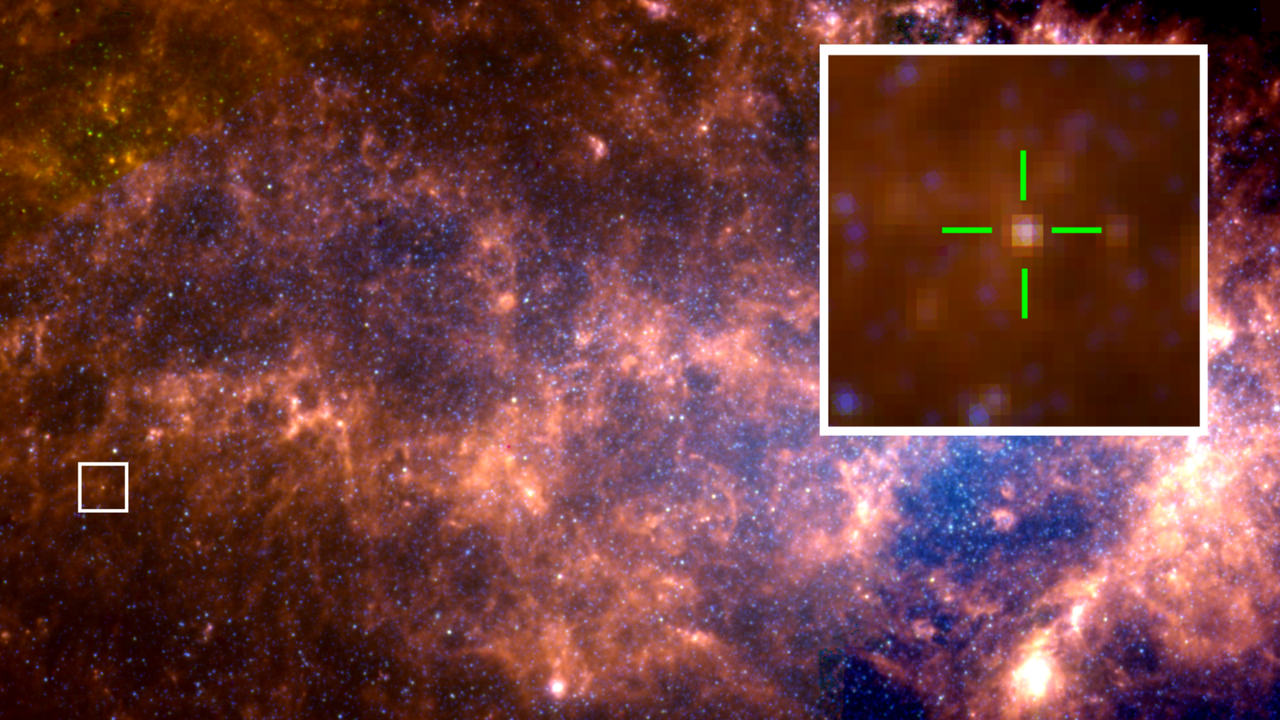
Astronomers have discovered what kind of stellar body is left after two stars collide and merge to generate an explosion called a "luminous red nova." Using the James Webb Space Telescope (JWST), the scientists discovered that the result of this merger event, which triggers a bright burst of light, is a supermassive star similar to a red supergiant star, and also found that these stellar mergers could have provided the raw materials needed for life.
Though many astronomical events occur over cosmic timescales of thousands or even millions of years, transient events like supernova explosions, the merger of black holes, and the collision and fusion of stars, as in the case of luminous red novas, occur over much shorter periods, from fractions of a second to decades. That gives astronomers the opportunity to study these events in "real time" as they develop.