Using the James Webb Space Telescope (JWST) and the Atacama Large Millimeter/submillimeter Array (ALMA), astronomers may have uncovered new clues about a longstanding mystery in galaxy evolution: why so many massive galaxies in the early universe appear to have died far sooner than expected.
Galaxies are often considered "alive" when they are actively forming stars and "dead" when star formation has largely ceased. In today's universe, dead galaxies are common. But astronomers have been surprised to find large numbers of them in the early universe, when galaxies were expected to be rapidly growing and churning out stars.
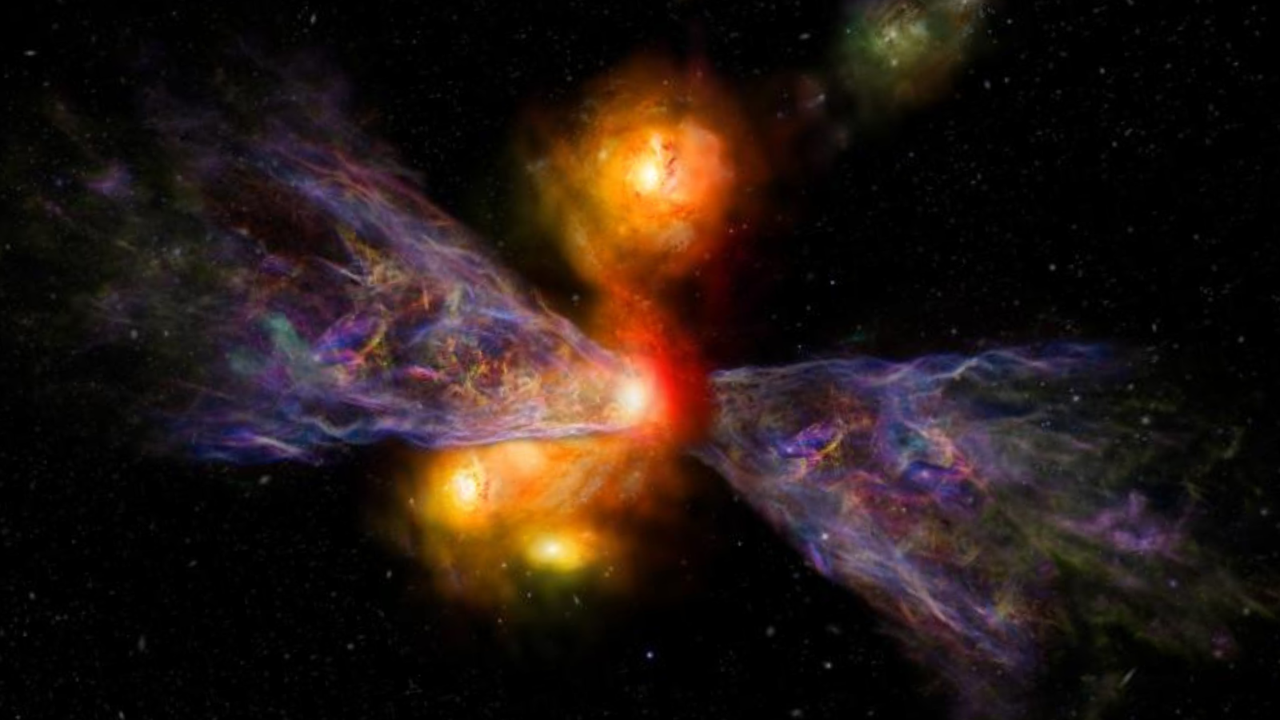
Using ALMA and JWST observations of a distant galaxy, researchers have detected a "galaxy-killing" wind — an enormous, high-speed outflow of gas — that is powerful enough to strip a galaxy of the raw material needed to make new stars. The discovery could help explain the puzzling population of massive "dead" galaxies found throughout the young cosmos, according to a statement from the Royal Astronomical Society.