
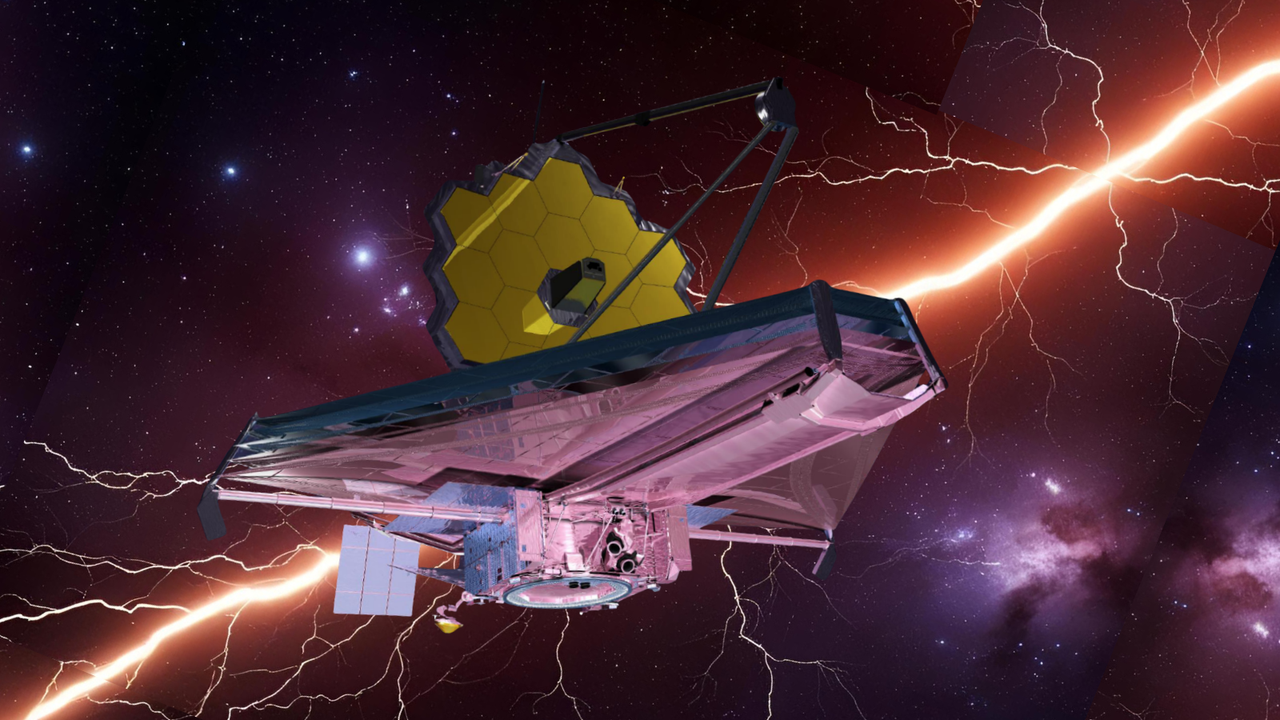
Since it began operations in 2022, the James Webb Space Telescope (JWST) has allowed scientists to make incredible strides in our understanding of the cosmos — especially its early epoch. However, one lingering cosmological mystery that the JWST hasn't had a major impact on is the nature of dark matter. Now, new research suggests that this is something that may soon change.
While dark matter is estimated to account for 85% of the matter in the universe, it is difficult to investigate because it doesn't interact with electromagnetic radiation (light) or it interacts so weakly that we can't directly detect it. As well as making dark matter effectively invisible, this lack of interaction with light tells scientists that the particles making up dark matter aren't the protons, neutrons, and electrons that comprise the everyday stuff we see around us on a day-to-day basis, ranging from the most massive stars to the viruses that make our lives miserable every winter. The search for a potential dark matter particle has delivered many suspects, but they've all remained frustratingly hypothetical.