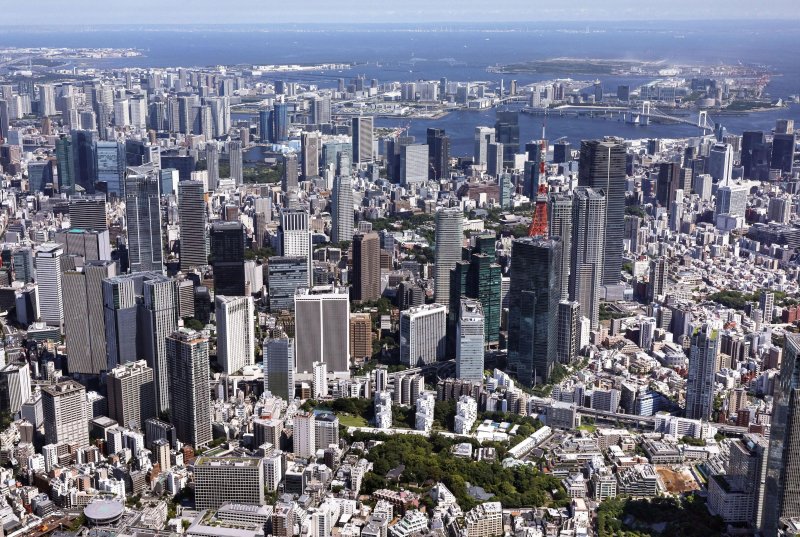
Jakarta ranked as the world's largest city with 41.9 million inhabitants followed by Dhaka, while Tokyo slipped to third, a recent United Nations (UN) report shows.
The population of Japan's capital has grown more slowly than those of Indonesia and Bangladesh, and consequently, its rank among the world's most populous cities dropped from first in 2000 to third by 2025, according to the report.

Bangkok saw its population grow by nearly 2% per year during 2015–2025, compared to the much slower growth of the total population of the country of 0.2% annually.

Looking ahead, the Tokyo urban area's population is expected to shrink from 33.4 million in 2025 to 30.7 million in 2050, dropping to seventh in rank as Dhaka takes the top spot with 52.1 million people, followed by Jakarta, Shanghai, New Delhi, Karachi and Cairo.
The world has become increasingly urban, with cities now being home to 45% of the 8.2 billion people, more than double the proportion in 1950, the report said. Two-thirds of the world's population growth from 2025 to 2050 is projected to occur in cities, with most of the remainder in towns.
Tokyo and Seoul are the only cities among the 10 largest in 2025 that are expected to experience a population drop by mid-century, due to low fertility rates and overall population decline, the report said.