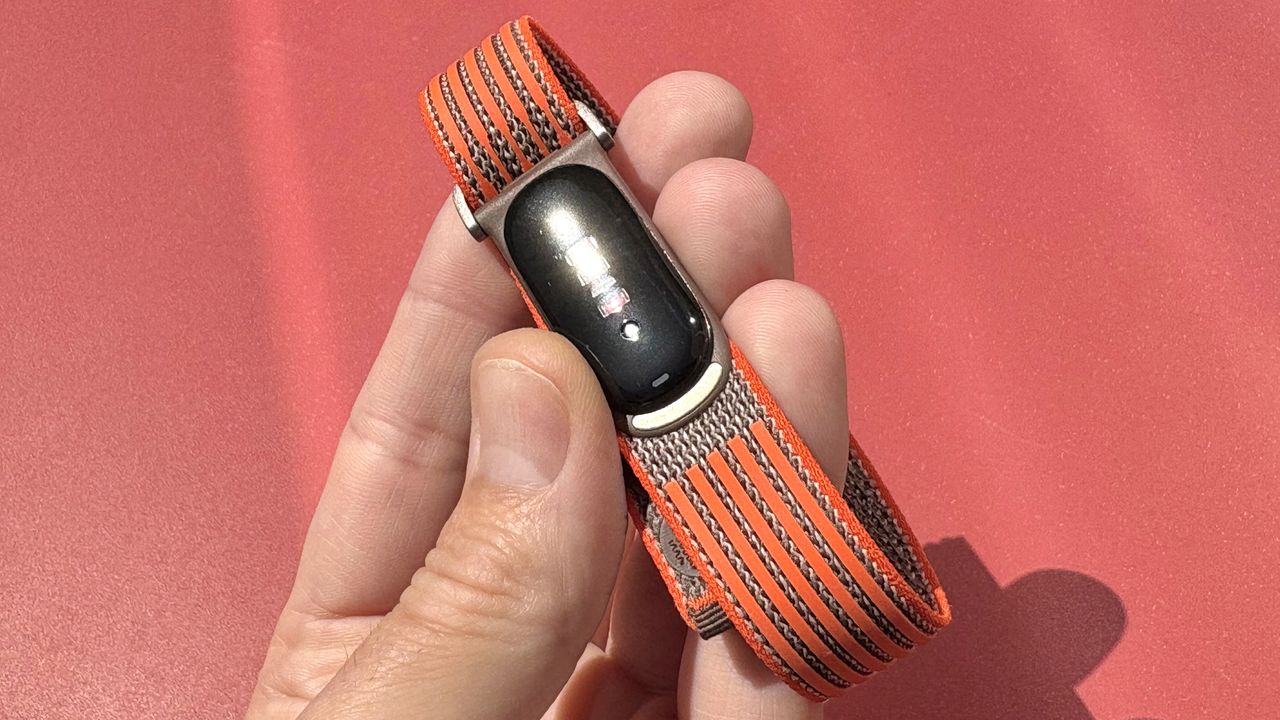
I’m currently reviewing the new Fitbit Air, and after four days wearing it, I’m already obsessed.
While the Fitbit Air is far from the most advanced fitness tracker on the market today — it doesn’t even have a screen or onboard GPS — a $99 price tag, playful design, and simple-to-use disposition make it a potentially compelling choice for wrists far and wide.

With that in mind, these are the three biggest reasons why I’m smitten with the new Fitbit Air, so much so that it just might be my favorite wearable in 2026, at least, so far.
1. Accessibly priced; plays well with others
The Fitbit Air is accessibly priced at $99. That cost covers the tracker and one band; additional straps start at $34.99 via Amazon and come in a wide range of colors, and your choice of silicone or woven knit.
Speaking of accessible, the Fitbit app… excuse me, the Google Health app (new name) plays nicely on both Android and iOS devices, offering users the same experience regardless of their OS preference; how democratic!
2. Subscription and distraction-free tracking
With no screen and no buttons to get in your way, not to mention a diminutive footprint (more on that below), the Fitbit Air is the antithesis of wearables like the Apple Watch 11, the Samsung Galaxy Watch 8, or the Google Pixel Watch 4, and that's the point!
There’s also no NFC for mobile payments, no speaker or microphone for taking calls, and ultimately, nothing to distract you from living in the moment.
Additionally, unlike other popular screen-free trackers aimed more at advanced athletes, most notably the Whoop 5.0 and MG, the Fitbit Air is subscription-optional. So, aside from the cost of the device itself, you never need to shell out any additional cash to make use of its primary tracking features.
That said, Google does offer an optional subscription plan for the Fitbit Air and Pixel Watch series called Google Health Premium (previously called Fitbit Premium). Priced at $9.99 a month or $99 for the year, a subscription unlocks all sorts of additional holistic tools, perhaps most notably, access to the tech giant’s new personalized wellness ‘Coach’ that turns your health data into surprisingly actionable insights.
3. Easy-wearing and addictively customizable
After roughly four days with the Fitbit Air on my wrist, I can say with certainty that this thing is comfortable as heck, a sentiment shared by my colleague Jane McGuire. Not only that, it barely resembles a piece of nerdy wearable tech; rather, it looks more like a stylish little bracelet, depending on which strap you opt for. I’m currently rocking the slick, limited-edition Stephen Curry jawn, and I’m hooked.
It’s also addictively easy to pop the little tracker out of the strap housing and swap it into a different setup. This is, of course, intentional on Google’s part. The idea is to make it easy for users to match their Air strap to their outfit or mood.
The official Google Fitbit Air straps start at $34.99, but I don't doubt that cheaper, third-party options will start popping up on Amazon in the coming weeks and months. When that happens, you can bet I’ll be purchasing a variety to test out.
What do you think of the Fitbit Air? What features are you most impressed with (or not), and are you considering buying one? Let me know in the comments below.
More from Tom's Guide
- I just spent 36 hours with Garmin’s new entry-level watch for runners — 5 things to know about the Garmin Forerunner 70
- I just ran my first 5K — 5 practical ways I conquered my pre-race nerves for a strong finish
- I tested the $79 Amazfit Bip 6 vs the $249 Apple Watch SE 3 — and the cheaper smartwatch is a lot better than I thought