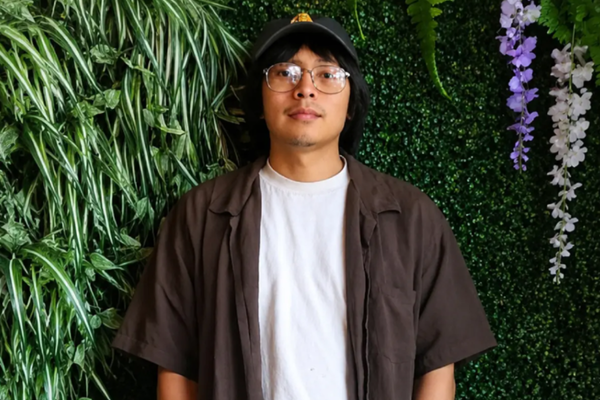
Jonathan Siffleet was 20 metres in the air when his legs gave way.
It was September 2022 and he was working to install a sign.
"I used to own a sign installation business. I travelled the country doing big installs for companies like Guzman and Gomez and Rebel Sport," Mr Siffleet, 56, of Edgeworth, said.
In the days after that, his right eyelid dropped and he experienced double vision.
"I was seeing four lanes on a two-lane highway, things like that," he said.
"As soon as I laid down, I was exhausted. I couldn't breathe properly or talk. My missus had to help me have a shower. It was getting crazy."
Doctors initially thought he had motor neurone disease.
Luckily, his doctor had another patient with a disease called generalised myasthenia gravis, so he noticed the symptoms.
Mr Siffleet was diagnosed with the autoimmune condition.
"They put me in hospital for five days and I had a plasma infusion. After that, they pumped me full of steroids," he said.
The condition disrupts communication between the brain and muscles.
"I don't receive those signals properly. Anything repetitive gets worse with activity," Mr Siffleet said.
This includes chewing, talking, eye and arm movement and walking.
"It fluctuates so much. You can't live a normal life," he said.
"Some days I can walk two kilometres. Other days, my wife has to help me get to the toilet," he said.
He had to close his business.
"Now I'm on the disability pension. It's a massive life change," he said.
The disease affects about 2000 people in Australia. A new drug, which has just been placed on the PBS, has given these patients hope.
It's a monoclonal antibody called Rystiggo (rozanolixizumab).
Research shows monoclonal antibodies have revolutionised modern medicine, given their effectiveness for cancer, autoimmune conditions, infectious diseases and diagnostics.
New treatments are needed for generalised myasthenia gravis because conventional therapies have limitations, such as side effects and inadequate symptom control.
Mr Siffleet said he was taking steroids, which caused him to put on 35 kilograms. Other drugs helped, but gave him side effects.
"It's been a torturous four years," he said.
He aims to try the monoclonal antibodies soon.
Clinical trials showed they led to improvement or no symptoms for tasks such as chewing and talking, swallowing and brushing hair/teeth and eyelid droop. They had mild to serious side effects.
Sydney neurologist Stephen Reddel, of Concord Repatriation General Hospital, said the treatment options for generalised myasthenia gravis had been limited.
"Access to additional PBS-listed options is an important step in enabling clinicians to tailor care based on a patient's clinical needs," Dr Reddel said.
Myasthenia Alliance Australia chairperson Susan White said the unpredictability of symptoms "makes it difficult for people to plan their lives, maintain work and stay socially connected".
"This ongoing uncertainty can affect mental health, contributing to anxiety, frustration and isolation," Ms White said.
Mr Siffleet said he tried to "not let it get me down, which is hard".
"I can't work, but I can do things sitting at a desk and support other people that way, which is good. I'm now the secretary of MG NSW," he said.
"I'm building an app for the disease. I'm quite proud of that. I started a university degree online to learn how to build the app because I was bored."