
Get all your news in one place.
100’s of premium titles.
One app.
Start reading
Motorsport
Motorsport

“It would be a mistake” – Ferrari warns against knee-jerk reaction to 2026 F1 rules

Ferrari team principal Fred Vasseur says tweaking Formula 1’s new-for-2026 rules imminently “would be a mistake”.

F1 moved to new chassis and engine regulations for this season, with the new power units approximately 50% electric, meaning energy management has become preponderant.

As a consequence, drivers lifted and coasted ahead of braking zones at the Australian Grand Prix, a problem that was exacerbated by the energy-hungry Albert Park layout. F1 reported a whopping 120 overtakes during the race, up from 45 last year; this included several lead-changing moves, but the role played by energy management in the action still raised questions.

Furthermore, the removal of the MGU-H component from the power unit means cars struggle to spool up the turbo, which led to a frightful near-miss at lights out in Melbourne despite a longer start sequence.

All these factors have been compounded by the complexity of the rules: the likes of straight mode, overtake mode, boost mode and super clipping take some getting-used-to, especially for casual viewers – the article below can explain them to you.

So does F1’s 2026 machinery need to be fixed, and when? As far as he’s concerned, Vasseur steers clear of any knee-jerk conclusions.

“Overall it is true that we had tons of negative comments, forecasts or whatever before the season,” the Frenchman said after the Australian race. “We were pushed also to change our regulation before race one.

“Honestly, I think it makes sense to wait two or three events, it is not because this one was a very good one that they will be all good, but I think it was a very good surprise.

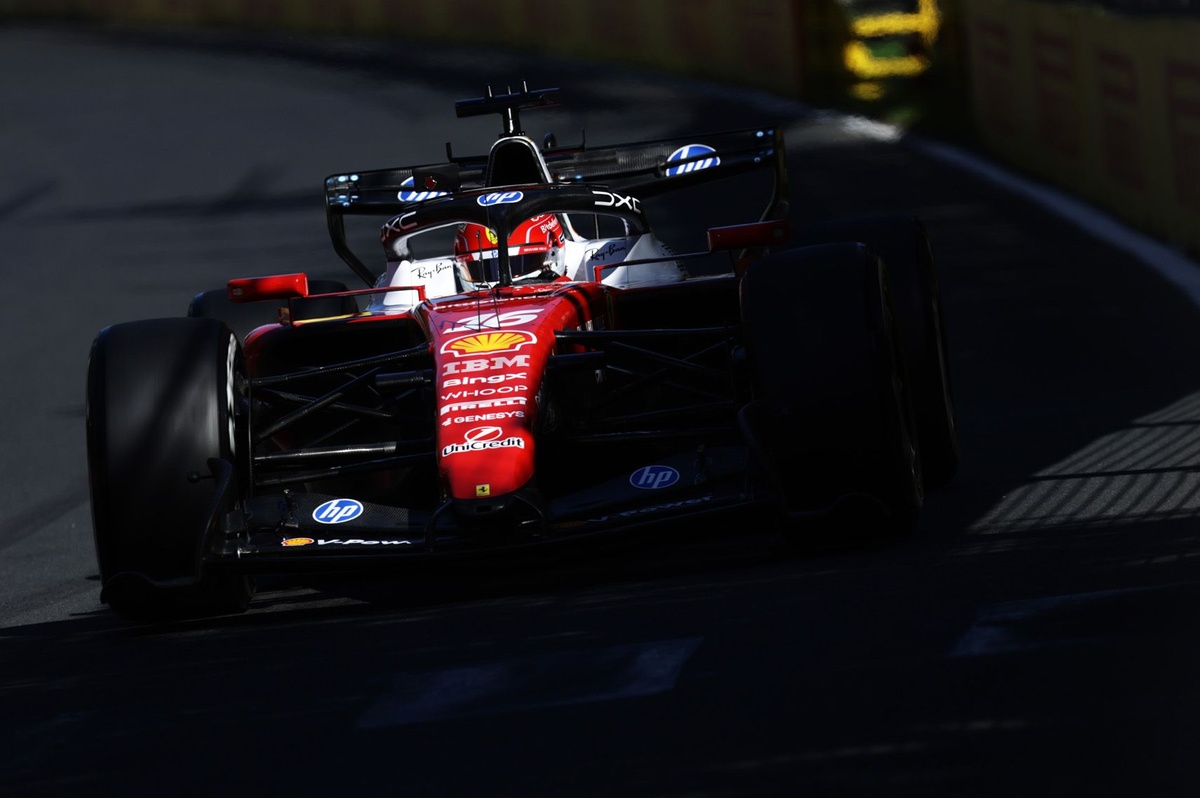
Charles Leclerc, Ferrari, George Russell, Mercedes (Photo by: Joe Portlock / Getty Images)

“Honestly, the first 10 laps of the race, I am not sure I saw something like this in the last 10 years,” he added, referring to an eventful, drawn-out battle for the lead between George Russell and Charles Leclerc. “We have to keep this in mind, that it is not a given now it will be like this every weekend.

“But I think it is a very good start for the sport, a very good start for the show. I think the fans, they enjoyed probably a lot the opening stint. But let's continue like this, and if we have to react at one stage after a couple of races we will react. But it would be a mistake to do it too quickly.”

Asked by Motorsport about the dramatic closing speeds generated by energy management and the arguably sketchy start sequence, Sauber team boss Jonathan Wheatley firmly pointed out: “We've just done the very first race with this set of cars. The very first race.

“The starts were interesting. Obviously, some cars are way more accomplished in getting off the line at the moment than others, but we all know that's not going to last for long before the other teams catch up. I think I've just got the long-term view with everything.

“I enjoyed some good racing, I thought. It was exciting. The crowd certainly thought so, I heard the cheering over the sound of the cars.

Jonathan Wheatley, Team Principal of Audi F1 Team (Photo by: Simon Galloway / LAT Images via Getty Images)

“I think there's a lot to learn; very interesting, Gabi [Bortoleto]'s battle with Arvid [Lindblad] at the end of the race. Different energy deployment usage, the strategy involved in that.

“Let's get into this season a little bit. We'll do a few more races before we react too quickly.”

On Sky Sport Germany, former F1 driver Timo Glock asked Wheatley about some drivers’ complaints regarding the potentially dangerous closing speeds due to energy management, but the Briton proved reassuring.

“Look, we're all involved in making sure that this sport is the best sport in the world,” Wheatley said. “The FIA have been managing Formula 1 forever, they do a great job of doing that. They're listening, maybe listening too much at times, maybe this weekend – but what I mean by that is not a criticism, it's that they're open and listening to the drivers, listening to the teams.

“These cars will become more sophisticated, these cars will become more straightforward to drive, and in three years' time, who knows, maybe we'll have the best Formula 1 cars of all time.”

Additional reporting by Roberto Chinchero and Filip Cleeren

Sign up to read this article
Read news from 100’s of titles, curated specifically for you.
Already a member? Sign in here
Related Stories
Top stories on inkl right now
One subscription that gives you access to news from hundreds of sites
Already a member? Sign in here
Our Picks
Fourteen days free
Download the app
One app. One membership.
100+ trusted global sources.