Scares took a bit of a backseat in It: Welcome to Derry's exposition-heavy episode 6, as shocking revelations regarding Lilly's Juniper Hill pal Ingrid Kersh came to light and the HBO horror spin-off amplified its connection to The Shining follow-up Doctor Sleep. Elsewhere, Ronnie and Lilly fought, while Marge and Rich grew closer and Will stood up to his domineering dad.
In amongst all that, there were plenty of Easter eggs to catch as always – and don't worry, you're not at risk of getting caught in some devastating factory accident if you go hunting for 'em. You may well have missed a bunch, though, if you were cowering behind a pillow the whole time…
Fortunately for you, we're tougher than Henry Bowers' scuffed boots, so we've made a list of all the fun references featured in each episode below. Things are starting to get a little lore-heavy now, and it's harder than ever not to hint at what may be to come while explaining certain nods to Stephen King's original novel. So if you're super wary of spoilers, be warned. That said, we vow not to give away anything too juicy. In short, if you've seen the films and are up to date, you'll probably be fine. Since HBO is rolling out It: Welcome to Derry weekly, be sure to check back in over the coming weeks, but for now, what're you waiting for? Hi-yo, GamesRadar+ reader, awaaaaay!
It: Welcome to Derry Easter eggs
Episode 6 'In the Name of the Father'

1935: In the same way episode 3 opened on a flashback to 1908, episode 6 kicks off with one from 1935; in which a young patient at Juniper Hill Asylum is accompanied down into the basement by a nurse. "This is where the clown told you to meet him?" the orderly asks the littlun, before Pennywise pops out and scares them (and us) silly. The scene becomes more significant later, but the year is important for another reason: it's the year in which season 2 of It: Welcome to Derry will reportedly be set. We also know at this point that 1935 was the year the Bradley Gang were massacred in town, during It's previous re-emergence.
Steam: Towards the end of his heated conversation with Major Hanlon, a traumatized Dick Hallorann gets so worked up at the thought of confronting It again, he starts "steaming". Look closely at his shoulders and you'll notice it. In King's The Shining follow-up Doctor Sleep, it's revealed that individuals who possess the ability to "shine" can sometimes involuntarily release said essence under extreme stress – which, we figure, is what's happening to Hallorann here. In one horrifying scene from the novel (and Mike Flanagan's film adaptation), vampiric villain Rose the Hat and her group The True Knot physically torture 11-year-old Bradley Trevor and inhale his "steam", before burying his body at an electricity plant.
Theodore Uris: In the scene where Derry locals are perusing the "missing" posters that have popped up all over town, we see one for "Theodore Uris", confirming our theory that he was related to Losers' Club member Stan Uris. RIP Teddy, you were a real mensch.

Machen Sporting Goods: Later on in the sequence, a trio of gun-toting Derry locals walk past a store called 'Machen Sporting Goods', which readers of the book will likely recognize. In the source material, pharmacist Dr. Keene tells Mike Hanlon that Machen Sporting Goods used to be owned by Lal Machen in the early '30s, who – at the behind-the-scenes behest of It – rallied the residents of Derry to ambush The Bradley Gang. After the notorious bank robbers entered his shop and placed an obscene order for guns and ammunition, he swiftly began encouraging his pals to bring their own firearms to the three-way intersection of Canal, Main, and Kansas Street at the exact time he told Al, George and co. to pick up the goods. Things, as you can imagine, got very bloody – and neither of the Bradleys made it out alive.
Derry Public Library: The Derry Public Library is a super significant spot in King's original It novel. It's less so in Andy Muschietti's It and It: Chapter Two, but there are still a few scenes set there, so we're quite surprised it took this long for it to show up in It: Welcome to Derry. No one goes inside it here, still, but it's glimpsed from the outside during the same montage.
Margaret… Tozier?: Earlier this week, HBO tweeted out a page from the fictional 'Derry Herald' that revealed Marge's full first name to be 'Margaret'. Since then, many viewers have convinced themselves that Marge will go on to become the mother of fellow glasses-wearer Richie Tozier, who shares the same name in the novel and movies. If you're not terminally online, you might have missed all that, though, but episode 6 gets you up to speed thanks to Patty Stanton calling her "Margaret" in the lunch hall of Derry High School.
Periwinkle: Episode 6 is bursting with revelations, and almost all of them relate to Lilly's friend from Juniper Hill: Ingrid Kersh. Turns out, she was the little kid we saw dressed as a clown in episode 3's 1908-set opener – and used to go by the stage name of 'Periwinkle', while her father would perform as 'Pennywise the Dancing Clown'. Gulp. She also divulged that she's been the clown stalking the youngsters up until now; in the cemetery and crouching outside the Hanlon's house. Periwinkle is an original creation for the show, but ties into a moment in which It's "Mrs. Kersh" form tells Beverly Marsh that her father was Pennywise. We're excited to see how this one plays out further.

Bob Gray: It's unlikely that Ingrid's father is actually Pennywise, seeing that he's a cosmic entity and all. But from what we can gather, her father was a human named Bob Gray, who It stole the face of in order to move more stealthily around Derry in the early 1900s. This sheds new, bleak light on the Mrs. Kersh scene from both the novel and It: Chapter Two, in which the alien's witch-like manifestation tells Beverly her father was Bob Gray. Most fans just wrote that off as a tall tale It used to spook the Losers' Club member, but could it be that Bob Gray, as well as Ingrid Kersh, was once a real person?
Carnival sounds: Right before Pennywise kills Mabel in the basement of Juniper Hill Asylum, Ingrid hears far-off-sounding carnival noises. It's brief, but really reminded us of the scene in the book where Stan ventures into the Standpipe. He's lured into the structure's restricted section by the smells and sounds of a funfair, but quickly realizes it's a trick when It manifests itself in front of him as the ghosts of a bunch of drowned children.
When the door slams shut, trapping him inside with the ghoulish spirits, he turns to his bird book for comfort. Terrified, he starts reeling off the names of certain types from memory. With that, the door miraculously opens again and he's able to escape. (We don't think it's a coincidence that Mabel died because a door in the basement locked on its own and Ingrid couldn't get it open).
The teacup: After Ingrid dumps a load of exposition on Lilly, the show cuts back to the pair in the former's creepy attic. Behind Lilly, you can just about see a pink, scalloped teacup to the right, which looks exactly like the one used by It as Mrs. Kersh in It: Chapter Two. Things really are coming full circle, huh? Though we worry that doesn't spell good things for Ingrid…
Episode 5 'Neibolt Street'

Kitchener Ironworks: We've mentioned the Kitchener Ironworks (and its inevitable explosion) in the Easter egg roundups of previous episodes a few times, but here it gets its first explicit name drop. In an early scene, General Shaw tries to explain his plan to "capture" It to Major Hanlon, and points out 29 Neibolt Street on a map of Derry. He notes, as we have before, that all of Derry's sewer pipes converge there, making it the most likely place they'll find "the weapon" they've been hunting. When he does, you can see the Kitchener Ironworks located to the right.
In the novel, it's revealed that 88 children and 14 adults were killed when the factory blew up during an Easter egg hunt in the early 1900s. The tragedy was later referenced in Andy Muschietti's movies, albeit obscurely. In the 2017 flick, as Ben Hanscom is researching the history of Derry, his attention is caught by a trail of literal Easter eggs leading down into the library's archive room. When he goes to investigate, he's followed by a headless, steaming corpse; a nod to Robert Dohay, a character whose head was said to be found three days after the explosion in a neighboring tree.
Armless: Much to the surprise of Lilly and co, a worse-for-wear Matty pops up at the standpipe; full of stories about the clown that abducted him and camps out underground. After filling them in on how he managed to escape Its lair, he tells them that Phil is still alive down there – and suggests the group try to save him. Teddy and Susie, not so lucky? According to Matty, It tore the former's jaw off and then ate his brains, while it ripped Susie's arm off and left her to bleed out in the darkness; the latter's fate sounding an awful lot like one of Pennywise's most infamous kills. In Muschietti's original movie, Bill Denbrough's brother Georgie is murdered by Pennywise, biting the littlun's arm off and dragging him down into the drain. In the book, though, Pennywise leaves Georgie to succumb to his injuries on the rainy sidewalk, and his body is later discovered by Derry local Dave Gardener.
Shawshank State Prison bus: After his cigarette-related slip-up left Bowers convinced he killed Phil, Teddy, and Susie, Hank Grogan gets ferried onto a bus with Shawshank State Prison painted on the side. "Your savior better work fast, Grogan," Bowers teases him menacingly beforehand. "The last fish we sent in there didn't survive the week. If you're lucky, you'll survive two."
Sewers: Calling "the sewers" in an It-centric show an Easter egg feels a little redundant, but we figured we'd include since Derry's elaborate underground system is a key part of the narrative – and episode 5 sees several characters delve down deep into it for the first time. As we explained before, the sewers underneath 29 Neibolt Street are It's domain, and where he brings his victims to "float" in fear-filled, catatonic states.

"I want you!": When Colonel Fuller and his men descend into the sewers, It manifests itself in front of the soldiers as a terrifying version of Uncle Sam, the character used in James Montgomery Flagg's recruitment ads during World War I. If the star-adorned top hat and pointing finger isn't recognizable enough, the ghoul shouts "I want you!" at the troopers, quoting the posters' catchphrase just to ensure audiences get the reference.
In the 1970s, the artwork was co-opted by anti-war activists, who reimagined Uncle Sam as a skeleton or a wounded man. As General Shaw continues to ignore Rose's pleas and recklessly pursue It, the show isn't being subtle with its commentary on the US army – so it's a pretty clever nod to a complicated, controversial part of military history.
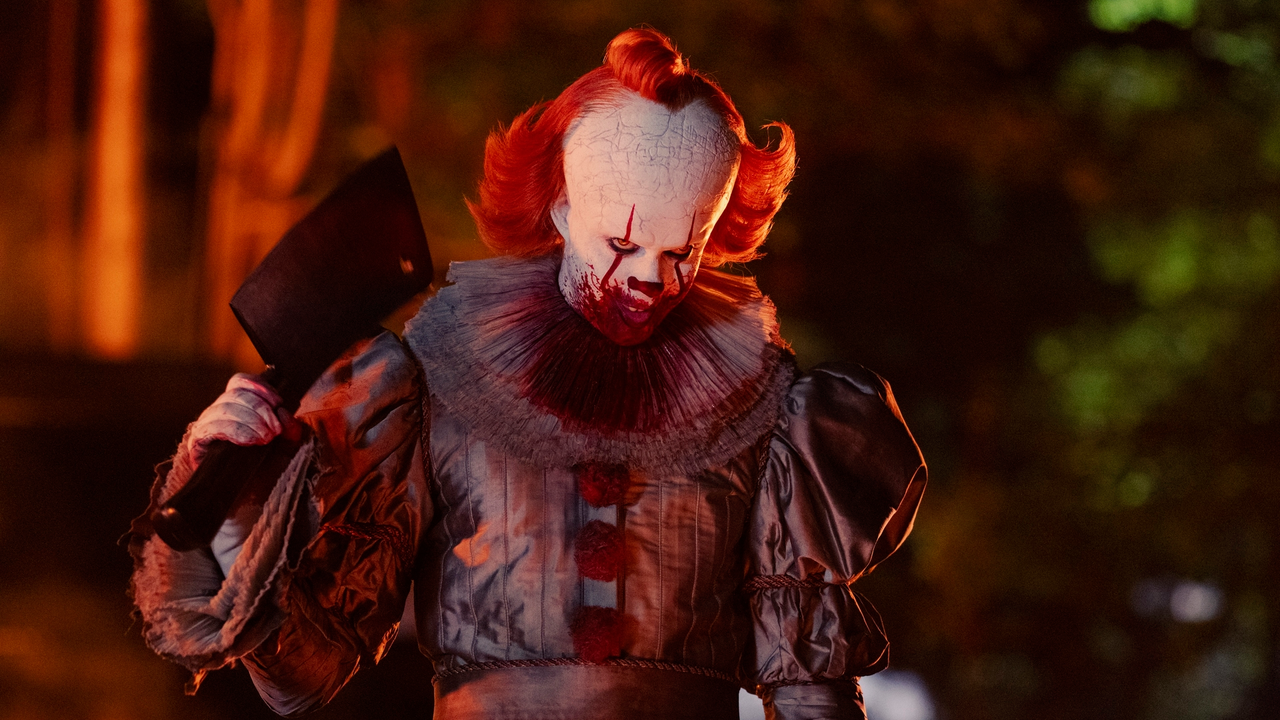
First Pennywise appearance: After weeks of waiting, horror fans finally got their first proper glimpse of Bill Skarsgard's Pennywise in the show – though, he wasn't around for long. The clown disguised himself as Matty to lure Lilly, Will, and co into the sewers, telling them that Phil was still alive down there – and could be saved. They should've suspected something when the kid insisted they not get any adults involved…
Mrs. Kersh: Turns out, Ingrid (Madeleine Stowe), Lilly's pal from Juniper Hill, is the married woman Hank Grogan was with on the night Phil, Teddy, and Susie were killed and, well, her husband is local butcher, Stan. That makes her Mrs. Kersh, a reveal that gives the child-adult friendship a sinister reframe.
In the movies and novel, adult Beverly pays a visit to her family's old home, where she discovers that an elderly lady named Mrs. Kersh bought the property off her late father five years ago. Mrs. Kersh invites her in for the tea but the sweet gesture soon turns into a nightmare, when the well kempt Kersh starts transforming into a decaying, fanged witch, and says: "My father… was Robert Gray, better known as Bob Gray, better known as Pennywise the Dancing Clown." Beverly concludes – along with most fans of the franchise – that the old woman is yet another of Its forms, but what does that mean for the show version? Has she been It hiding in plain sight this whole time, or is there more at play here?
It's worth noting that in episode 5, Ingrid begs Lilly not to venture into the sewers in the hope of saving Phil, which doesn't sound like something Pennywise would do. Similarly, back in episode 4, Ingrid told Lilly that her father "always said to me that with good friends by your side, anything's possible". Curious. With next week's episode being titled, 'In the Name of the Father', we're dying to see how this subplot plays out.
The lockboxes/Hallorann's grandparents: Episode 5's family connections don't end there, either, as we meet Dick Hallorann's grandparents. After he follows Hanlon, Fuller, and Taniel into the sewers, he's transported into a vision, in which his grandmother warns him of his abusive grandfather's arrival. The pair converse telepathically, with Hallorann's grandma clearly possessing the same ability to "shine"; something his grandpa clearly hates. "Keeping secrets from me?" his grandpa – who later shows himself to be It – whispers. "I may not have had the gift, but I ain't no dummy. She don't understand like we do. Power like this is supposed to be used," he continues, encouraging Hallorann to open his "box".
This backstory of Hallorann's was explored in King's The Shining follow-up Doctor Sleep, with him telling Danny Torrance that it was his grandmother, Rose, who taught him how to hide "bad shines" away with mental lockboxes. With Hallorann's open wide at the end of the episode, we can only imagine the horrors that await.
Episode 4 'The Great Swirling Apparatus of Our Planet's Function'

Dracula: After their plan to show Chief Bowers photographic evidence of the evil entities wreaking havoc in Derry goes sideways, Will, Lilly, Rich, and Ronnie gather on the bleachers at school to debrief. "Maybe it's like a Dracula thing?" Ronnie wonders, noting how Bowers couldn't see what they saw in the snapshots. "You know, like in the movie, where we can't see his reflection?" We could be stretching here, but the mention reminded us of It's Count-like form that terrorizes adult Ben in the Derry Public Library in King's novel. Only that version of the vampire had Gillette razor blades for fangs…
Will's call to arms: "The first thing I'd do is find out if there's a history of this stuff happening in Derry", Will says in the same scene. While It (2017) inexplicably presented Losers' Club member Ben as the one who investigated Derry's dark past as a child, it's adult Mike who gathers together such information in the source material. Like father, like son, eh? Mike's findings are ultimately presented in the book's four interludes, all of which inspire It: Welcome to Derry.
The Black Spot: We were told before the show even began that it'd center partly on the fire at The Black Spot from the book. Here, we see the beginnings of the subplot, as Shaw makes good on his earlier promise to Hallorann and sets him and his pals up with an off-base place to cut loose. When the guys go to visit the site, they're disappointed by how run-down it looks – but Hallorann's quick to make them see the potential. They then suggest he put a little grill in the backroom so that he can fix up some grub for future patrons; a nod, presumably, to Hallorann being the Overlook Hotel's head chef in The Shining and briefly mentioned as a cook in It the novel, too.

Duck and cover: There's that Bert the Turtle again, though we're still not able to explain all of the show's references to our hard-shelled pals just yet. Since Maturin the turtle is a key part of the novel, newbies should expect some explanation as to who this cosmic being is when the time comes. With only four episodes to go, we're not sure how much of that we'll actually get in season 1 but given It: Welcome to Derry's huge debut on HBO Max, we're sure more chapters are on the way…
Marge's trick: In episode 4, Marge colludes with Patty to embarrass Lilly in front of the whole school, tricking her into believing one of the popular boys is "sweet" on her. It's reminiscent of a huge plot point in King's first novel Carrie, in which Sue Snell convinces her boyfriend Tommy to invite Carrie to prom. While Sue had seemingly good intentions, Carrie's attendance paves way for their more mean-spirited peers to concoct a plan to dump pig's blood on the titular teen – and the subsequent destruction of Chamberlain by a humiliated, rage-filled Carrie and her telekinetic powers.
"You'll burn too": Will and his father Leroy's fishing trip is cut short when the former is dragged under the water by a charred version of his dad. "You'll burn, too!" the entity prewarns, frightening Will. At first, the youngster assumes it's just It messing with him, trying to exploit his fear of his pilot pops getting caught in a plane crash. If you've seen the films, though, you'll likely realize that it's actually a heartbreaking nod to Will dying in a house fire when he's much older.
Derry's Indigenous locals trapping It: When Hallorann forces his way into Taniel's mind, and unearths a memory that details It coming to Earth 400 years ago, it's explained that the Sqoteawapskot tribe once successfully contained It, using fragments of the star he crash-landed in to cage him inside the Western wood. Their efforts were undone, though, when settlers raided the area and ignored the tribe's warning not to venture into the trees. It killed the settlers and grew much stronger, rendering the Sqoteawapskot's previous method of containment useless. With that, one of the tribeswomen sought out more shards, but things turned sideways when her mother and others followed them – and many were slaughtered by It, which they dubbed "the Galloo". The interlude is a neat buildout on the all-too-brief mention of Native Americans in King's novel, and subsequently It: Chapter Two.

"It's a beautiful opportunity to expand on the King universe, because undergirding a lot of the stories is the land," Kimberly Guerrero, who plays Taniel's auntie Rose, previously told Polygon. "The land is a character itself. The land of Derry is rife with history. The land under The Shining is rife with history. The land underneath Shawshank Prison is rife with history, and that history is our history."
Deadlights: In the flashback depicting Taniel's story, warrior chief Sesqui is hypnotised by three glowing orbs as she battles It. In It (2017), Sophia Lillis's Beverly encounters them and temporarily falls into a coma. In It: Chapter Two, Richie looks into them and starts to float catatonically, before Eddie saves him by throwing an iron fence post into It's throat.
In the book, said orbs – also known as 'Deadlights' – are revealed to be balls of otherworldly energy from the Macroverse and are considered to be It's truest form. As spelled out above, looking into them can cause immediate death or insanity. If the official trailer is anything to go by, the Deadlights are going to feature in future episodes, too; most notably in a scene with Patty and her pals. Shudder!
29 Neibolt Street: Episode 4 ends with a shot of a debilitated house we've seen before in Muschietti's movies: 29 Neibolt Street. It's a significant location in both films, in which the Losers' Club confront Pennywise; first, as children, where they cause his early hibernation and second, as adults, when they fatally rip out his heart and crush it.
It's similarly important in the novel, built on the spot of the old Well House and where all of Derry's sewer pipelines connect. It's essentially It's lair.
Episode 3 'Now You See It'

1908: Episode 3 features a bunch of flashbacks set in 1908; the first of which sees a young boy – who's later revealed to be General Francis Shaw – get a fright after he wanders inside a circus's 'Human Freaks' attraction. We'll delve more into the flashbacks themselves later, but first we'd better point out the significance of 1908...
As mentioned before, director Andy Muschietti has spoken openly about his three-season plan for It: Welcome to Derry, with each chapter focusing on a different interlude from King's original novel. The third season of which, they're setting in 1908 (it's 1906 in the book). Was Shaw around when the Kitchener Ironworks blew? If so, we can imagine he'll be a major character in all three seasons.
Andy Muschietti: Speaking of flashbacks, key-p your eyes peeled in the first… director Andy Muschietti has an easily missable cameo as the cigarette-smoking organ player inside the 'Human Freaks' attraction.
The Skeleton Man: Ever since It: Welcome to Derry's Funko Pops were unveiled back in August, franchise fans have been wondering what the deal was with "The Skeleton Man" design. It's not a form It takes in the novel nor was it an original creation for Muschietti's movies – though it's worth noting that Tim Curry's Pennywise appeared as an admittedly different-looking swamp-dwelling skeleton in the '90s miniseries. In episode 3, we finally meet "The Skeleton Man" and it's a version of It that terrorized Francis 54 years ago.
Slingshot: In the opener, Francis is given a slingshot by his father and later trades it with a younger Rose, played in the present-day timeline by Kimberly Guerrero, for some water. The kids play with it in the woods but when Francis is accosted by "The Skeleton Man", the toy becomes a life-saving weapon; Rose uses it to pop the ghouls eye out, incapacitating it enough for Francis to escape.
In 1962, Francis/Shaw gives the slingshot to Hallorann to help him locate It. The Phillies Cigar box Shaw keeps it in is essentially an Easter egg within an Easter egg, as it nods to antagonist Greg smoking that very kind of cigar in The Dead Zone, another of King's novels.
In the It book, Beverly Marsh seriously wounds It with a slingshot and silver slugs; a character-defining moment that sadly isn't present in Muschietti's movies.

Shawshank Prison: If you've seen the trailer, you'll know Shawshank State Prison is going to factor pretty heavily into It: Welcome to Derry and, well, it gets its first name-drop in episode 3.
In an attempt to goad Hank Grogan into confessing he killed Teddy, Phil, and Susie, Chief Bowers pays him a visit in the stockade and offers him a cigarette. Clocking the Pall Mall pack, Grogan says he prefers Embassy Golds, Bowers plays along for a bit – before asking Grogan to confirm where he was on the night of the murders. "I told you, I was home," Grogan sighs, prompting Bowers to reveal that he has an eyewitness who saw him strolling down Jackson Street at 11:30pm that same evening. Grogan insists, and that's when Bowers flashes the old packet of Embassy Golds that was found where Grogan was spotted. With that, he ominously asks: "Do you know what they do to kiddy-killers in Shawshank?"
"Shawshank" is most instantly recognisable as the eponymous location of heartbreaking drama The Shawshank Redemption – but it's a key place in Rita Hayworth and mentioned in a whole bunch of other books, too, including Under the Dome, Dolores Claiborne, and Mr. Harrigan's Phone. In It, Richard Macklin, Eddie Corcoran's stepfather, is sentenced to ten years there after murdering Eddie's little brother Dorsey.
The Bradley Gang massacre/Al Bradley: We knew it was coming after the cliffhanger in episode 2, but episode 3 gave us our first explicit mention of "the Bradley Gang Massacre". It's first brought up by Fuller, who says they "stripped the Caddy down to the bolts" and found nothing but "blood stains and bullet holes". He goes on to explain that it's "part of the 1935 cycle" and that the Bradley were a "bunch of Dillinger wannabes".
"Town went crazy and shot them to hell," he adds. "Eyewitness reports at the time suggest sightings of the entity in one of its forms." With that, it looks like Welcome to Derry will be sticking close to the novel, in which sporting goods shop owner Lal Machen rallied the locals – without realizing that Pennywise had coaxed him subconsciously into doing so – to execute the Midwest-hailing mobsters and their crew in a broad-daylight shootout. In the book, this happens in 1929, just a few months before The Black Spot fire.
Al Bradley is mentioned specifically later on in episode 3 by Taniel (Joshua Odjick).
First mention of Pennywise: It's safe to say that viewers are desperate for a glimpse at It in his iconic clown form but alas, episode 3 didn't feature an appearance from Pennywise. It did, however, mention his name for the first time. No character said it but it was seen when Hallorann uses the slingshot to strengthen his psychic connection with It, and winds up astral projecting right into his lair in the sewers.
In the scene, It addresses Hallorann from a wagon emblazoned "Pennywise". It asks, "Who are you?!" from the shadows, spooking Hallorann enough to request Shaw call off the search. "It wasn't supposed to see us. It wasn't supposed to know. I got a feeling we keep on like we're doing, something bad is coming. Maybe we oughta just let this thing be." Chills!
Episode 2 'The Thing in the Dark'

The opening credits: Director Andy Muschietti has already spoken publicly about his three-season plan for It: Welcome to Derry and well, the opening titles, which are introduced at the start of episode 2, contain major hints as to what's to come. Set to Patience & Prudence's admittedly creepy 1956 track 'A Smile and a Ribbon', it offers us glimpses of kids peering into sewers, playing in the canal, and getting their teeth prodded at the dentist – but it's the cartoon depictions of a bloody shootout and a blown-up mill that people should be paying attention to…
"[The interludes in the novel] talk about catastrophic events from the past, like the fire in the Black Spot… the massacre of the Bradley Gang, a gang of bank robbers in the '30s… and the explosion of the Kitchener Ironworks," Muschietti previously told Radio TU. "We are basing the three seasons of this series on each of these catastrophic events." Guess they didn't want to have to redesign the titles for future chapters…
Bangor Chew: Before Charlotte pops into town, we see a wide shot of Derry and if you look closely, a poster for tobacco store 'Bangor Chew'. King is a longtime resident of Bangor, Maine, often using the city as inspiration for the fictional Derry. In other street-focused shots, you might see a restaurant called Jade of the Orient, too, which is the place the members of the original Losers Club reunite in both the book and It: Chapter Two.
Secondhand Rose: During her errand run, Charlotte pays a visit to Secondhand Rose, the antique shop in which Leroy picked up the telescope for their son, Will. Each used item is immaculate and thoughtfully arranged inside, which Charlotte remarks on – and couldn't be further from the picture painted of Secondhand Rose in the book. In the novel, an adult Bill is directed there by a local kid, when he asks her what her favorite shop is in town. Upon seeing it, he's horrified, due to its filthy windows, disorganized displays, and standoffish clerk. Nevertheless, he makes a purchase: his old bike, Silver. It's a brief scene but an important one, setting everything in place for The Losers' Club's second showdown with It.
In It: Chapter Two, Stephen King cameos as the owner of Secondhand Rose.
Minnie Miñoso: On the inside of Rich's locker, there's a poster of Cuban baseball player Minnie Miñoso, who played for the Cleveland Indians and the Chicago White Sox in the '40s and '50s – and was dubbed 'the first Latin American to play in an MLB All-Star Game'. Throughout his career, Miñoso was known as 'The Cuban Comet', which might be a neat little nod to Pennywise's cosmic origins.
Hercules Unchained (1959): Below Minnie Miñoso's poster in Rich's locker, there's a photo of Steve Reeves in fantasy-adventure sequel Hercules Unchained. Beyond it being era appropriate, it's worth noting that the film centers on the titular hero having to overcome a series of increasingly challenging trials after returning home to Greece. He also learns that his kingdom is on the verge of collapsing into a civil war, which links to the show's themes of nuclear conflict between the US and the Soviets. In order to save the day, Hercules must unite the people and defeat his enemies, all while avoiding the magical allure of the villainous queen Omphale.
Will Hanlon: We'd all assumed that Leroy's son was Will, the father of Losers' Club member Mike – Will's pops in the book is called Leroy, but his mother is called Shirley, not Charlotte, so you never know – but now we've got official confirmation. Episode 2 introduces Will, played by Blake Cameron James, early on, as he and his mother Charlotte (Taylour Paige) join Leroy in Derry.
Sam Cooke: Shortly before Will and Charlotte arrive, Leroy can be seen listening to Sam Cooke's 1958 song 'You Send Me'.

Stan Kersh: When Charlotte pops into town to get some ingredients to make a roast, she meets the local butcher, who introduces himself as "Stan Kersh". The scene is brief and the guy never comes out from behind the counter, but his surname seems worth mentioning since it's the same as Mrs. Kersh's, one of the guises It uses to scare Beverly in the novel and It: Chapter Two.
Dick Hallorann: For most King fans, the name 'Dick Hallorann' makes them think of The Shining – but as with a lot of the author's characters, he's made appearances across a bunch of literary titles; It included.
Chris Chalk brings him to life in the show, following in the footsteps of Scatman Crothers, who played him in Stanley Kubrick's Shining adaptation, and Carl Lumbly, who starred in Mike Flanagan's Doctor Sleep. He seems to be rather different to the humbler Hallorann we've met before, though, throwing his "special privileges" around on the Derry Air Force Base and working with the US military on the mysterious Operation Precept.
In the novel, Hallorann is name-dropped by a dying Will Hanlon, who tells his son Mike that the former used his spiritual gifts to help him escape The Black Spot fire.
Clint Bowers: Much of the show's Easter eggs are name-related, with a whole bunch of characters linking to major players in King's original novel and Muschietti's big-screen adaptations; police chief Clint Bowers is no exception. If we're going by the ages of other characters, Clint is likely the grandfather or great uncle of Henry Bowers, the Derry High School bully who terrorizes Bill and the gang in It and It: Chapter Two. It checks out, really, given that he's not proving to be a very nice guy so far.
Juniper Hill Asylum: Following the grisly deaths of Phil, Suzie, and Teddy, Lilly pays a visit to police chief Bowers and insists that Capitol Theater projectionist Hank Grogan isn't responsible for their murders, as well as the other missing kids. Bowers acts sympathetic for approximately a millisecond before suggesting to Lilly that if it wasn't Grogan, then she might be implicated herself. "It doesn't take much for the only witness to start looking like the only suspect," he menacingly tells the kid, before he asks her whether she can be absolutely certain Grogan wasn't there. (Cut to a scene of the police rocking up to Hank's house and arresting him).
Bowers then advises Lilly to check herself back into Juniper Hill, a mental health facility she spent some time in shortly after her father died. As It readers know, the aforementioned Henry Bowers wound up being institutionalised at Juniper Hill after he was convicted of killing his pops. It has featured in many of King's other novels, too, including Insomnia, Needful Things, 11/22/63, and Gerald's Game. On the small screen, it was first brought to life in Hulu's Castle Rock series, which also stars Pennywise actor Bill Skarsgard.

Veronica Grogan: Since she was only referred to as 'Ronnie' in episode 1, we'll admit that we didn't put two-and-two together when it comes to her identity, but 'Ronnie' is in fact 'Veronica Grogan', a character mentioned a whole bunch in the novel. Her fate (and age) has clearly been reimagined, though, since nine-year-old Veronica dies off-page at the hands of Pennywise in the same summer the Losers face off against the titular evil. That was in 1958, and Welcome to Derry is set in 1962. In the show, she's played by slightly older actor Amanda Christine.
Vintage movie posters: Another episode, another kid's wall covered in movie posters… though we should probably stop describing them as "vintage" here, seeing as they'd be considered contemporary within the context of the show. In Ronnie's room, we see artwork for Sidney Poitier-led films A Raisin in the Sun and The Defiant Ones, as well as sci-fi horror Teenagers From Outer Space.
The Falcon Tavern: The bar in which Hallorann can be seen drinking in with two pals nods to an establishment mentioned early on in the novel. In the source material, it's owned by Elmer Curtie – in the show, Bowers calls the bartender by the same name – and after years of near-empty nights, it starts becoming a popular hub for Maine-based gay men in the late '70s. Adrian Mellon, one of It's victims, and his boyfriend Don Hegarty were two of its regulars.
Episode 1 'The Pilot'

The Music Man: In the show's very first scene, Derry locals can be seen watching the 1962 musical in the town's Capitol Theater. Not only is it era-appropriate but it's also amusingly fitting, in the sense that the movie centers on a traveling conman whose schemes of creating a boys' marching band are bamboozled by a suspicious librarian. Maybe we're reaching here, but you could argue that shapeshifter Pennywise is like Robert Preston's eponymous deceiver while bibliosoph Mike Hanlon is the equivalent of Shirley Jones' character.
The Capitol Theater: Despite Welcome to Derry being set almost three decades before the events of It (2017), a cinema glimpsed in the movie plays a key role in the show, too. It's where Matty Clements – more on him later – flees from in the prologue, and a place the local police keep coming back to in their investigation of the missing kid. The name could be a nod to the theater in Burlington, Iowa that was closed down in 1977 due to disrepair. The last film that screened there was Carrie.
Paul Bunyan: The name 'Paul Bunyan' is glimpsed a couple of times in episode 1; on the sign welcoming people to Derry in the prologue and in a newspaper article that states the city council are "pressing forward" with a monument of the mysterious man. In the book and movies, the statue of Bunyan is the base for a bunch of spooky goings-on, including Richie Tozier's run-in with Pennywise. The actual statue resides in Bangor, Maine.
Teddy Urines: HBO managed to keep most of Welcome to Derry's character names under wraps in the run-up to the show's premiere and now that we've seen the first episode, it's clear why. A bunch of 'em are linked to the Losers Club, including Mikkal Karim-Fidler's Teddy, if our theory that he's related to Stan Uris is correct. In episode 1, we see Teddy's locker desecrated with the words, TEDDY URINE SUCKS BALLS. The similarity between the words 'urine' and 'Uris' is what first made us reckon so, but our thoughts were backed up when Teddy returns home later on in 'The Pilot' and it's revealed his family are Jewish. Being Jewish is a big part of Stan's characterization in both the book and the movies.
We can rule out that he's his father, given that Teddy doesn't make it to the end credits alive, but it's worth noting that he's shown to have a brother in a couple of scenes. Maybe he's Stan's uncle?

Matty Clements: Matty Clements' screentime in It: Welcome to Derry is short, with the poor pre-teen getting killed off in the opening 10 minutes of the very first episode – but fans of King's original novel will know his name all-too-well.
After being chased by an usher out of Hank Grogan's cinema having tried to "catch a freebie" in the show, Matty hitches a ride with a family out of Derry. All seems fine at first, but things soon turn sinister; the daughter starts munching uncooked liver chunks, the show-off son starts spelling out increasingly dark words like 'necrosis', 'kidnapping' and 'strangulation', and the mother… gives birth to a demonic, two-headed baby with bat wings. The creature flies around the car causing the others to erupt into a fit of laughter, while Matty sticks in the candy pacifier he got at the flicks, shuts his eyes, and covers his ears. The car goes quiet passing over a bridge and the baby lunges at the ill-fated boy, seemingly decapitating him as the pacifier plops into the river below.
It's a horrific scene but interesting, too, in how it seems to combine the source material's Clements with an older kid who is also killed by Pennywise: Eddie Corcoran. You see, Matty – or Matthew, as he's referred to in the book – is only three years old when he's taken by the dancing clown in 1958. He's a minor character whose death occurs off-page, but he's name-dropped a fair bit and his voice is one of the ones heard coming from the drains in Beverly Marsh's bathroom. We're assuming, then, that the candy pacifier is a neat nod to Matty's younger iteration in the book.
Matty's age here, the shiner he's sporting ("Leave 'im be. You ever see that boy's damn family?" Grogan tells the usher), and the fact that he's running away from home ties him closely to Corcoran, too, who comes face-to-face with Pennywise while sleeping rough one night after his violent stepfather murders his younger brother. Appearing to him as the Gill-man, It chokes Eddie and tears his head off. Sound familiar?
Vintage movie posters: We get a brief glimpse at posters for the 1954 sci-fi horror The Creature from the Black Lagoon and The Earth vs. Flying Saucers (1956) in Teddy's bedroom.
Detective Comics: During Teddy's family's dinner, his father berates him for filling his head with sci-fi fantasy nonsense. "Real-life is terrible enough," he moans, as he waves a copy of The Flash in front of his son's face. Director Andy Muschietti helmed The Flash (2023), which gives the moment a fun behind-the-scenes twist.
In a later scene, Teddy can be seen reading another DC comic. From its Batman and Robin-themed cover, it's easy to identify as #298, an issue written by Bill Finger, which introduced the second incarnation of Clayface, Matt Hagen in December 1961. Muschietti is set to direct the DCU's Dark Knight upcoming flick The Brave and the Bold.
Major Hanlon: Unlike with Mikkal Karim-Fidler's mysterious character Teddy, we've known that Jovan Adepo was playing 'Leroy Hanlon' for a good few months now, but it still felt appropriate to mention him here given his ties to one of the most important members of the Losers Club. It's not been explicitly confirmed yet how Leroy relates to Mike Hanlon, but it's pretty obvious that he's his grandfather. While the youngster doesn't appear in episode 1 outside of a blink-and-you'll-miss-it photograph, army pilot Leroy will soon be joined in Derry by his son, who introduces himself to another kid as 'Will' in the official teasers and trailers – and well, in the book, Mike's father is called Will...
Additionally, Leroy explains to his superior, General Shaw, in one scene that he comes from a family of farmers. In Muschietti's movies, Chosen Jacob's Mike explains that he's lived on his grandfather's farm ever since his parents died in a house fire.

Matty's finger: Sure, Matty whispering to Lilly is a clear nod to when Beverly Marsh hears kids' voices from her own drain, but the child's bloody finger poking out of the plughole also reminded us of 'The Moving Finger', one of King's short stories. First published in December 1990, it centers on Jeopardy! superfan Howard Mitla, an ordinary man whose ordinary life takes a dark turn when a human finger emerges from his bathroom sink. He tries all sorts of methods to get rid of the thing, from heavy-duty drain cleaner to electric hedge trimmers, but the digit isn't going to leave Howard alone that easily.
The standpipe: The Derry standpipe is a key location in King's novel, but has yet to heavily feature in an onscreen adaptation. Welcome to Derry makes it a focus right away, with the show cutting from the snowy prologue to Jack Molly Legault's Phil tracking army planes from its balcony in the spring. Later, Matty takes Lilly Bainbridge there in a flashback, before Lilly returns there once again with Phil and Teddy. In the book, Stan Uris first encounters Pennywise at the standpipe. It's a foreboding structure, often symbolizing the town's misery and death.
Alvin Marsh graffiti: When Lilly tells her friend Marge that she heard Matty talking to her from the plughole in her bathtub, the latter drags the former into one of the stalls in the girls' bathroom and urges her not to make a fool of herself in front of the Pattycakes. If you look closely at the wall, you can see 'Alvin Marsh' written inside a heart, a reference to the abusive father of Losers Club member Beverly Marsh.
The turtle: If you've not read It, Welcome to Derry's turtle references will likely mean nothing to you. It's not something we're going to explicitly dive into just yet since Muschietti has already confirmed that the series will shine some light on the hard-shelled cosmic being Maturin – but let's just say, it has big beef with Pennywise.
Episode 1 nods to Maturin with a couple of mentions of the sea-faring reptiles, from Derry High School's mascot being 'Bert the Turtle', who urges students to "duck and cover" in the event of a nuclear fallout. Later, when Matty and Lilly are hanging out at the standpipe, they open two Cracker Jack boxes. Lilly is gutted to get a rocket ship toy, which prompts a smitten Matty to offer her his: a turtle. Lilly takes the charm with a grin.
Episode 6 of It: Welcome to Derry is streaming now on HBO Max in the US and Sky/NOW in the UK. Episode 7 airs on Sunday, December 7 at 9pm ET. For more, check out our picks of the most exciting new TV shows heading our way or our ranking of the best Stephen King adaptations.