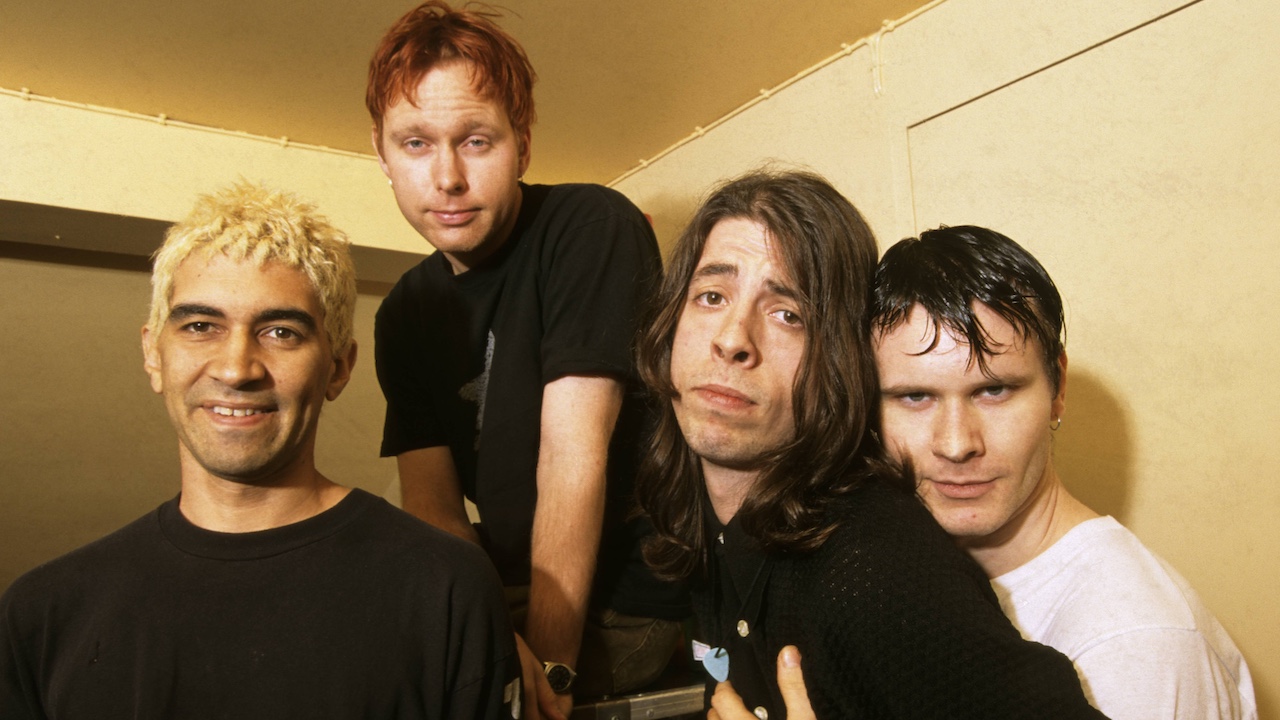
Rewind 30 years and no-one on the planet, not even the man himself, would place bets on Dave Grohl becoming one of the most famous frontmen of his generation. It was May 1995, just over a year since the death of Grohl’s Nirvana bandmate Kurt Cobain and the subsequent dissolution of a band who had turned rock music inside out and changed everything. Grohl had been a big part of that, of course, his powerful, pugilistic drumming style key to what made Nirvana’s best songs so exhilaratingly impactful. Everyone assumed that’s where Grohl would stay, doing his thing behind the kit, totally unaware he was about to change lanes and launch a hugely triumphant second act.
There were some signs of what was about to come. Grohl had recorded the material that would make up Foo Fighters’ debut a few months before, in October, 1994, turning to music, as he has often done throughout his career, as a way of channelling grief. After a few club shows in early ’95, he’d hit the road with his new band throughout spring opening for punk veteran Mike Watt, but for the wider world, the news that one of the world’s best drummers was downing sticks and heading out front arrived with the release of Foo Fighters’ debut single This Is A Call in June 1995.