Get all your news in one place.
100's of premium titles.
One app.
Start reading
Guitar World
Guitar World
Entertainment
Pete Emery

“It’s the same, loud, high headroom amp but with a more open-sounding clean tone that boasts a little extra life”: Fender Hot Rod Deluxe 30th Anniversary review

Fender Hot Rod Deluxe 30th Anniversary.

What is it?

(Image credit: Matt Lincoln)

The Fender Hot Rod Deluxe is a guitar amp that almost every guitarist will be familiar with. Famed as a high-headroom pedal platform, it is a common sight in venues all over the world, as well as within the rigs of both the serious hobbyist and the professional guitar player. This year, the Hot Rod Deluxe turns 30 years old and, given its impact, it deserves to be celebrated. So Fender has marked the occasion with a limited, 30th Anniversary edition.

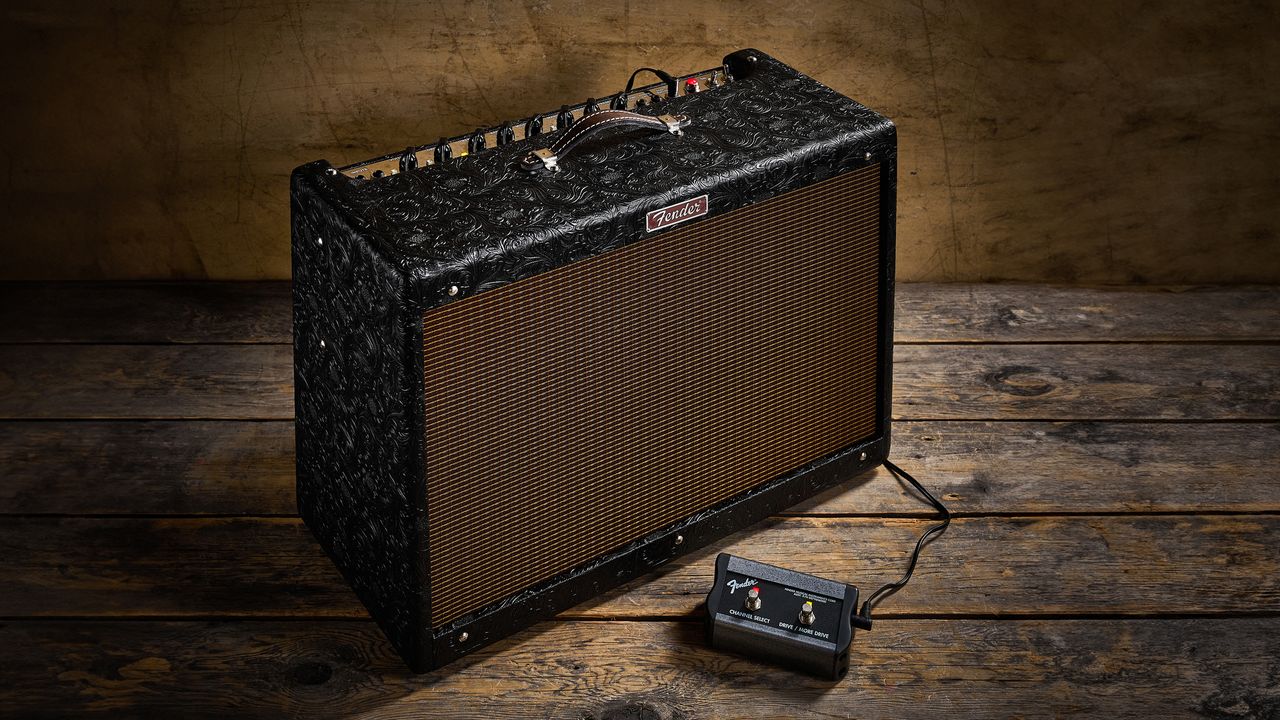
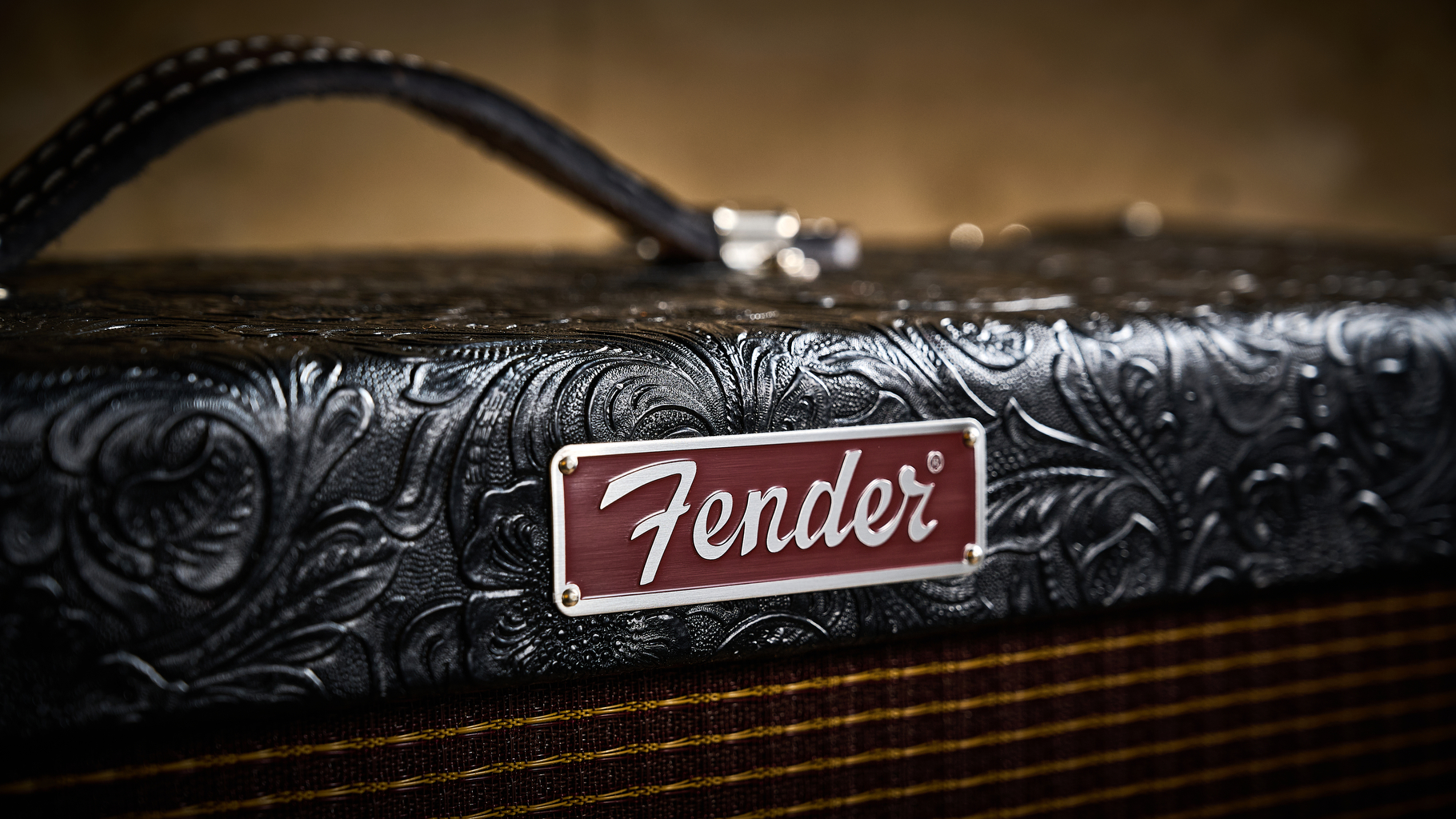
This version takes the current iteration (the Hot Rod Deluxe IV) and spruces it up a bit with what Fender calls a “Black Western” vinyl, but also swaps out the Hot Rod Deluxe IV’s usual Celestion A-Type speaker for a Celestion G12M-65 Creamback.

Beyond that, it is the same 40-watt, mightily loud, 1x12 combo we all know. It boasts both a clean channel and a drive channel, with a Bright switch to bring in more highs, and a More Drive button to add, you guessed it, more overdrive to the drive channel.

(Image credit: Matt Lincoln)

Bass, Mid, Treble, and Presence controls handle EQ duties, while a real spring reverb tank introduces some ambience that is tweaked via a single Reverb knob. We also have an effects send and return, or as Fender calls it on this amp; Pre-amp Out and Power-amp In.

The Hot Rod Deluxe IV is an amp I personally own, and it has faithfully gotten me through hundreds of gigs over the last seven years, so I would happily recommend it as a gigging tube amp that is fairly priced for a professional bit of gear. If you are considering buying one, this limited edition 30th Anniversary version will cost you around $250 more than the stock IV. Therefore, the question is, is it worth it?

Specs

(Image credit: Fender)
  • Launch price: $1,299 | £1,269 | €1,489
  • Type: Combo
  • Origin: Mexico
  • Output: 40 watts RMS
  • Speaker: 12”, Celestion G12M-65 Creamback
  • Channels: Clean, drive and More Drive mode
  • Controls: Volume, Drive, Bass, Mid Treble, Master, Reverb, Presence, Bright/Normal, More Drive, Channel Select
  • Connectivity: ¼” input, ¼” low gain input
  • Footswitch: Included
  • Weight: 41Lbs/18.59kg
  • Dimensions: 23.5"x18.7"x10.4"/59.7x47.6x26.5cm
  • Contact: Fender

Guitar World video demo

Build quality

The 30th Anniversary Hot Rod Deluxe includes a cover (Image credit: Matt Lincoln)

Build quality rating: ★★★★½

As the 'lightweight pine' moniker would suggest, it is on the lighter side for valve-driven, 1x12 combos

You don’t get to become a renowned gigging amplifier without a rock-solid build, and the 30th Anniversary Hot Rod Deluxe follows on from the standard model with the same robust construction.

The lightweight pine chassis feels up to the challenges of a hard-gigging life. I say 'lightweight', and that is relative. Bear in mind that this is a tube amp, and as such is a hefty 41lbs, but, as the 'lightweight pine' moniker would suggest, it is on the lighter side for valve-driven, 1x12 combos. For example, the Marshall DSL 40C comes in around 48lbs, and the Laney Lionheart L20T-112 is about 53lbs.

When shifting that weight, a comfortable carry handle is important. Here, the 30th Anniversary version falls a little short for me. It has a faux leather handle, which looks more upmarket than the rubber one on the original, but is a little sharper around the edges and therefore less comfortable to use.

(Image credit: Matt Lincoln)

Just like the Hot Rod Deluxe IV, however, the tubes consist of three 12AX7s in the preamp, two 6L6s in the power amp.

The Power and Standby switches both operate with a satisfying clunk, and the chicken head controls all sport a healthy resistance, both of which give me confidence in their longevity.

I’ve always loved the oversized, jewel-like power light that sits on the top panel of the Hot Rod amplifiers. It not only looks cool in a retro sort of way, but leaves you in no doubt that the amp is definitely on.

Speaking of power, the IEC cable is molded to the amplifier. I don't think this is ideal. Personally, I always prefer to see separate IEC cables in gear designed for gigging, as loading in and out of venues can be tough on equipment, and things can break even in the hands of the most careful of users. So, the more easily replaceable high-wear items like cables are, the better.

However, as I touched upon, I have been using my own Hot Rod Deluxe live for years with the same molded IEC cable, and it is still going strong.

(Image credit: Matt Lincoln)

If you are going to use both channels when gigging, you will need a way to switch them, so Fender provides a sturdy metal footswitch that changes the amp's channels and activates the More Drive function on the Drive channel. Aesthetically, I would like to have seen the footswitch reflect the brown and black colors of the Anniversary model, but it is instead grey and black like the standard edition.

The appearance of the 30th Anniversary Hot Rod Deluxe is striking in a classy sort of way. This is completely subjective, of course, but I much prefer the Western stylings of the black, textured vinyl and the brown grill cloth compared to the understated, plain black and grey of the original, through the textured finish is slightly lost in the black of the material.

Usability

(Image credit: Matt Lincoln)

Usability rating: ★★★★½

The joy of the good ol’ tube amp is that, in general, they are fairly simple beasts. This holds true with the Hot Rod Deluxe, as it’s a case of plug in, tweak the four EQ controls to your liking, and go.

Input 2 is a low-gain input, primarily for the purpose of preventing the preamp from breaking up too early when using high-output pickups

Switching between the clean and drive channels is facilitated by the Channel Select button, the Normal/Bright button adds more high-end, the More Drive button adds, well, more Drive to the Drive channel, and the amount of reverb is adjusted via a single Reverb control. So far, so self-explanatory.

Of the amp's two inputs, most of us are going to be using Input 1, while Input 2 is a low-gain input, primarily for the purpose of preventing the preamp from breaking up too early when using high-output pickups. While this is widely understood to be the usual function of multiple inputs on a tube amplifier, there’s nothing on the front panel to indicate this is the case.

(Image credit: Matt Lincoln)

There are some further naming conventions that, while they will make sense to more experienced users, may cause a little confusion in those buying their first gigging amp

Firstly, the effects loop is labelled Pre-amp Out and Power-amp In instead of the more ubiquitous Send and Return. The former is more descriptive of what is actually happening within the amp; however, it is something that I have seen cause confusion in players who are not au fait with those terms.

(Image credit: Matt Lincoln)

Secondly, the Drive and Master controls set the level of the Drive channel. Again, this will make sense to those who are familiar with how pre-amp gain and master controls work, but some will assume that the term ‘Master’ would set the overall level for both channels.

So there may be a small bit of learning for newer users; however, most will figure these things out with a little experimentation and a quick glance at the manual.

It’s also worth mentioning that these amps go to 12. Which is two louder than 10.

Sounds

(Image credit: Matt Lincoln)

Sounds rating: ★★★★☆

I was hitting roughly 103dB with the Volume control at three

The Hot Rod Deluxe’s clean channel is renowned as a high-headroom, incredibly loud amplifier, perfect for showing off your pedalboards, and this holds true with the 30th Anniversary edition.

Standing around seven feet away, and using a Fender Telecaster, I was hitting roughly 103dB with the Volume control at three, and the channel didn’t break up until around seven.

So, volume and clean headroom remain the same, but there are some real changes when it comes to tone. The standard Hot Rod Deluxe is known for a mid-forward sound, with a tight bass that perhaps lacks a little life in the highs, but is great for showing off your carefully curated collection of pedals.

In the 30th Anniversary edition, the Celestion G12M-65 Creamback speaker results in a less mid-forward and more open sound, making the high end feel a little more lush.

(Image credit: Matt Lincoln)

By the time the clean channel starts to break up, it is way too loud for all but the biggest of stages, so it’s time to get some overdrive pedals out. In my case, a T-Rex Mudhoney II and RYRA Klon, supplemented with the Wampler Cory Wong Compressor, and an MXR Carbon Copy Delay.

I'll be blunt here, the drive channel is usable but is far from the highlight of the Hot Rod Deluxe IV

To my taste, the 30th Anniversary version does an even better job of the pedal platform thing than the standard model, as, due to that more open nature, it allows extra detail to be heard.

Now, the drive channel. I'll be blunt here, it’s usable but is far from the highlight of the Hot Rod Deluxe IV as it can verge on bright and spikey with single-coil pickups, especially. On the plus side, the low end is tight, and you will be heard in a live mix.

The 30th Anniversary version, again being the same amp, suffers from this, too. Indeed, the change of speaker and its more open nature accentuates that spikey flavour that I don’t like in the Hot Rods Deluxe’s drive channel.

(Image credit: Matt Lincoln)

The range of the Drive control stays firmly in light overdrive territory, and the tone remains tight throughout the sweep. Kick on the More Drive mode, and it gives the channel a good boost, bringing it into heavy overdrive and stopping short of distortion, whilst retaining the same EQ and that tight low end.

When it comes to EQ, the Bass, Middle, and Treble all provide enough sweep to tweak your sound for a room without changing the core character of the amp

Setting the drive to around six, leaving the More Drive function off, and boosting it with my RYRA Klon and T-Rex Mudhoney is where I am getting the most out of the drive channel. Using pedals like those helps smooth things out a little and placates that spikey nature, into what is a pretty rewarding, mid-forward drive.

When it comes to EQ, the Bass, Middle, and Treble all provide enough sweep to tweak your sound for a room without changing the core character of the amp, making it hard to dial ourselves out of a good tone. The Presence control adds some air, but is a lot more subtle in use.

(Image credit: Matt Lincoln)

For a little extra high-end spank, the Bright switch brings in some more cut at a frequency that can be a little jarring when playing on your own at volume, but is perfect for getting heard in a busy mix, as well as allowing articulations on chords to shine through.

Lastly, the reverb is courtesy of a real spring reverb tank. With only one control to adjust it, it is not the most versatile of things. I found myself longing for both a mix and decay control, as it is quite a warm-sounding verb set fairly long, which can get in the way of the guitar when used heavy-handedly.

However, get it in the sweet spot - for me, around four - and that warmth results in a lovely, natural-sounding ambience to build your tone around.

Verdict

(Image credit: Matt Lincoln)

Having gigged a Hot Rod Deluxe IV for a number of years, this 30th Anniversary version is an interesting thing to review. It’s exactly the same amp, but with an upgraded look and a change in speaker, presenting an opportunity to dive into the weeds of how a different speaker affects an amp's tone.

In this case, the Celestion G12M-65 Creamback in this limited edition of the amp results in a more open sound compared to the mid-range punch of the Celestion A-Type in the stock model. To my ears, this enhanced the liveliness of the Clean channel, whilst highlighting the spikey nature of the Drive channel.

It’s famed as a pedal platform, and the speaker change here, in my opinion, enhances this function

Let’s be honest, most of us are not using a Hot Rod Deluxe for its drive sound. It’s famed as a pedal platform, and the speaker change here, in my opinion, enhances this function. If I did not already own one, I would happily pay a little extra and get the 30th Anniversary version above the stock model. In fact, as a result, I may well be changing the speaker in my own Hot Rod Deluxe IV.

If, however, you are someone who does use the drive channel of the Hot Rod Deluxe, or perhaps you are considering it for its mid-forward character, it would make more sense to stick with the stock model.

Either way, although it is not a cheap amp, it is on the lower end of what you might expect to spend when it comes to professional-grade gear. So, as a hard-working, gigging amplifier built to show off your pedals, it’s hard to go wrong with a Hot Rod Deluxe.

Guitar World verdict: The 30th Anniversary Hot Rod Deluxe sports a speaker change that enhances what the well-renowned amp was already good at - showing off those lovingly constructed pedalboards. It’s the same, loud, high headroom sound but with a more open, clean tone that boasts a little extra life. However, I would still avoid that drive channel.

Ratings scorecard

Test

Results

Score

Build quality

A solid, gig-ready build with the usual valve amp heft. Only slightly brought down by an uncomfortable carry handle.

★★★★½

Usability

A simple amp, but with some terminology that those buying their first gigging amp may find confusing.

★★★★½

Sounds

A more open clean sound compared to the standard Hot Rod Deluxe, perfect for pedals. Most will find the drive channel a bit spikey.

★★★★☆

Overall

The speaker upgrade in this Anniversary model, enhances what the already renowned amp is good at. An ideal pedal platform.

★★★★½

Also try

Hands-on videos

Guitar World

Fender

What is it?

The Fender Hot Rod Deluxe is an amp that almost every guitarist will be familiar with. Famed as a high-headroom pedal platform, it is a common sight in venues all over the world, as well as within the rigs of both the serious hobbyist and the professional guitar player. This year, the Hot Rod Deluxe turns 30 years old and, given its impact, it deserves to be celebrated. So Fender has marked the occasion with a limited, 30th anniversary edition.

This version takes the current iteration (the Hot Rod Deluxe IV) and spruces it up a bit with what Fender calls a “Black Western” vinyl, and swaps out the Hot Rod Deluxe IV’s usual Celestion A-Type speaker for a Celestion G12M-65 Creamback.

Beyond that, it is the same 40-watt, mightily loud, 1x12 combo we all know and love. It boasts both a clean channel and a drive channel, with a Bright switch to bring in more highs, and a More Drive button to add, you guessed it, more overdrive to the drive channel.

(Image credit: Matt Lincoln)

Bass, Mid, Treble, and Presence controls handle EQ duties, while a real spring reverb tank introduces some ambience that is tweaked via a single Reverb knob. And then we also have an effects send and return, or as Fender calls it on this amp, Pre-amp Out and Power-amp In.

The Hot Rod Deluxe IV is an amp I personally own, and it has faithfully gotten me through hundreds of gigs over the last seven years, so I would happily recommend it as a gigging tube amplifier that is fairly priced for a professional bit of gear. If you are considering buying one, this limited edition 30th anniversary version will cost you around £200 more than the stock IV. Therefore, the question is, is it worth it?

Specs

(Image credit: Fender)
  • Launch price: $1299/£1269/€1489
  • Type: Combo
  • Origin: Mexico
  • Output: 40 watt RMS
  • Speaker: 12”, Celestion G12M-65 Creamback
  • Channels: Clean, drive and More Drive mode
  • Controls: Volume, Drive, Bass, Mid Treble, Master, Reverb, Presence, Bright/Normal, More Drive, Channel Select
  • Connectivity: ¼” input, ¼” low gain input
  • Footswitch: Included
  • Weight: 41Lbs/18.59kg
  • Dimensions: 23.5"x18.7"x10.4"/59.7x47.6x26.5cm
  • Contact: Fender

Build quality

(Image credit: Matt Lincoln)

Build quality rating: ★★★★☆½

You don’t get to become a renowned gigging amplifier without a rock-solid build, and the 30th anniversary Hot Rod Deluxe follows on from the standard model with the same robust construction.

The lightweight pine chassis feels up to the challenges of a hard gigging life. This is still a tube amp, and as such is a hefty 18kg, but, as 'lightweight pine' would suggest, it is on the lighter side for valve-driven, 1x12 combos. For example, the Marshall DSL 40C comes in around 48lbs, and the Laney Lionheart L20T-112 is about 53lbs.

When shifting that weight, a comfortable carry handle is important. Here, the 30th anniversary version falls a little short. It has a faux leather handle, which looks more upmarket than the rubber one on the original, but is a little sharper around the edges and therefore less comfortable to use.

(Image credit: Matt Lincoln)

Just like the Hot Rod Deluxe IV, however, the tubes consist of three EL34’s in the pre-amp, two 6L6’s in the power amp.

The Power and Standby switches both operate with a satisfying clunk, and the chicken head controls all sport a healthy resistance, both of which give me confidence in their longevity.

I’ve always loved the oversized, jewel-like power light that sits on the top panel of the Hot Rod amplifiers. It not only looks cool in a retro sort of way, but leaves you in no doubt that the amp is definitely on.

Speaking of power, the IEC cable is moulded to the amplifier. Personally, I always prefer to see separate IEC cables in gear designed for gigging, as loading in and out of venues can be tough on equipment, and things can break even in the hands of the most careful of users. So, the more easily replaceable high-wear items like cables are, the better.

(Image credit: Matt Lincoln)

However, as I touched upon, I have been using my own Hot Rod Deluxe live for years with the same moulded IEC cable, and it is still going strong.

If you are going to use both channels when gigging, you will need a way to switch them, so Fender provides a sturdy metal footswitch that changes the amp's channels and activates the More Drive function on the Drive channel. Aesthetically, I would like to have seen the footswitch reflect the brown and black colors of the anniversary model, but it is instead grey and black like the standard edition.

The appearance of the 30th anniversary Hot Rod Deluxe is striking in a classy sort of way. This is completely subjective, of course, but I much prefer the Western stylings of the black, textured vinyl and the brown grill cloth compared to the understated, plain black and grey of the original, but that textured finish is slightly lost in the black of the material.

Usability

(Image credit: Matt Lincoln)

Usability rating: ★★★★☆½

The joy of the good ol’ tube amp is that, in general, they are fairly simple beasts. This holds true with the Hot Rod Deluxe, as it’s a case of plug in, tweak the four EQ controls to your liking, and go.

Switching between the clean and drive channels is facilitated by the Channel Select button, the Normal/Bright button adds more high-end, the More Drive button adds, well, more Drive to the Drive channel, and the amount of reverb is adjusted via a single Reverb control. So far, so self-explanatory.

Of the amp's two inputs, most of us are going to be using Input 1, while Input 2 is a low-gain input, primarily for the purpose of preventing the pre-amp from breaking up too early when using high-output pickups. While this is widely understood to be the usual function of multiple inputs on a valve amplifier, there’s nothing on the front panel to indicate this is the case.

(Image credit: Matt Lincoln)

There are some further naming conventions that, while they will make sense to more experienced users, may cause a little confusion in those buying their first gigging amp

Firstly, the effects loop is labelled Pre-amp Out and Power-amp In instead of the more ubiquitous Send and Return. The former is more descriptive of what is actually happening within the amp; however, it is something that I have seen cause confusion in players who are not au fait with those terms.

Secondly, the Drive and Master controls set the level of the Drive channel. Again, this will make sense to those who are familiar with how pre-amp gain and master controls work, but some will assume that the term ‘Master’ would set the overall level for both channels.

So there may be a small bit of learning for newer users; however, most will figure these things out with a little experimentation and a quick glance at the manual.

It’s also worth mentioning that these amps go to 12. Which is two louder than 10.

Sounds

(Image credit: Matt Lincoln)

Sounds rating: ★★★★☆

The Hot Rod Deluxe’s clean channel is renowned as a high-headroom, incredibly loud, pedal platform. And given that the 30th anniversary version is the same amp with a different speaker, this remains the case.

Standing around seven feet away, and using a Fender Telecaster, I was hitting roughly 103dB with the Volume control at three, and the channel didn’t break up until around seven.

So, volume and clean headroom remain the same, but there are some real changes when it comes to tone. The standard Hot Rod Deluxe is known for a mid-forward sound, with a tight bass that perhaps lacks a little life in the highs, but is great for showing off your carefully curated collection of pedals.

In the 30th Anniversary edition, the Celestion G12M-65 Creamback speaker results in a less mid-forward and more open sound, making the high end feel a little more lush.

(Image credit: Matt Lincoln)

By the time the clean channel starts to break up, it is way too loud for all but the biggest of stages, so it’s time to get some overdrive pedals out. In my case, a T-Rex Mudhoney II and RYRA Klon, supplemented with the Wampler Cory Wong Compressor, and an MXR Carbon Copy Delay.

To my taste, the 30th anniversary version does an even better job of the pedal platform thing than the standard model, as, due to that more open nature, it allows extra detail to be heard.

Now, the drive channel. Let’s be blunt here, it’s usable but is far from the highlight of the Hot Rod Deluxe IV as it bit bright and spikey, and therefore pretty hard to enjoy. On the plus side, the low end is tight, and you will be heard in a live mix.

The range of the Drive control stays firmly in light overdrive territory, and the tone remains tight throughout the sweep. Kick on the More Drive mode, and it gives the channel a good boost, bringing it into heavy overdrive and stopping short of distortion, whilst retaining the same EQ and that tight low end.

(Image credit: Matt Lincoln)

Setting the drive to around six, leaving the More Drive function off and boosting it with my RYRA Klon and T-Rex Mudhoney is where I am getting the most out of the drive channel. Using pedals like those helps smooth things out a little and placates that spikey nature, into what is a pretty rewarding, mid-forward drive.

The 30th anniversary version, again being the same amp, suffers from this, too. The change of speaker and its more open nature accentuates that spikey flavour that I don’t like in the Hot Rods Deluxe’s drive channel.

When it comes to EQ, the Bass, Middle, and Treble all provide enough sweep to tweak your sound for a room without changing the core character of the amp, making it hard to dial ourselves out of a good tone. The Presence control adds some air, but is a lot more subtle in use.

(Image credit: Matt Lincoln)

For a little extra high-end spank, the Bright switch brings in some more cut at a frequency that can be a little jarring when playing on your own at volume, but is perfect for getting heard in a busy mix, as well as allowing articulations on chords to shine through.

Lastly, the reverb is courtesy of a real spring reverb tank. With only one control to adjust it, it is not the most versatile of things. I found myself longing for both a mix and decay control, as it is quite a warm-sounding verb set fairly long, which can get in the way of the guitar when used heavy-handedly.

However, get it in the sweet spot - for me, around four - and that warmth results in a lovely, natural-sounding ambience to build your tone around.

Verdict

(Image credit: Matt Lincoln)

Having gigged a Hot Rod Deluxe IV for a number of years, this 30th Anniversary version is an interesting thing to review. It’s exactly the same amp, with an upgraded look and a change in speaker, presenting an opportunity to dive into the weeds of how a different speaker affects an amp's tone.

In this case, the Celestion G12M-65 Creamback in this limited edition of the amp results in a more open sound compared to the mid-range punch of the Celestion A-Type in the stock model. To my ears, this enhanced the liveliness of the Clean channel, whilst highlighting the spikey nature of the Drive channel.

Let’s be honest, most of us are not using a Hot Rod Deluxe for its drive sound

Let’s be honest, most of us are not using a Hot Rod Deluxe for its drive sound. It’s famed as a pedal platform, and the speaker change here, in my opinion, enhances this function. If I did not already own one, I would happily pay a little extra and get the 30th anniversary version above the stock model. In fact, as a result, I may well be changing the speaker in my own Hot Rod Deluxe IV.

If, however, you are someone who does use the drive channel of the Hot Rod Deluxe, or perhaps you are considering it for its mid-forward character, it would make more sense to stick with the stock model.

Either way, although it is not a cheap amp, it is on the lower end of what you might expect to spend when it comes to professional-grade gear. So, as a hard-working, gigging amplifier built to show off your pedals, it’s hard to go wrong with a Hot Rod Deluxe.

Guitar World verdict: The 30th Anniversary Hot Rod Deluxe sports a speaker change that enhances what the well-renowned amp was already good at - showing off those lovingly constructed pedal boards. It’s the same, loud, high headroom sound but with a more open, clean tone that boasts a little extra life. However, I would still avoid that drive channel.

Ratings scorecard

Test

Results

Score

Build quality

A solid, gig-ready build with the usual valve amp heft. Only slightly brought down by an uncomfortable carry handle.

★★★★☆½

Usability

A simple amp, but with some terminology that those buying their first gigging amp may find confusing.

★★★★☆½

Sounds

A more open clean sound compared to the standard Hot Rod Deluxe, perfect for pedals. Most will find the drive channel a bit spikey.

★★★★☆

Overall

The speaker upgrade in this anniversary model, enhances what the already renowned amp is good at. An ideal pedal platform.

★★★★☆½

Also try

Hands-on videos

Fender

Sign up to read this article
Read news from 100's of titles, curated specifically for you.
Already a member? Sign in here
Related Stories
Top stories on inkl right now
One subscription that gives you access to news from hundreds of sites
Already a member? Sign in here
Our Picks
Fourteen days free
Download the app
One app. One membership.
100+ trusted global sources.