Get all your news in one place.
100’s of premium titles.
One app.
Start reading
Tom’s Guide
Tom’s Guide
Technology
Michael Desjardin

It’s the beginning of the end of 8K TVs, but that’s OK — these will be the 4K TVs to shop in 2026

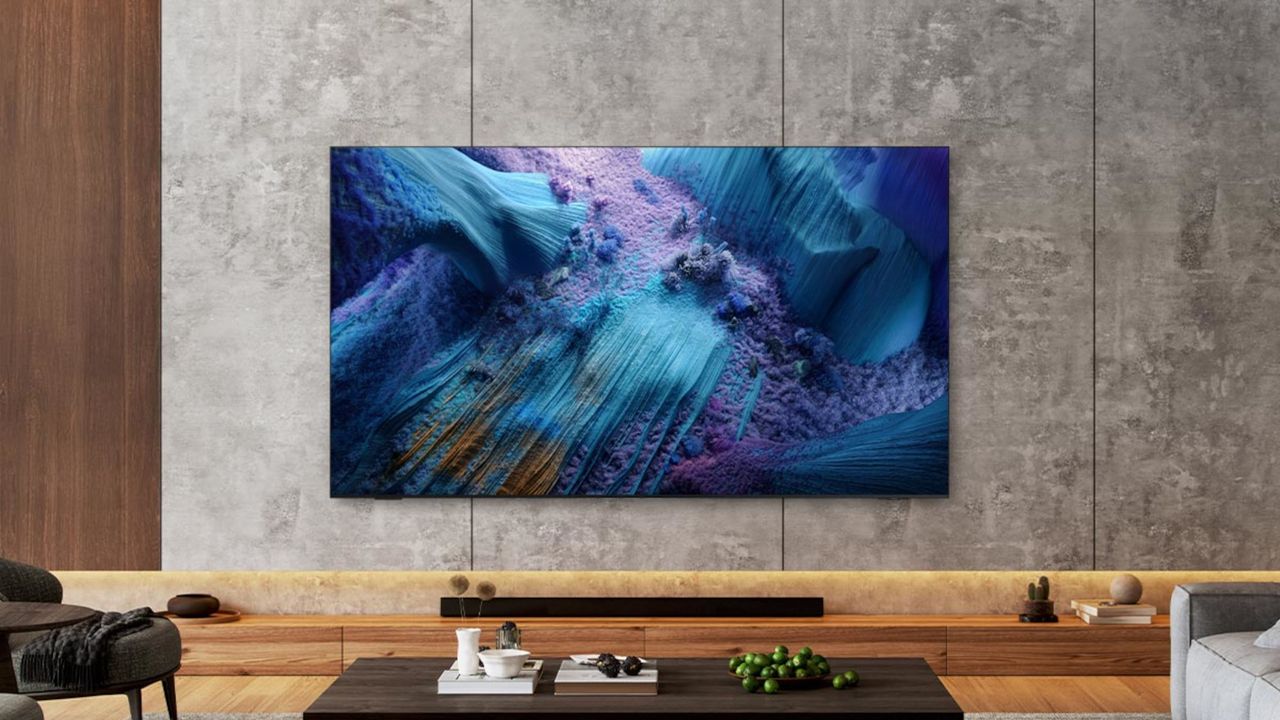
Samsung QN990F lifestyle .

As a TV expert, I entered 2026 skeptical about 8K’s continued existence in the commercial TV space. Last year marked the end of Sony 8K TVs, and according to a recent report by FlatpanelsHD, LG has ceased making 8K OLED panels, too.

Samsung — makers of some of the best OLEDs and Mini-LED TVs on the market — remains the final 8K holdout among the big-name TV brands.

With the end seemingly in sight, it’s worth revisiting why 8K ultimately flopped. More importantly, it’s time to set our sights on the slew of new 4K sets launching in just a few short months. For folks who had their sights set on an 8K TV, what will be the next-best thing in 2026?

A quick recap on the meteoric rise and fall of 8K

(Image credit: Future)

In a nutshell, 8K failed for two reasons: cost and content. 8K displays are costly to make in TV-appropriate sizes. This makes the bar for entry quite high — more than most shoppers are willing to spend on a new TV.

For early adopters, a new 8K TV might’ve lit up their living room, but it probably wasn’t because they were watching native 8K content. There just isn’t much out there to enjoy that hasn’t been upscaled from a resolution of 4K or below.

Newly released 4K movies and shows have only recently become somewhat of a standard.

Newly released 4K movies and shows have only recently become somewhat of a standard for streaming platforms. Live TV — like basic cable and over-the-air broadcasts — remains, for the most part, below 4K. (Though you can watch the Super Bowl in 4K this year).

This presents a problem. As an 8K TV-owner, not only is it difficult to find stuff to watch that makes the most out of your super-pricey new TV, but the upscaling process on sub-8K content (read: almost everything) can limit clarity and even introduce visual artifacts. This last part depends entirely on the capabilities of the TV’s picture processing software.

As mentioned, Samsung is still chugging along, building and selling 8K models to fill that niche. In addition to being the only new 8K TV to launch in 2025, the Samsung QN990F is also one of the better Mini-LED TVs we saw last year. That said, you’ll have to shell out a considerable amount of cash for it.

This year, the QN990F is being replaced by the 8K Samsung QN990H, so the endangered species lives on. However, it’s not clear yet how many size options will ultimately be available with the QN990H. Currently, only a 98-inch version has been reported.

These TVs are pricey and target a very narrow slice of the market. They’re a luxury item. But soon, the folks who wish to indulge in a posh, cutting-edge A/V experience will have to find another corner of the market to explore. That raises the question: What’s the 2026 version of a cutting-edge, luxury experience?

Enter RGB LED

(Image credit: Samsung)

RGB LED is a brand-new TV technology that comes in many names. Hisense calls its take on the tech RGB Mini-LED. Samsung is touting Micro RGB TVs (not to be confused with true Micro-LED). Similarly, LG is going with Micro RGB evo TVs.

Like the best Mini-LED TVs, these TVs leverage an array of super-small LEDs that can be broken up into dimmable zones. This goes a long way towards enhancing contrast and generating higher brightness.

Unlike the best Mini-LED TVs, however, RGB LED TVs have an added bonus: Their LEDs are red-, green- and blue-tinted. While the white light of garden-variety Mini-LEDs rely on a color filter, RGB LEDs do not.

We’re still weeks away from taking some of these sets through our testing lab and seeing what they’re truly capable of, but I’ll say this: There’s a lot of hype going around.

(Image credit: LG)

Every TV-maker entering the RGB LED market has reported brighter, purer color across all of these TVs. Managing Editor Nick Pino called the Hisense 116UXS RGB Mini-LED TV “the best-looking LCD TV” at CES 2026.

Pricing and sizing will vary by brand, but RGB LED TVs are quickly emerging as the next ultra-premium choice for high-end shoppers. And, if you were making moves to make 2026 the year that you finally splashed out on an 8K set, I wouldn’t blame you for switching gears.

The primary purported benefit of RGB LED TVs is bright, brilliant color — in some reported cases, up to 100% of BT.2020. Combined with the overall contrast and highlight brightness we’ve come to expect from the industry’s best Mini-LED TVs, I would argue that some of these RGB LED TVs have a chance of looking better than any 8K TV I’ve ever personally seen.

This is because our eyes are far more likely to notice enhanced contrast and color before an increase in native resolution.

In the OLED vs RGB LED debate, I would probably still choose OLED in 2026. But a big reason for this has to do with my expectation that many of these RGB LED TVs are bound to be prohibitively expensive for most people.

If you were already convinced about spending that sort of cash on a fancy, ultra-high-end TV, RGB LED might be the next-best thing to 8K this year.


Follow Tom's Guide on Google News and add us as a preferred source to get our up-to-date news, analysis, and reviews in your feeds.


More from Tom's Guide

Sign up to read this article
Read news from 100’s of titles, curated specifically for you.
Already a member? Sign in here
Related Stories
Top stories on inkl right now
One subscription that gives you access to news from hundreds of sites
Already a member? Sign in here
Our Picks
Fourteen days free
Download the app
One app. One membership.
100+ trusted global sources.