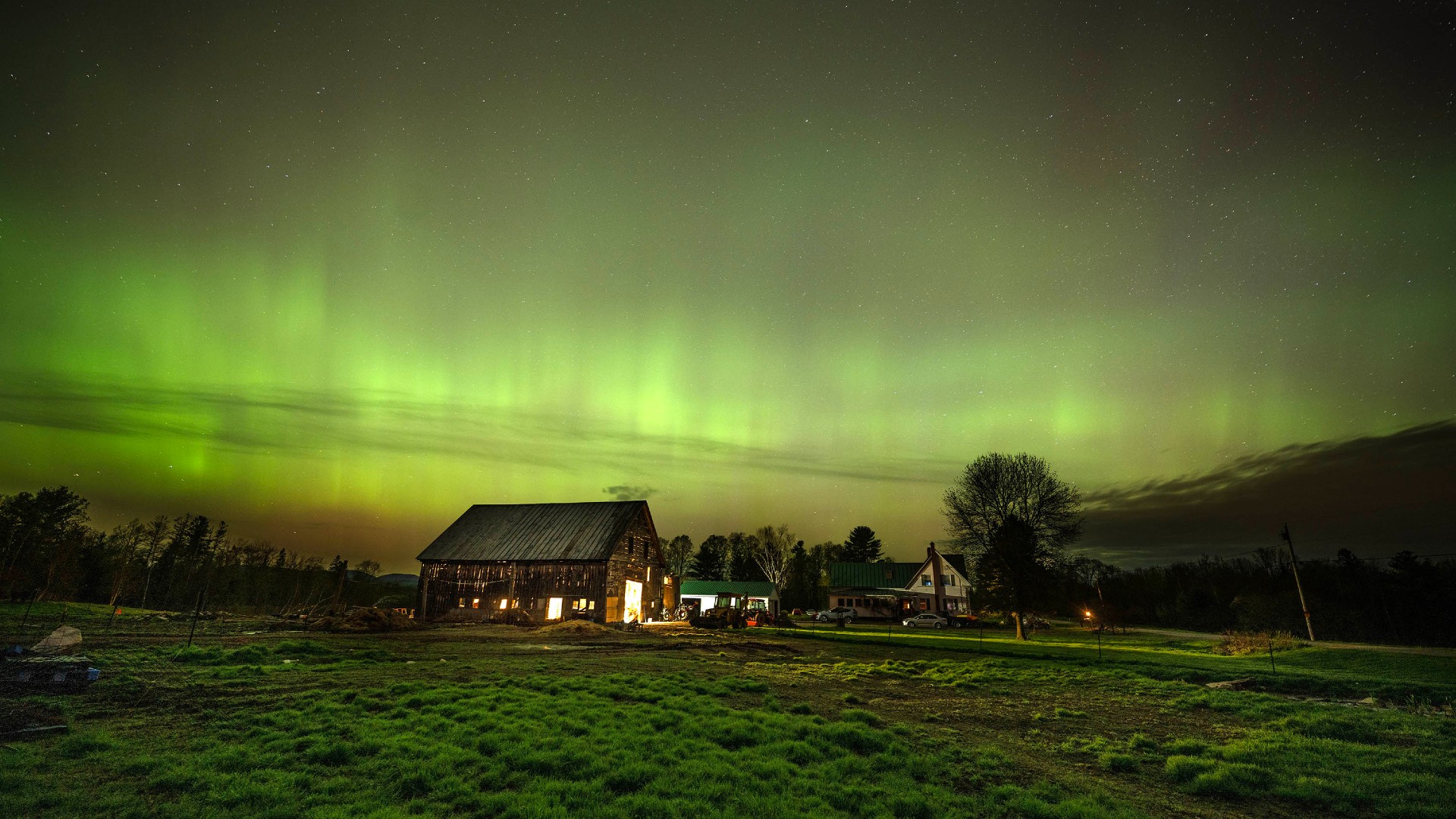
I'll never forget the night of May 10, 2024. I remember having dinner with a friend and talking about the potential of seeing the northern lights in Northeast Ohio, a conversation that I had never had before or even thought was possible. It sounded unlikely, but earlier that week, the possibility was brought to my attention when I wrote one of my first-ever stories highlighting space weather triggered by the sun.
As a meteorologist, space weather wasn't something I talked about often, but the more I was learning that week, the more I became fascinated with how powerful solar flares from sunspot clusters almost 93 million miles (149.60 million kilometers) away could impact us here on Earth. When the National Oceanic and Atmospheric Administration's Space Weather Prediction Center (SWPC) issued a geomagnetic storm watch for a pretty powerful solar event on Mother's Day Weekend and I was asked to report on it, I had no idea I would be writing about a geomagnetic storm that would make history.